
Israeli Prime Minister Benjamin Netanyahu warned that Israel’s fight with Iran and Hezbollah is "not finished" despite a temporary halt in direct strikes after intense exchanges. Iran fired ballistic missiles at Israel in response to Israeli strikes on southern Beirut; Israel then struck sites inside Iran. The US intervened diplomatically while also disabling a tanker bound for Iran, the EU imposed sanctions on parts of the IRGC Navy, and international agencies urged renewed diplomacy and inspections.
Netanyahu Warns Israel’s Fight With ‘Weakened’ Iran And Hezbollah Is Not Over After Brief Exchange Of Strikes
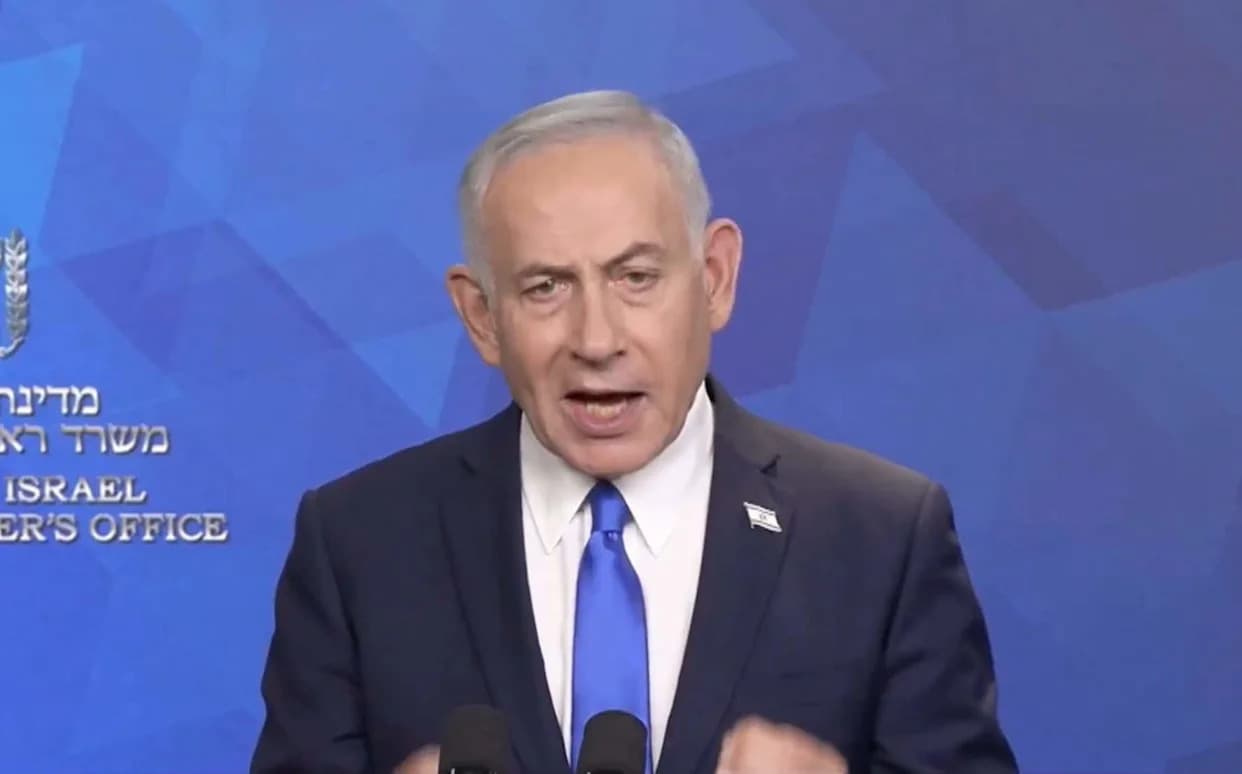
Benjamin Netanyahu said his forces would continue attacking Hezbollah and respond overwhelmingly to any further Iranian retaliation
Israeli Prime Minister Benjamin Netanyahu said on Monday that Israel’s confrontation with Iran and Lebanon’s Hezbollah remains unresolved, even after a brief exchange of missiles and air strikes that both sides later agreed to suspend following US intervention.
Key Developments
Temporary Halt After Heavy Exchanges — Iran and Israel exchanged direct strikes over 24 hours, threatening to break a fragile ceasefire that had held since April. Tehran launched ballistic missiles toward Israeli military sites after the Israel Defense Forces (IDF) struck southern Beirut; Israel then carried out strikes on targets inside Iran, including a petrochemical complex the IDF said supported missile production.
Netanyahu: "We are stronger than ever — but our battle against them is still not finished. At the moment we are holding our fire. If the terror regime in Iran resumes attacks on us, we will respond with overwhelming force."
US Role and Diplomatic Pressure — US President Donald Trump repeatedly urged both sides to "stop shooting," saying he would press Israeli leaders not to retaliate and that negotiations toward a deal were continuing. Washington also acted militarily in the Gulf, disabling a Palau‑flagged oil tanker, the M/T Marivex, which US forces said was heading to Iran in violation of a blockade; all 24 Indian crew were rescued by Omani authorities.
Regional and International Responses — The European Union announced sanctions on two Iranian individuals and the Hormozgan Provincial Command of the IRGC Navy for threatening freedom of navigation in the Strait of Hormuz. Rafael Grossi, head of the International Atomic Energy Agency (IAEA), urged Iran to re‑engage with inspectors and disclose the fate of nuclear material reportedly stored at sites hit in recent strikes.
Human Cost and Local Impact — Lebanese health authorities reported civilian casualties from Israeli strikes in southern Lebanon, including fatalities in Nabatieh district; Israel said it would continue operations against Hezbollah in the security zone. In Israel, schools briefly closed and medical services shifted underground as civil defence measures were activated and reserve mobilisation preparations began.
Militaries, Proxies and Maritime Risk — Iran’s Quds Force commander announced plans for a new "security belt of Resistance" from the Strait of Hormuz to Bab el‑Mandeb, raising fears for key shipping lanes. The wider region also saw strikes on Kurdish opposition camps in northern Iraq and Houthi threats in the Red Sea, underscoring how the conflict's ripple effects involve multiple state and non‑state actors.
What Happens Next?
The temporary pause leaves the ceasefire precarious. Israeli officials insist they will continue to target Hezbollah infrastructure in Lebanon, and Iranian leaders warned they could resume harsher reprisals if attacks persist. Diplomatic channels remain strained but active; whether negotiations and US pressure can prevent a wider return to war will depend on decisions made in Tehran, Jerusalem and Washington — and on actions by allied militias and regional proxies.
Sources and Verification: Reporting includes statements from Israeli and Iranian officials, the IDF, the IRGC, the US Central Command, EU foreign policy officials and the IAEA. Some claims remain unverified independently and were described by the parties involved.

Palestinians visit a fruit market in the town of Khan Yunis in Gaza. - Anadolu
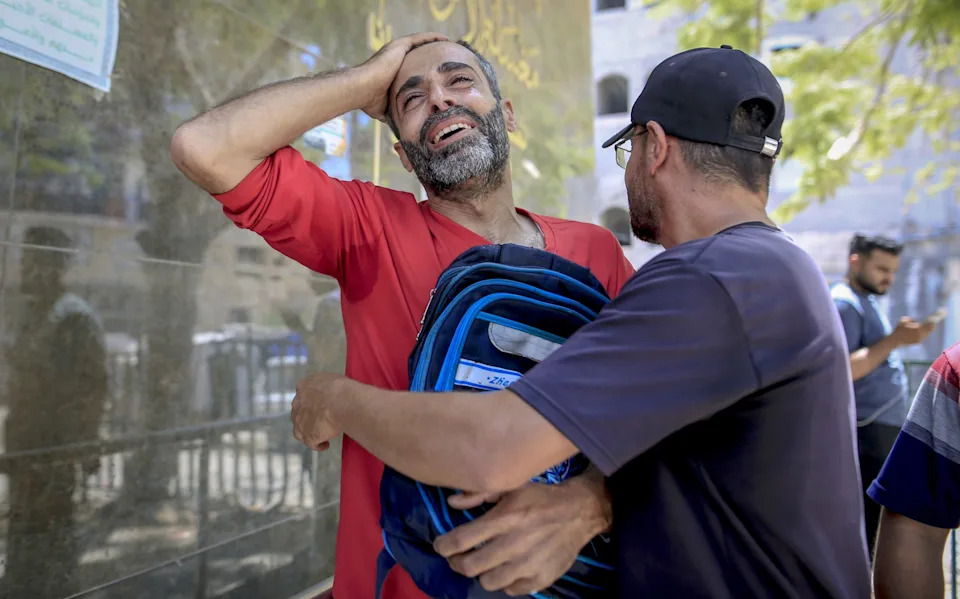
Father of an eight-year-old child killed in an Israeli attack on the Jabalia refugee camp in the northern Gaza Strip mourns his son. - Anadolu

Residents of Bandar Abbas take a dip as cargo and commercial vessels lie at anchor in the Strait of Hormuz. - AMIRHOSSEIN KHORGOOEI/AFP

Lebanese army soldiers carry the coffin of captain Elie Khoury during his funeral procession in Kfar Jarra, southern Lebanon. He was killed on Saturday in an Israeli airstrike. - Mohammed Zaatari/AP
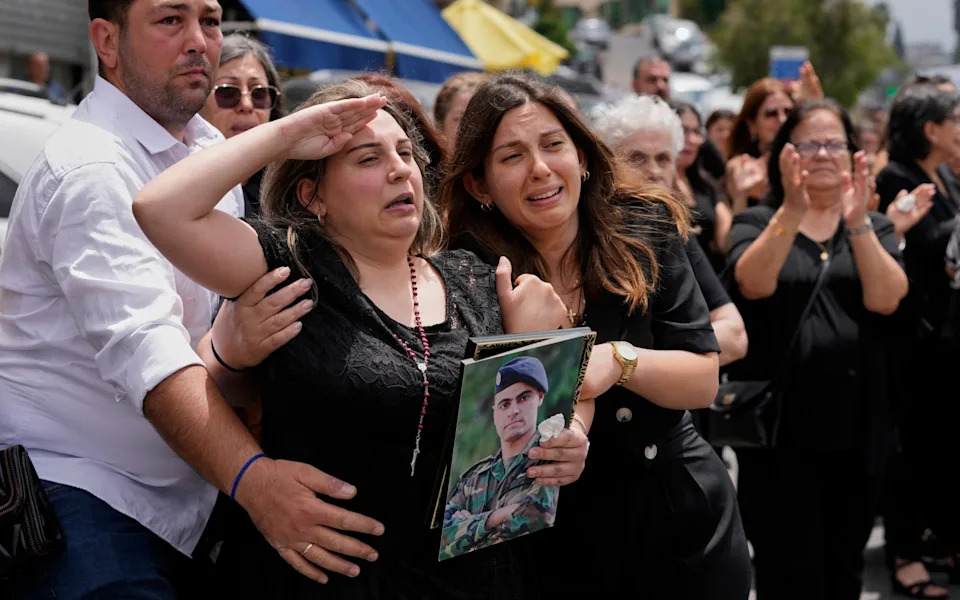
Rozette, second left, the wife of Lebanese army captain Elie Khoury, who salutes during his funeral procession. - Mohammed Zaatari/AP
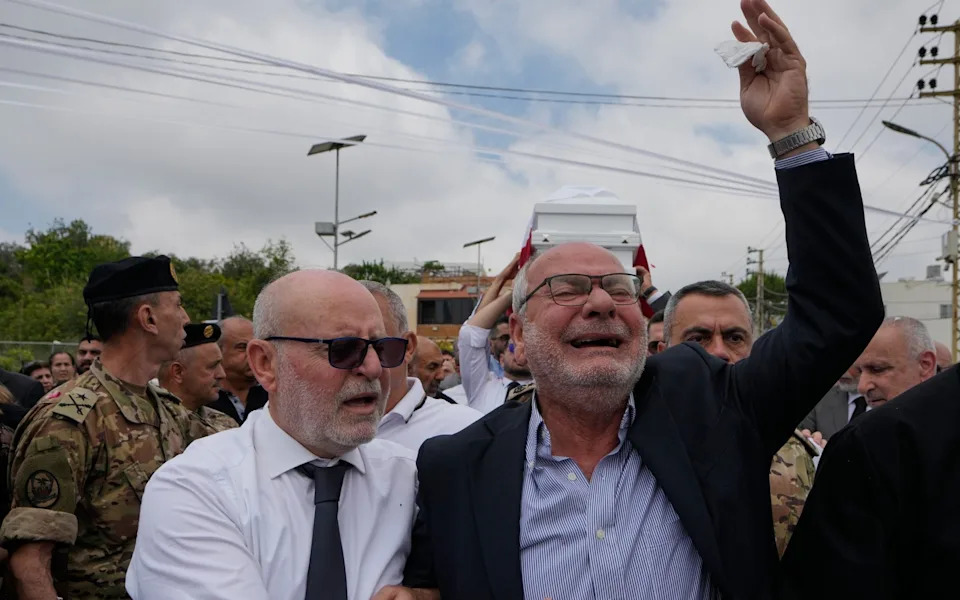
The father of a Lebanese soldier killed by Israeli strikes mourns at his daughter’s funeral - Mohammed Zaatari/AP
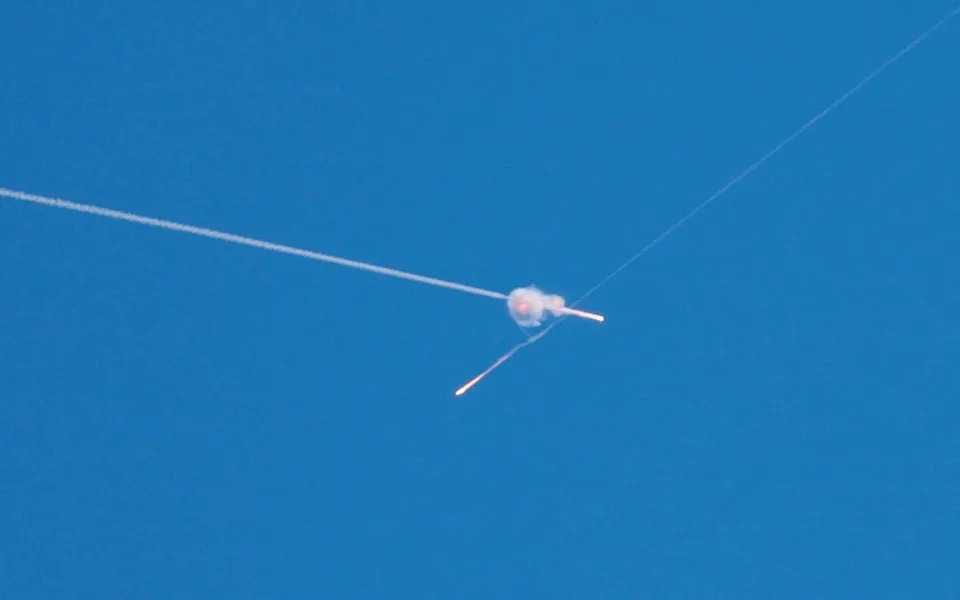
Israel intercepts missiles over the West Bank - Mohamad Torokman/Reuters
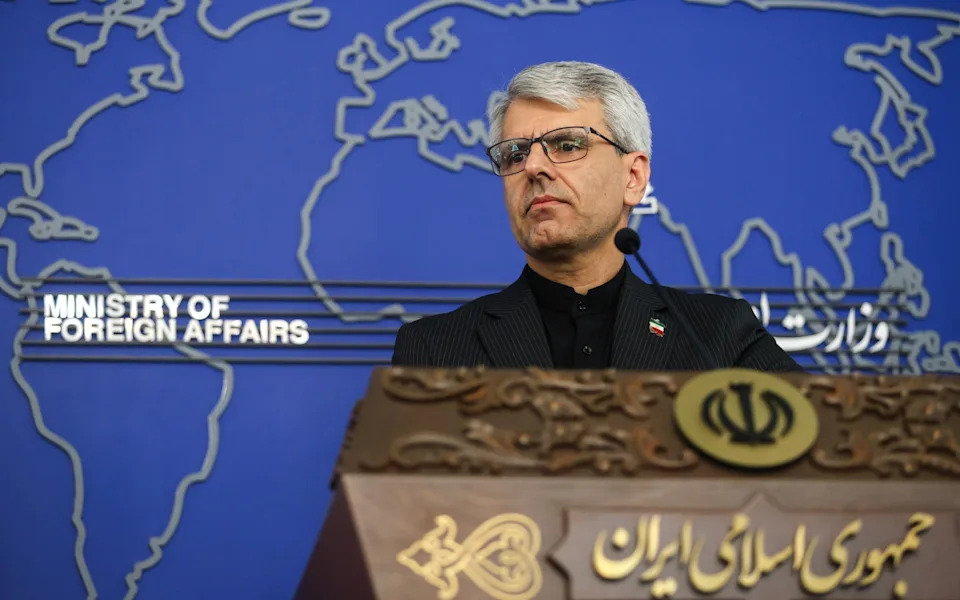
Esmaeil Baghaei at a press conference in May - Foad Ashtari/SOPA Images/LightRocket/Getty
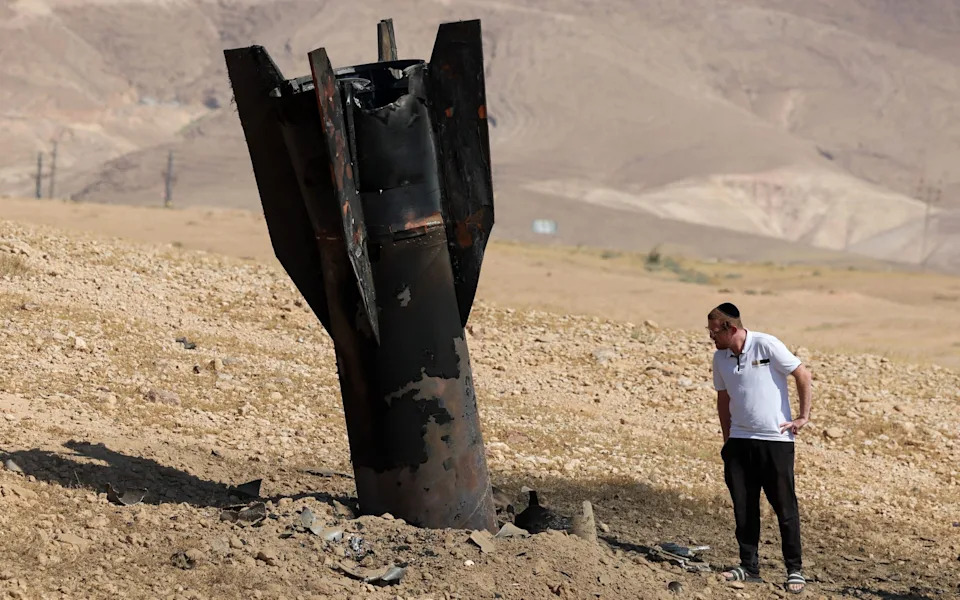
A man checks a fallen rock half-buried in the ground on the outskirts of Jericho, West Bank - Ahmad Gharabli/AFP
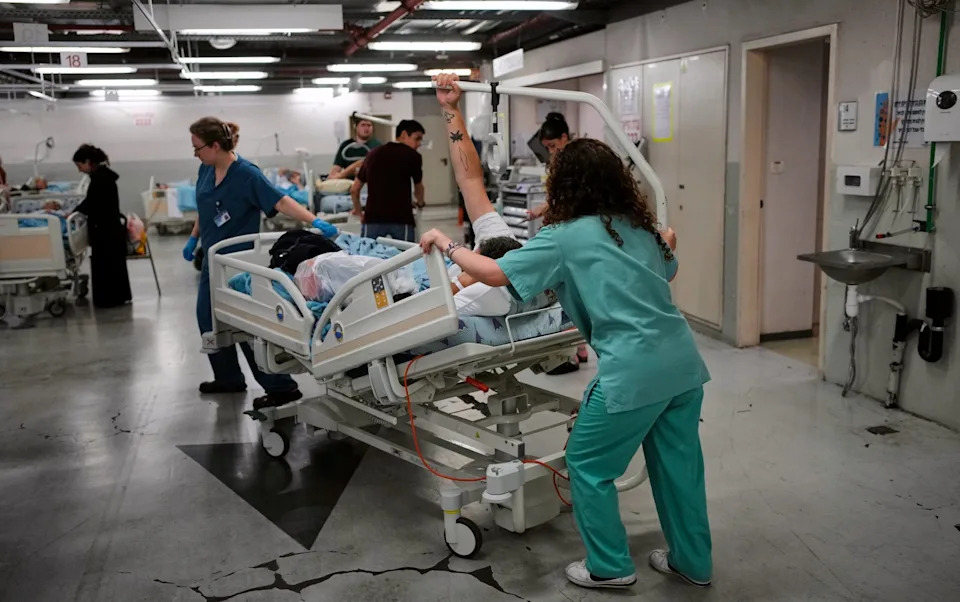
Israeli medical staff transfer patients to a protected underground facility following an Iranian missile attack - Ohad Zwigenberg/AP

Security forces examine a fragment of a missile which fell in northern Israel - Rami Shlush
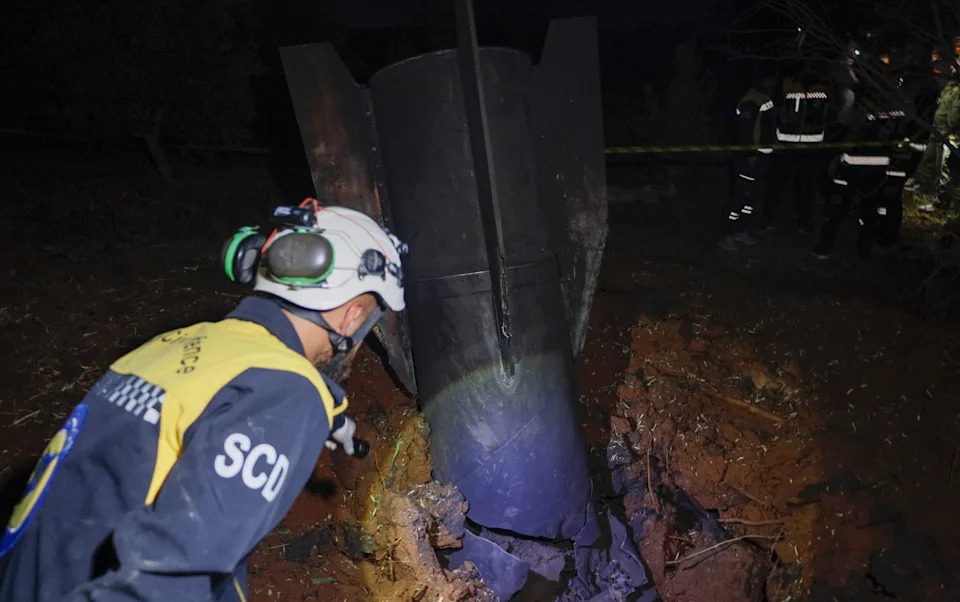
Anadolu
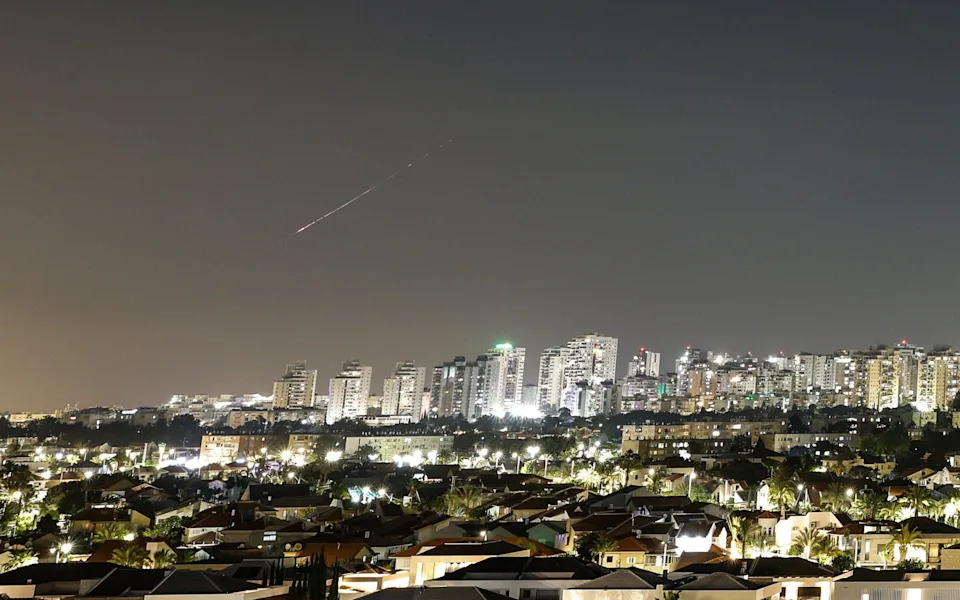
A missile flies over Israel during Iran’s missile attack - REUTERS
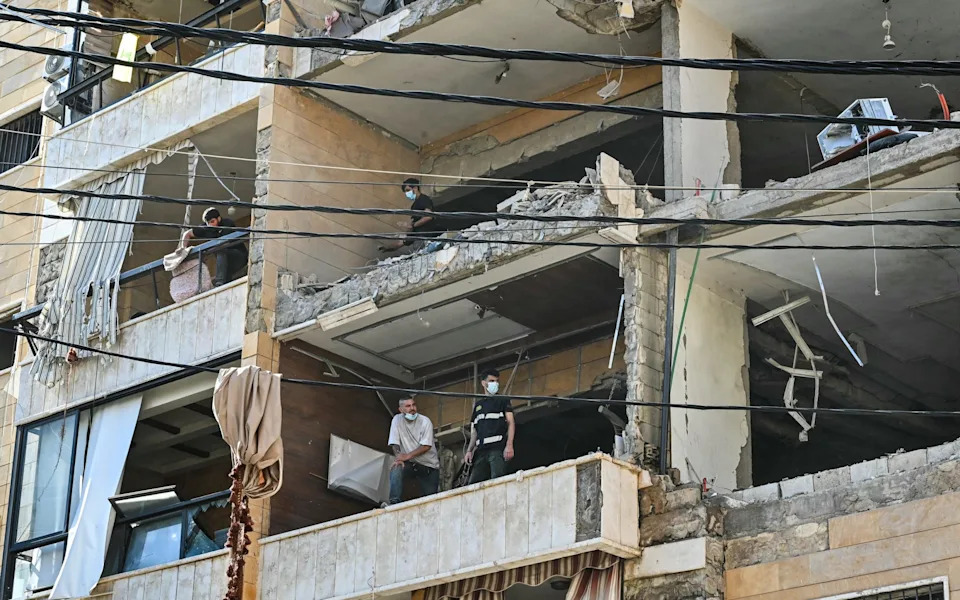
An Israeli air strike hit apartment buildings in Beirut’s southern suburbs on Sunday - FADEL ITANI
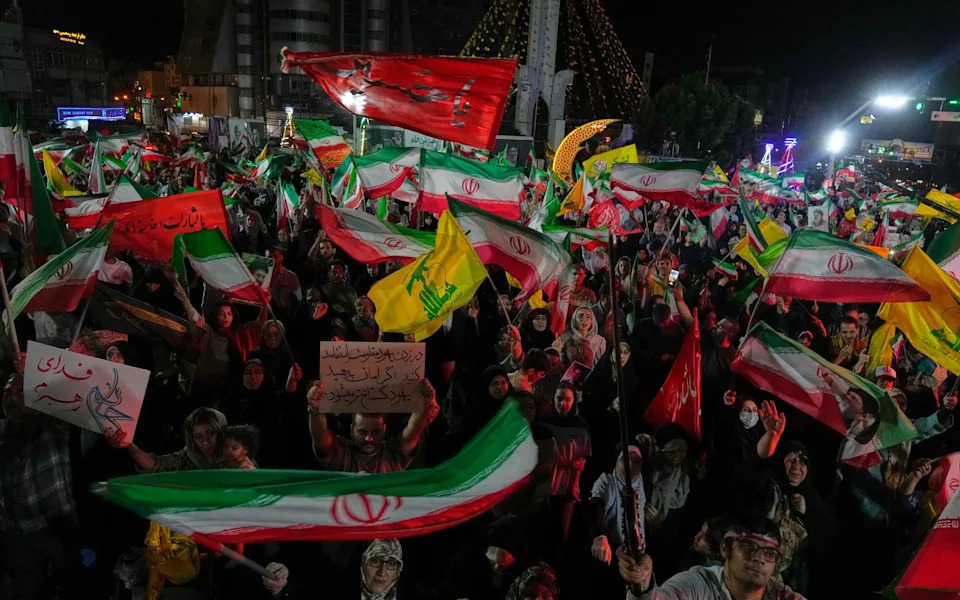
Pro-government Iranian demonstrators in Tehran - AP
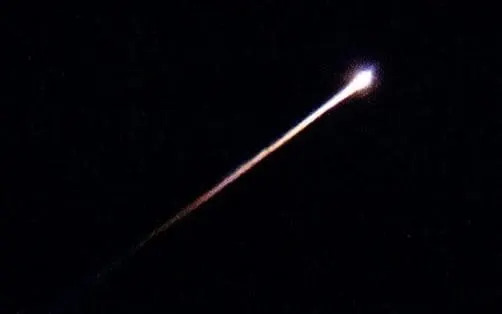
Iran’s missiles are seen in the skies over Jerusalem - Anadolu
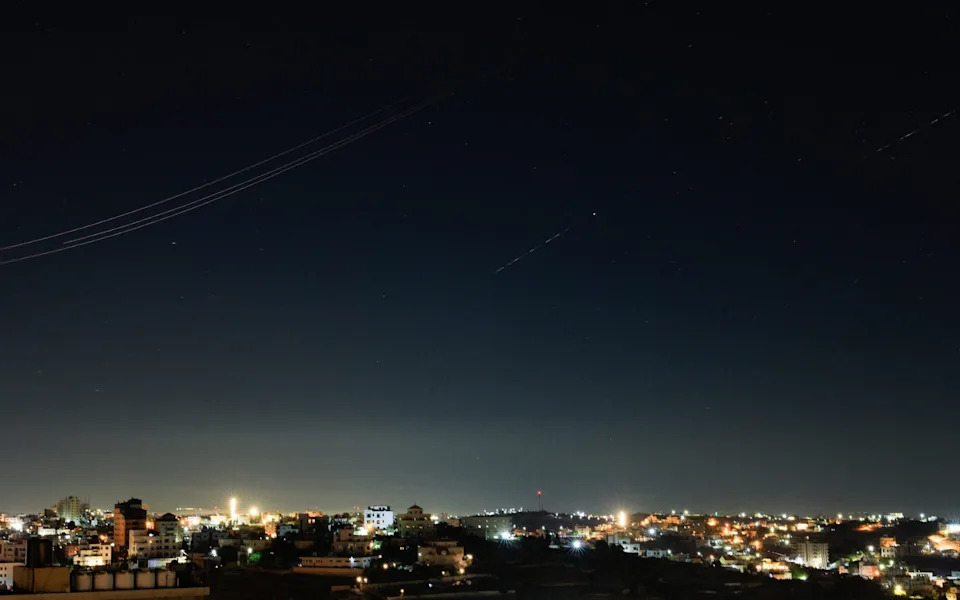
Iranian missiles fly in the sky over Israel - REUTERS
Help us improve.





















