
After the most serious Israel–Iran exchange since April, missile alerts sent Tel Aviv residents to shelters before many returned to routines, seeking normalcy amid renewed alarms. Schools and non-urgent hospital services were briefly suspended while air defenses intercepted missiles; Iran later said it would pause offensive operations and restrictions were lifted. Citizens voiced exhaustion and blamed political leadership, though some defended the government. The flare-up is linked to the broader conflict that began with the Oct. 7, 2023 attacks and the ensuing Israeli offensive in Gaza.
Missile Alerts in Tel Aviv: Israelis Revert to Wartime Routines After Exchange With Iran
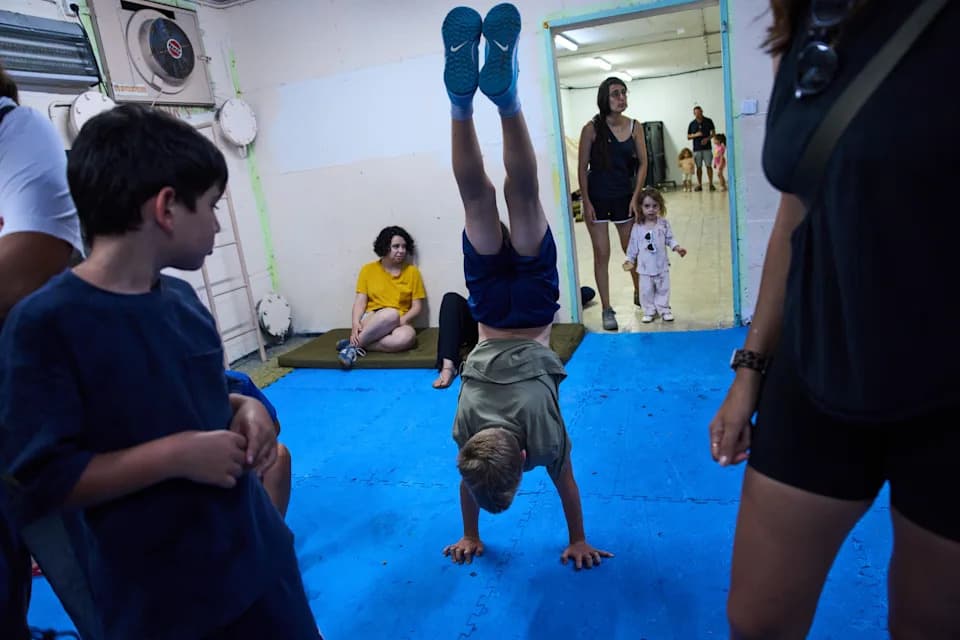
People take shelter as air raid sirens warning of incoming Iranian missiles in Ramat Gan, Israel, Monday, June 8, 2026. (AP Photo/Oded Balilty)(AP Photo/Oded Balilty)
TEL AVIV, Israel — As Israel and Iran exchanged fire on Monday in the most serious escalation since a fragile cease-fire in April, many Israelis slipped back into familiar wartime routines with a sense of resignation and exhaustion.
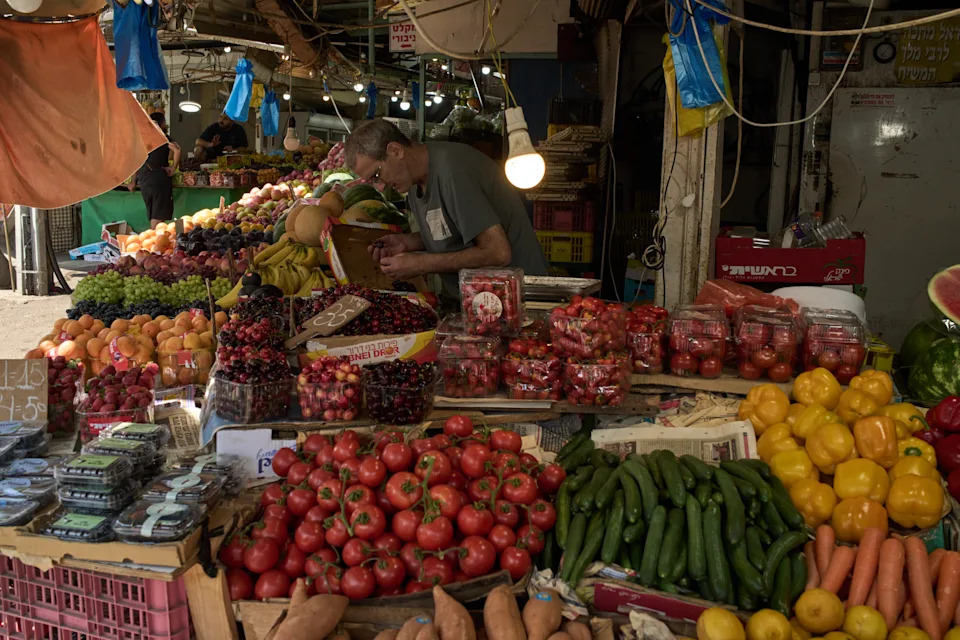
A vendor checks the fruits on his stand at a local street market following air raid sirens warning of incoming Iranian missiles in Haifa, northern Israel, Monday, June 8, 2026. (AP Photo/Leo Correa)(AP Photo/Leo Correa)
In the morning, missile alerts sent residents rushing to public shelters. By midday some stayed home while others ran errands or took children to parks, trying to preserve a measure of normal life amid renewed alarms. In Tel Aviv, the normally busy commercial and cultural hub felt subdued, with fewer customers in shops and quieter streets — a stark contrast to the rainbow Pride decorations ahead of the city’s parade scheduled for June 12.
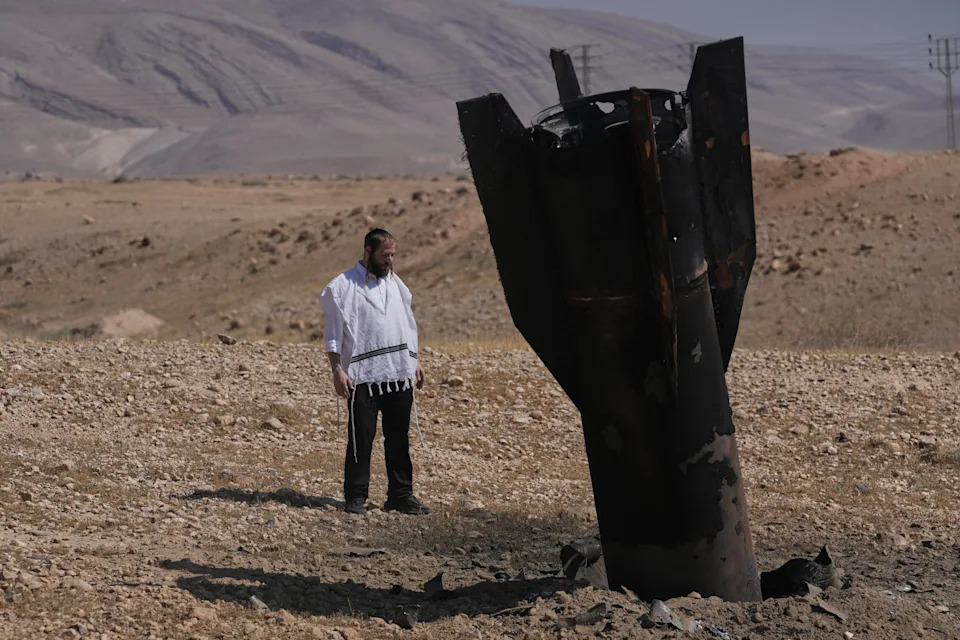
A man looks at the wreckage of an Iranian missile that landed near the West Bank city of Jericho Monday, June 8, 2026. (AP Photo/Mahmoud Illean)(AP Photo/Mahmoud Illean)
Earlier in the day, missiles were launched toward Israel from Yemen and Iran after Israeli strikes over the weekend targeted what Israel described as Hezbollah military infrastructure in the southern suburbs of Beirut. Israeli air defenses intercepted incoming threats, and authorities briefly closed schools and postponed non-urgent hospital procedures, moving some patients to protected areas.
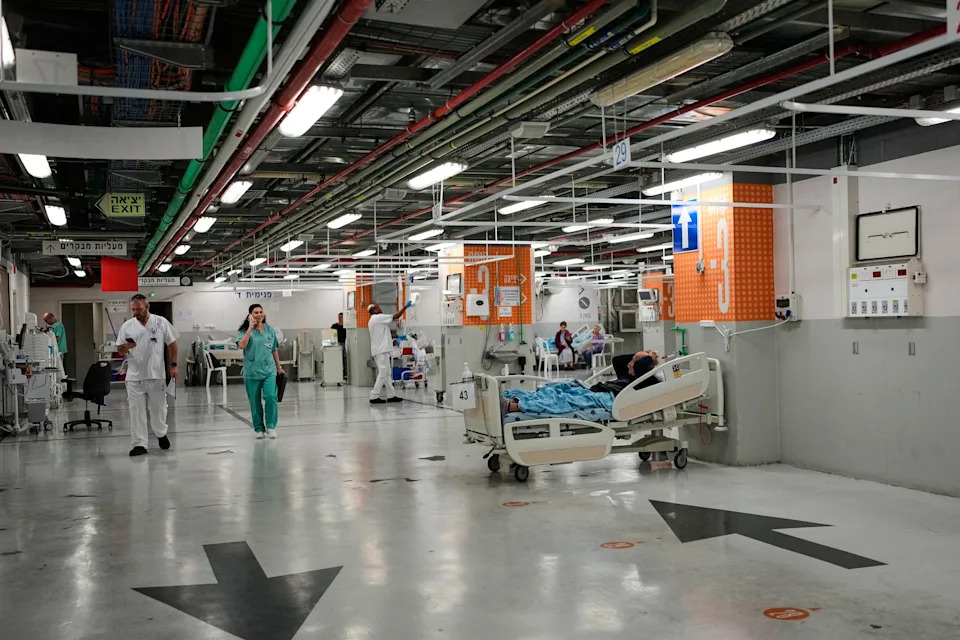
Medical staff transfer patients to a protected underground parking following an Iranian missile attack, at Ichilov Hospital in Tel Aviv, Israel, Monday, June 8, 2026. (AP Photo/Ohad Zwigenberg)(AP Photo/Ohad Zwigenberg)
After Iran said it would pause offensive operations, many of those restrictions were lifted and schools were set to reopen. By evening, Prime Minister Benjamin Netanyahu indicated that Israel’s raids had stopped but warned the country would respond “with force” to any future Iranian attacks.
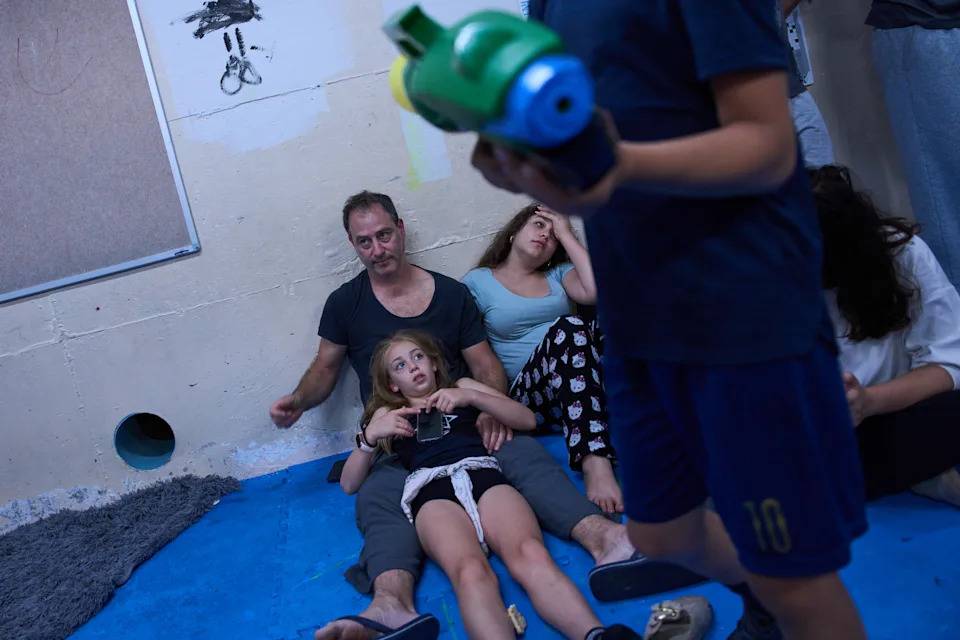
People take shelter as air raid sirens warning of incoming Iranian missiles in Ramat Gan, Israel, Monday, June 8, 2026. (AP Photo/Oded Balilty)(AP Photo/Oded Balilty)
Residents described a mix of anxiety, weariness and determination. “We’re not normalizing it,” said Liron Eldad, a mother of two, at a Tel Aviv playground next to a public bomb shelter. “But we can’t just sit there and be bitter.” Rana Raslan, a physician and mother, said: “I feel like I’m stuck in a place where you have no control over your life.”
Criticism of the government was common, with many Israelis blaming national leadership for repeated escalations. Others defended the authorities; 75-year-old market vendor Shlomi Yakobi praised Netanyahu’s resilience and noted the impact of conflict on small businesses, saying he sometimes donates surplus produce to a nearby synagogue.
The current tensions trace back to the Hamas-led attack on Oct. 7, 2023, which killed about 1,200 people in Israel and resulted in the abduction of hundreds. The subsequent Israeli offensive in Gaza has produced heavy casualties; the Gaza Health Ministry — run by Hamas — reports more than 72,700 deaths in Gaza since then. Those figures are the primary source for Gaza casualty counts but are produced by the Hamas-run health authority.
Context: The recent exchange underscores how regional escalation can quickly affect daily life in Israel, where repeated cycles of violence, air-raid sirens and political uncertainty have left many citizens tired and anxious.
Help us improve.





















