Airbus unveiled the U145, an uncrewed, cargo-optimized derivative of the H145. The aircraft — cockpit-free, with an estimated MTOW of ~8,400 lb and a payload up to 2,600 lb — targets a first flight with a safety pilot in late 2026 and service entry early next decade. Airbus intends the U145 for high-volume logistics, armed reconnaissance, disaster response and a drone-mothership role with MBDA, while retaining core H145 systems to reduce costs and speed fielding.
Airbus Reveals U145: An Uncrewed, Cargo-Focused H145 Variant Poised for First Flight in Late 2026
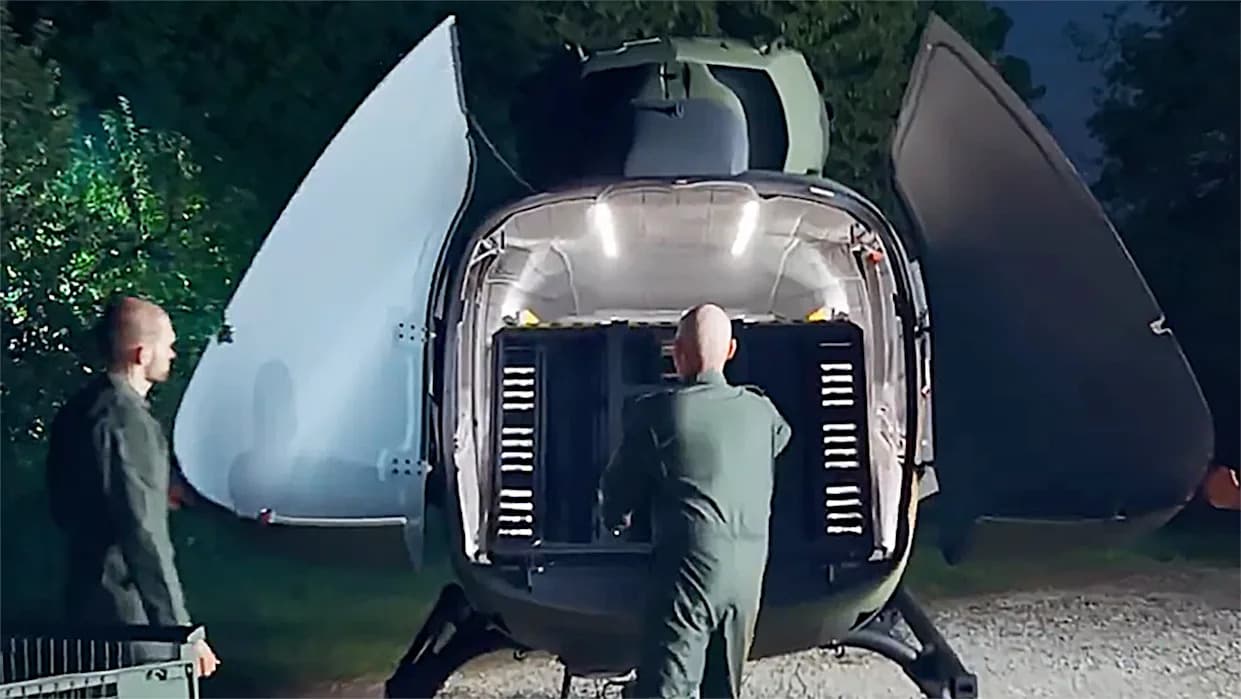
U-145 helicopter drone.
Airbus has announced the U145, an uncrewed, fully autonomous variant of its proven H145 twin-engine light helicopter, optimized for cargo and multi-mission roles. The U145 was unveiled ahead of the ILA Berlin airshow, where Airbus will display a full-scale mock-up.
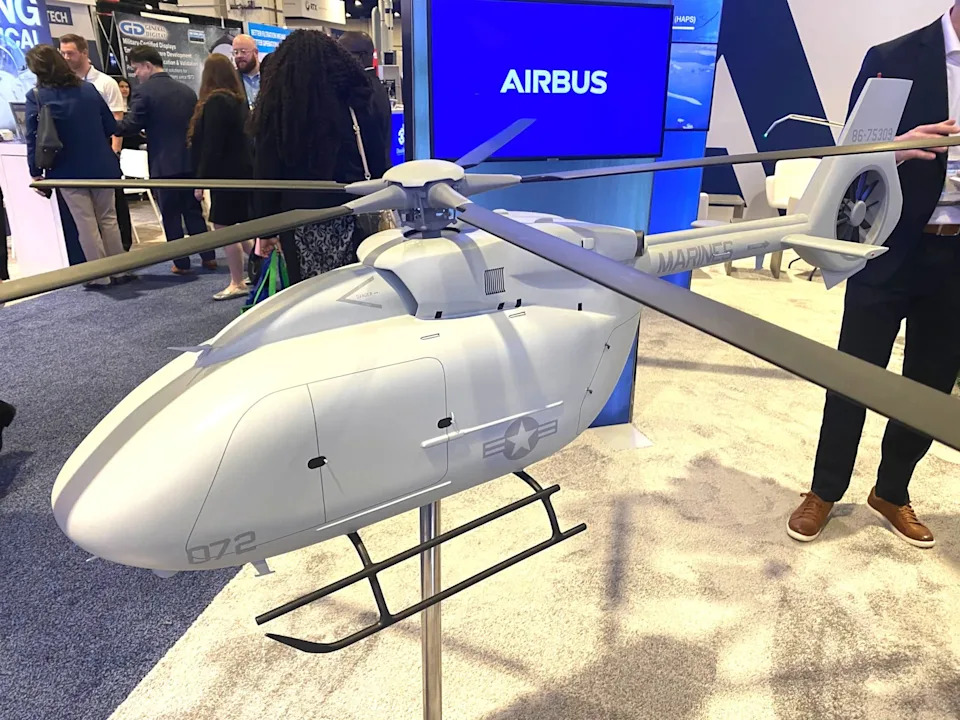
A model of the uncrewed version of the Lakota, now known as the MQ-72C, on display at the 2024 Sea Air Space convention.Jamie Hunter
Airbus says it is targeting a first flight with a safety pilot onboard in late 2026 and aims for entry into service at the start of the next decade. The company intends to partner with leading autonomy firms to develop the platform as a multi-mission unmanned aerial system (UAS) that serves both civil and military customers.
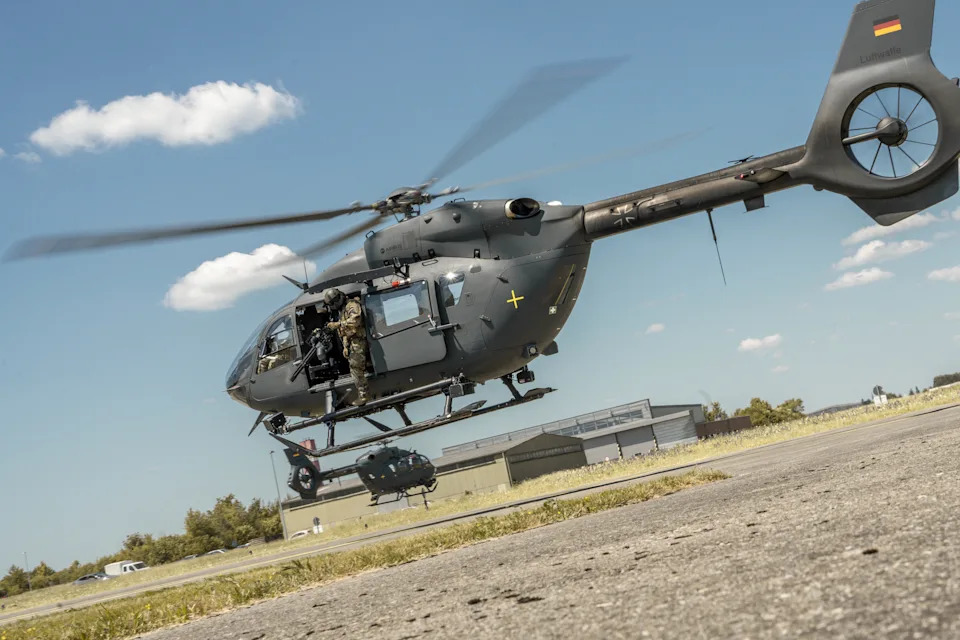
German special forces members take off from Lechfeld Air Base, Germany, aboard a pair of H145Ms during Exercise Air Defender 2023.U.S. Air National Guard photo by Staff Sgt. Joseph R. MorganTech. Sgt. Joseph Morgan
Capabilities and Design
The U145 retains the H145’s core systems while removing the cockpit to create a cargo-optimized interior. Key specifications and design highlights include:
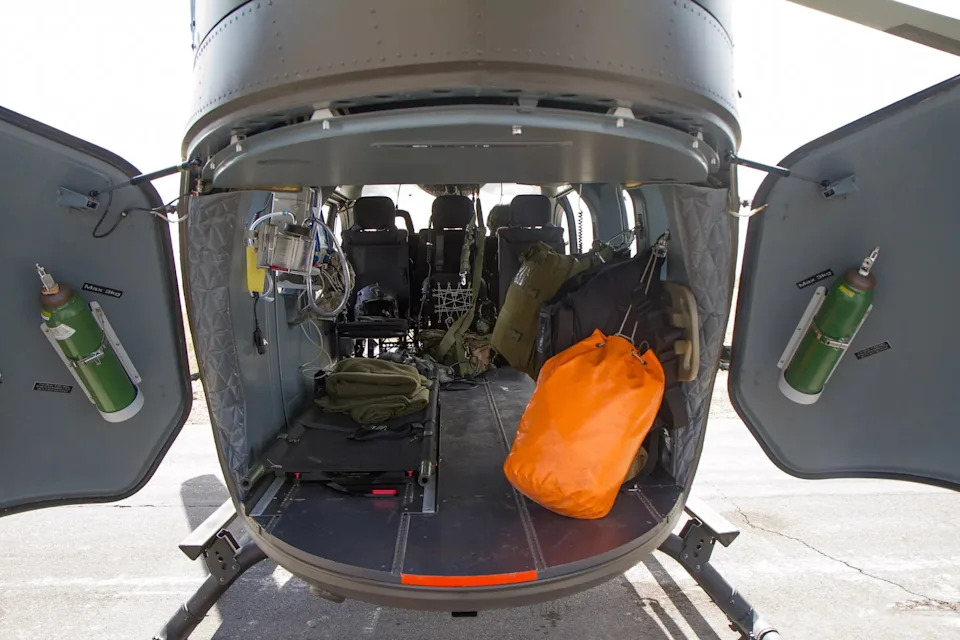
A look in through the rear of a UH-72 in a medical evacuation configuration. The H145 is essentially similar.U.S. Army National Guard
- Maximum Takeoff Weight (MTOW): ~8,400 lb
- Payload: Up to 2,600 lb
- Cargo features: clamshell nose door, loading platform, dedicated cargo floor and pass-through cargo hold (rear clamshell and side doors retained)
- Propulsion and systems: two Safran Arriel 2E engines with FADEC and a fenestron tail rotor
- Autonomy: full autonomous capability enabled by a specialized sensor suite and artificial intelligence
Roles and Concepts of Operation
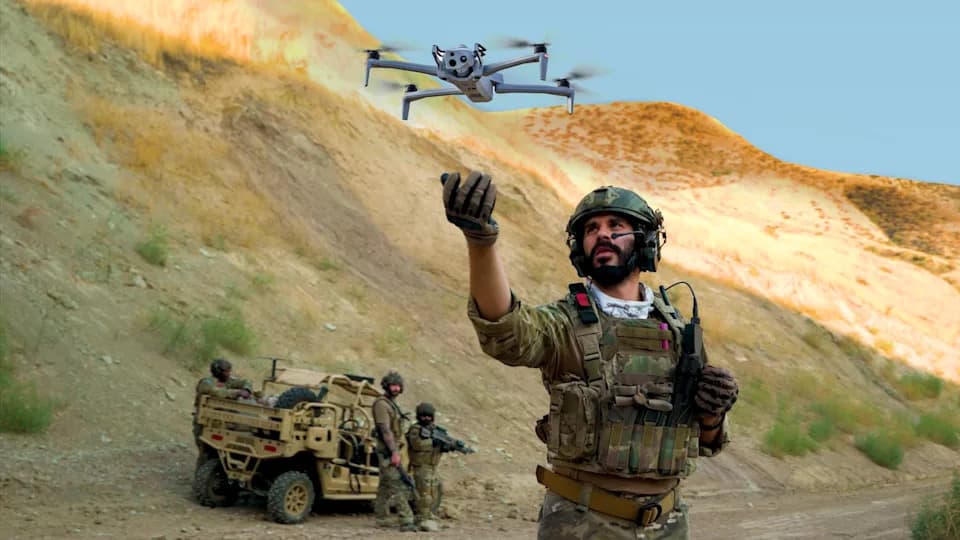
Airbus presents the U145 as a mission-agnostic platform primarily aimed at high-volume logistics and remote resupply, but also suited for armed reconnaissance, surveillance, disaster response, firefighting, and offshore logistics. The company is developing a "drone mothership" concept with MBDA to carry and deploy launched effects such as surveillance drones or loitering munitions, and envisages the U145 operating in crewed–uncrewed teaming scenarios alongside conventional helicopters.
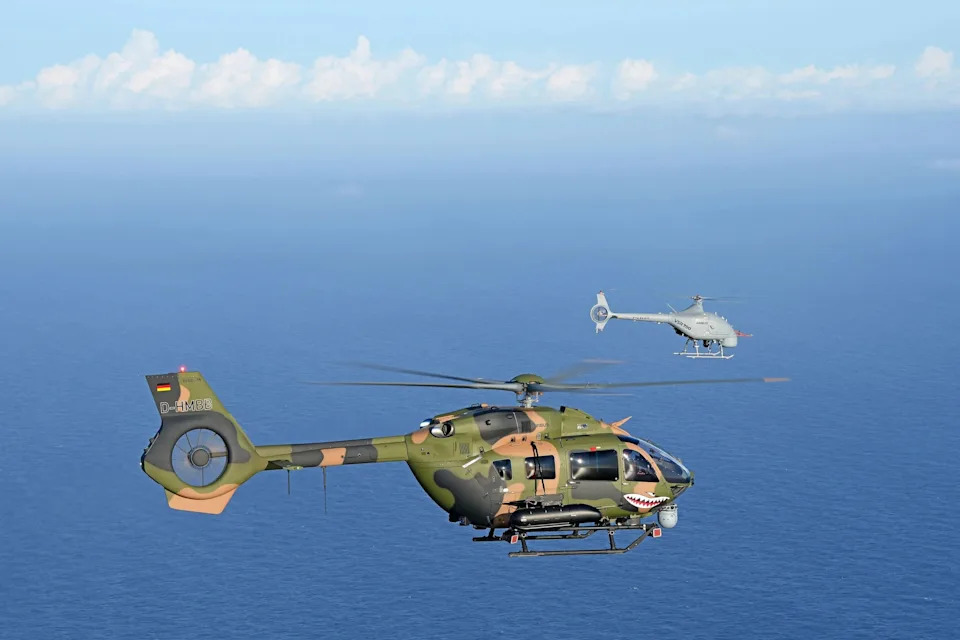
A VSR700 completes a test flight, accompanied by an H145.Airbus
Comparisons and Market Context
The U145 will enter an increasingly competitive field of autonomous rotorcraft. A comparable program is the MQ-72C (Lakota Connector / Unmanned Logistics Connector), an uncrewed variant of the UH-72 Lakota being developed by Airbus U.S. Space and Defense with partners Shield AI, L3Harris and Parry Labs. The MQ-72C is quoted with a payload of roughly 4,000 lb (including slung loads) and a cruise speed around 135 kt with ranges of at least 350 nm, so the two platforms are broadly complementary in capability and mission focus.
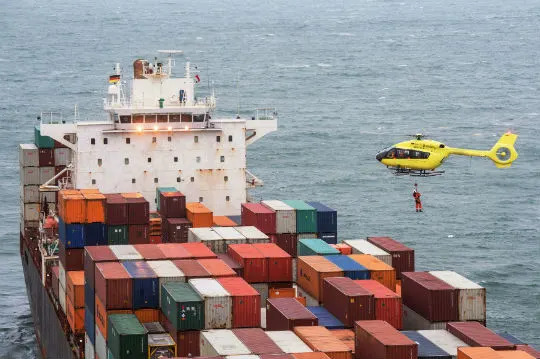
A standard H145 demonstrates its capabilities for offshore missions.Airbus
Other industry efforts include Sikorsky’s U-Hawk demonstrator (an uncrewed Black Hawk variant) and Boeing’s long-term study toward an uncrewed H-47 Chinook. Airbus’ advantage with the U145 is significant commonality with the widely fielded H145—more than 1,800 in service—which should help reduce logistics and support costs for operators.
Development Lineage and Partnerships
The U145 follows Airbus’ earlier rotary-wing UAS work such as the VSR700, itself derived from a piloted airframe. Airbus has indicated it will collaborate with autonomy specialists and defense industry partners (MBDA is already named) to expand Europe’s UAS ecosystem and deliver multi-mission capabilities.
Operational Considerations
For logistics roles, waypoint navigation and pre-planned routes provide a practical baseline for autonomous flights. Airbus also highlights the potential value of more advanced features—dynamic rerouting, real-time obstacle and threat response, and robust autonomy in contested environments—especially for military resupply missions.
Airbus notes the U145 was not developed for any single national procurement program; instead, the program aligns with broader European efforts to strengthen sovereign defense capabilities and diversify autonomous rotorcraft options globally.
Bottom line: By adapting a proven, widely used platform, Airbus aims to accelerate adoption of uncrewed rotorcraft for logistics and multi-mission tasks — but the U145 will face stiff competition from U.S. and international programs targeting similar roles.
Help us improve.