Meta removed 39 Vietnam-run Facebook pages after an AFP probe found they were publishing false cancer claims about prominent NHL figures during the Stanley Cup playoffs. The pages — which together had about 244,600 followers — posted near-identical "breaking news" alerts naming multiple stars as having stage IV glioblastoma. AFP identified factual errors, recycled claims about deceased players, and signs of AI-driven production and homoglyph use; linked sites were ad-heavy and provided no official confirmations.
Meta Pulls 39 Fake Hockey Fan Pages After AFP Reveals False Cancer Claims During Playoffs
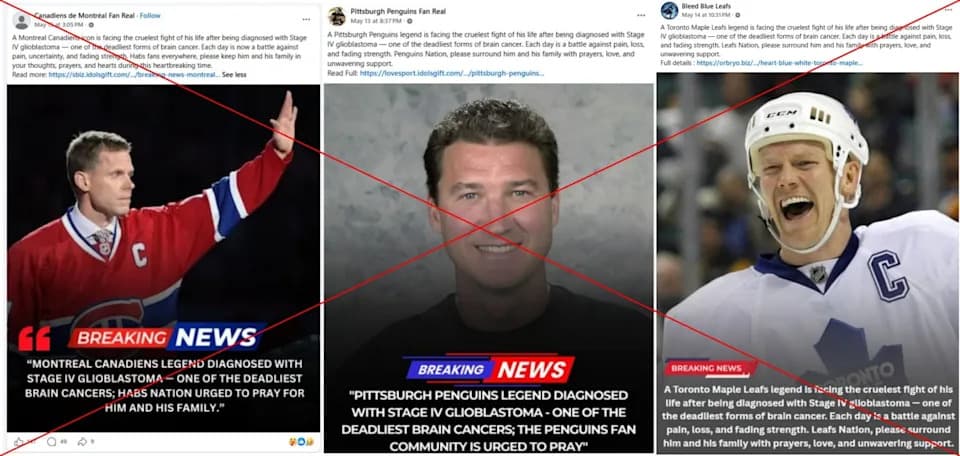
Screenshots of Facebook posts taken June 3, 2026
Meta removed 39 Facebook pages after an AFP investigation found they were spreading false medical claims about high-profile National Hockey League figures during the Stanley Cup playoffs. The pages, run from Vietnam, exploited playoff interest to generate engagement and funnel readers to advertisement-heavy websites.
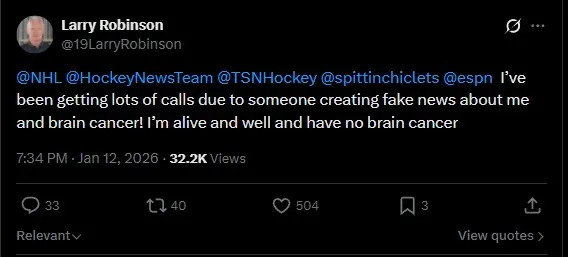
Screenshot from X taken June 2, 2026
Operating under names like "Hockey Lovers Hub" and "Montreal Hockey Pulse," the accounts published near-identical “breaking news” posts that repeatedly claimed celebrated players had been diagnosed with stage IV glioblastoma. Combined, the pages had about 244,600 followers.
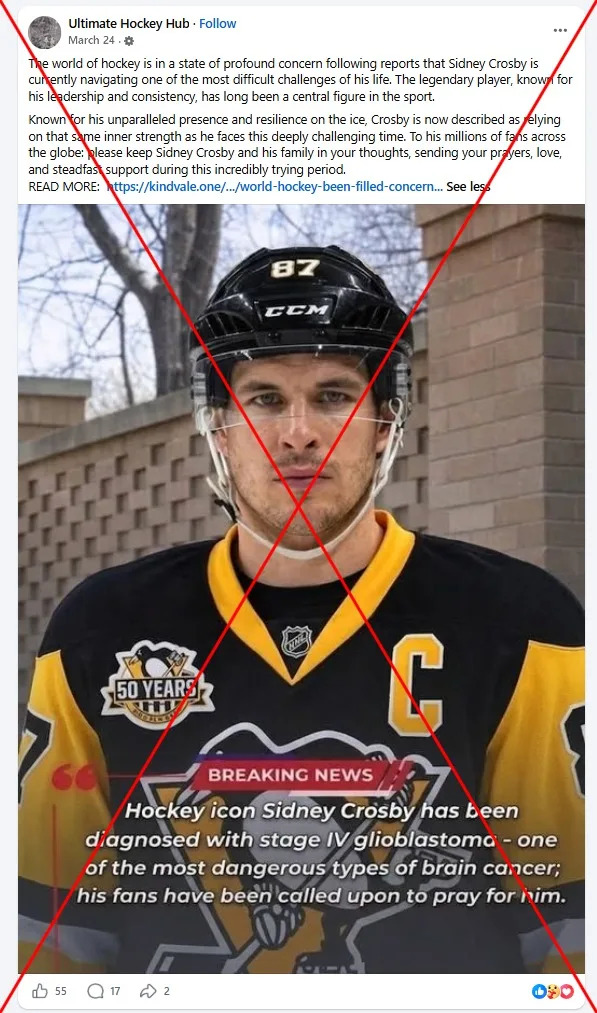
Screenshot of a Facebook post taken June 2, 2026
On June 4, Meta told AFP it had removed the pages for violating platform policies.
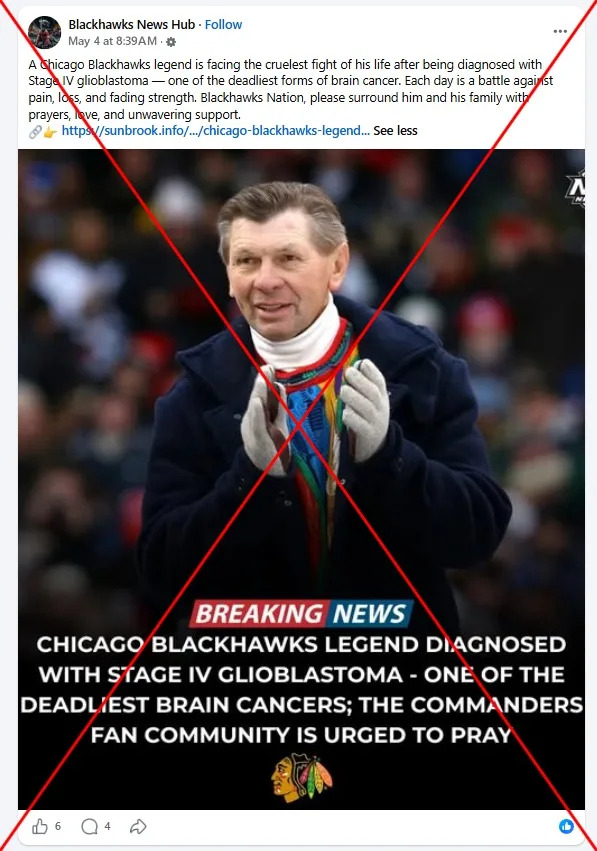
Screenshot of a Facebook post taken June 2, 2026
False Claims And Clear Red Flags
The network named many legendary current and former stars — including Mario Lemieux, Mark Messier, Wayne Gretzky, Larry Robinson, Chris Chelios, Duncan Keith, Roberto Luongo, Guy Carbonneau, Darryl Sittler, Doug Gilmour, Mikko Koivu and Mats Sundin — in identical posts claiming they had aggressive brain cancer.
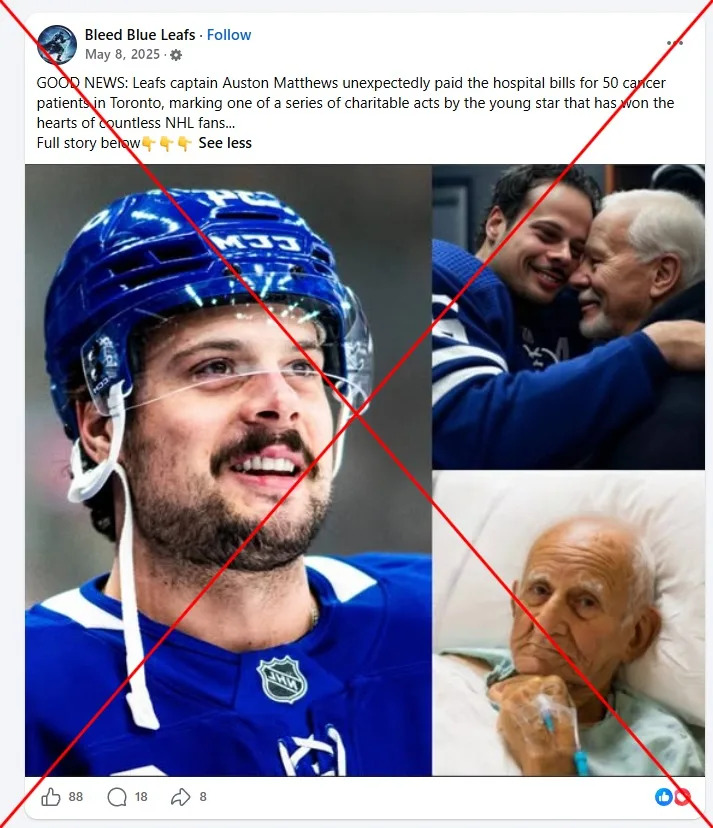
Screenshot of a Facebook post taken June 2, 2026
These claims were contradicted by readily available facts. For example, Mario Lemieux was treated for Hodgkin's lymphoma at age 27 but returned to play two months later in 1993. Several retired players have had skin cancers treated, but AFP found no evidence any of the named stars had been diagnosed with aggressive brain tumours.
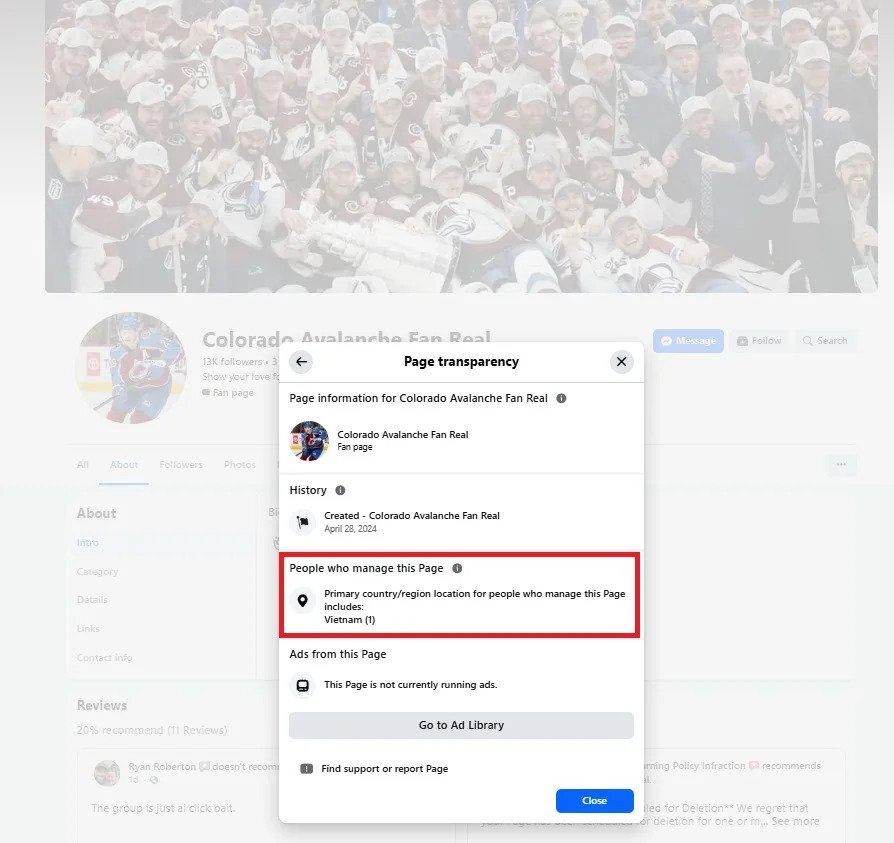
Screenshot of page transparency information captured from Facebook on June 3, 2026
"I'm alive and well and have no brain cancer," Larry Robinson wrote on X on January 12, 2026, saying he had been receiving many calls after "someone creating fake news."
Other posts contained obvious timing or factual errors: a March post alleged Pittsburgh Penguins captain Sidney Crosby had been diagnosed even while he was actively playing, and an identical May 4 claim targeted Stan Mikita despite the Blackhawks legend having died in 2018. (Mikita had previously survived tongue cancer; a postmortem exam later showed he had chronic traumatic encephalopathy.)
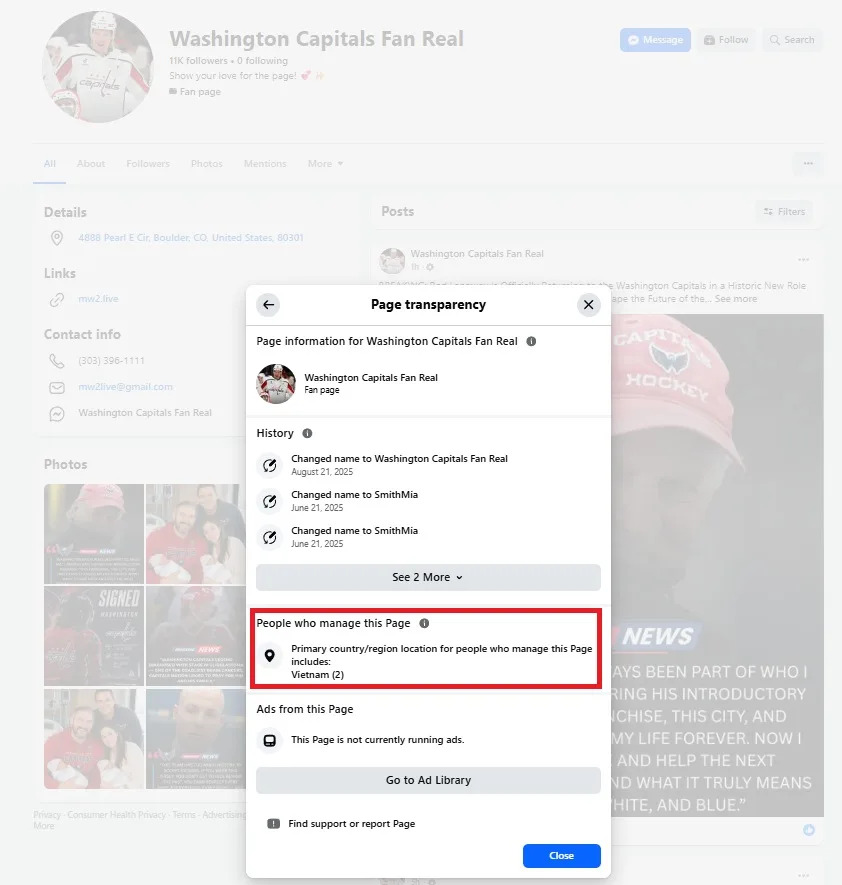
Screenshot of page transparency information captured from Facebook on June 3, 2026
Purpose And Production Clues
AFP found that all the fraudulent pages were administered from Vietnam, not from the United States or Canada where the NHL franchises and fan bases are based. The pages appear linked to content-farm operations that monetise traffic: links directed readers to ad-clogged websites with articles quoting no players, teams or other official sources.
Articles on those sites often featured awkward English phrasing and the use of homoglyphs — visually similar characters with different encodings — suggesting probable use of automated tools or artificial intelligence in content production, a pattern AFP has seen in prior fact-checks.
The pages also recycled unverified stories of player generosity, such as claims that Toronto Maple Leafs players Auston Matthews and William Nylander paid hospital bills for dozens of cancer patients and that Connor McDavid covered medical costs in Rapid City, South Dakota — claims without verifiable evidence and inconsistent with Canada’s public health coverage or McDavid’s known ties.
AFP has previously found similar fabricated sports content aimed at baseball fans. Separately, Meta removed 13 other pages after probing inauthentic tennis and swimming fan accounts that had shifted to systematically spreading misinformation about Australian politics.
How Users Can Spot Inauthentic Pages
Meta users can check a page's authenticity by viewing the Page Transparency tab, which shows the page's creation date and the locations of administrators. Signals such as atypical admin locations, repetitive near-identical posts, and links to ad-heavy sites with no official sourcing are strong indicators of inauthentic behavior.
Help us improve.