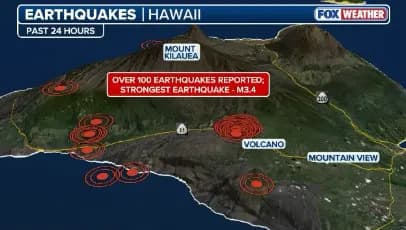
Kilauea produced its 48th lava fountain on Monday, marking the most fountaining episodes recorded during a single eruption, officials said. The volcano has been erupting intermittently since December 2024, and the USGS has released photos and video of recent surges. Scientists say the repeated activity from the same summit vents means the bursts are part of one ongoing eruption. The site’s relative accessibility has made this eruption particularly well documented.
Kilauea Sets Record With 48th Lava Fountain as Eruption Continues
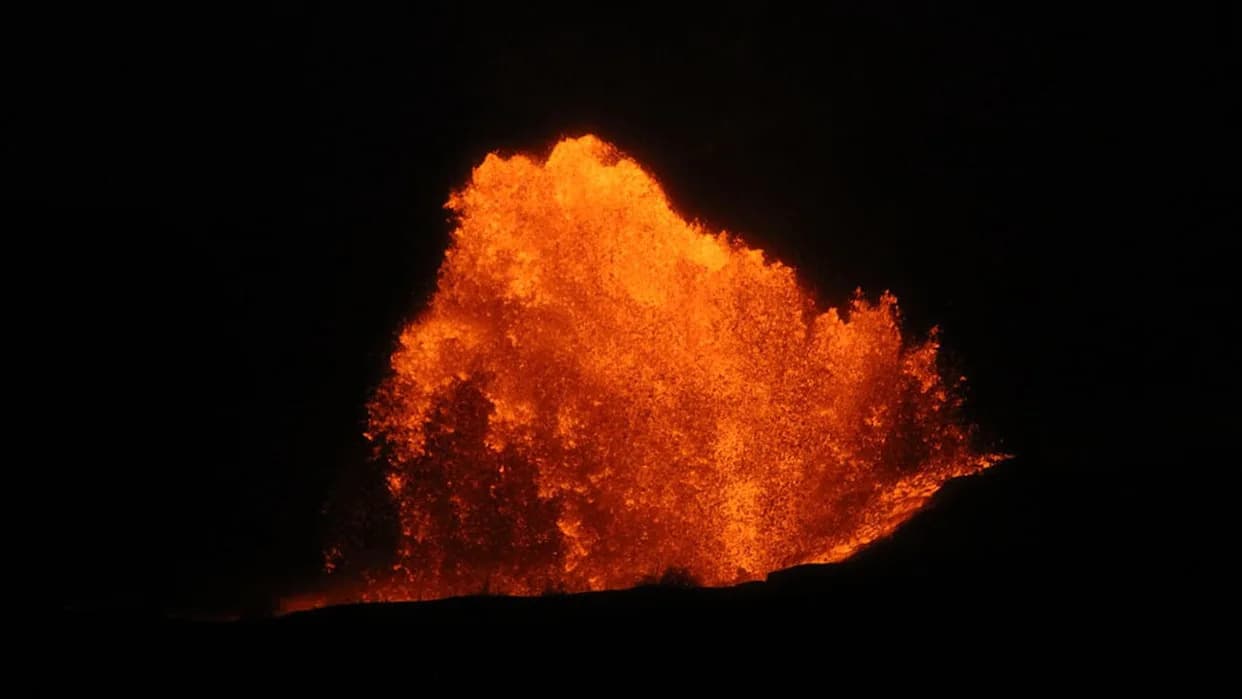
In the early morning hours of June 1, 2026, USGS Hawaiian Volcano Observatory scientists reported to Uēkahuna to watch the beginning of Kīlauea summit eruption fountaining episode 48. The fountaining episode began at 4:40 a.m. HST and by the time the scientists arrived around 5:00 a.m. HST, the Halema‘uma‘u north vent already hosted a lava fountain reaching over 330 feet (100 meters) high. USGS photo by M. Zoeller. (Courtesy: USGS)
Kilauea on Hawaii's Big Island produced its 48th lava fountain on Monday, setting a new record for the most fountaining episodes observed during a single eruption, officials from the U.S. Geological Survey and the Hawaiian Volcano Observatory said.
Big picture
The volcano has been erupting intermittently since December 2024. According to the Hawaiian Volcano Observatory, Monday's event was the 48th observed fountain in this ongoing eruption — the highest count recorded for a single Kilauea eruption. The USGS has published video and photographic records documenting the most recent surges.
What scientists say
Kilauea is one of the world's most active volcanoes, but this eruption has not produced continuous lava flows. Activity has alternated between quiet intervals and discrete fountaining episodes. Because the lava repeatedly emerges from the same summit vents, scientists consider these intermittent bursts part of a single, ongoing eruption. HVO spokesperson Katie Mulliken noted that the tally represents a milestone for the volcano.
Public access and context
Mulliken also emphasized that the current eruption site is unusually accessible to observers, which has allowed for extensive photographic and video documentation. By contrast, the previous eruption with a comparable pace lasted about three and a half years and unfolded in a far more remote area, limiting public viewing.
Sources: Associated Press, U.S. Geological Survey, Hawaiian Volcano Observatory.
Help us improve.