Summary: Field studies show African mole-rats harvest geophytes (bulbs and tubers), backfill tunnels to promote regrowth, and return later to feed—behaviors documented in both social and solitary species. Radio-tracking and excavation revealed extensive tunnel networks with nests, food stores, latrines, and transit highways. Fossil evidence places mole-rats in southern Africa since the Pleistocene (~2 million years ago), suggesting these behaviors may be long-established and raise questions about how we define "farming."
Inside Mole-Rats' Underground Farms: How These Rodents 'Cultivate' Tubers
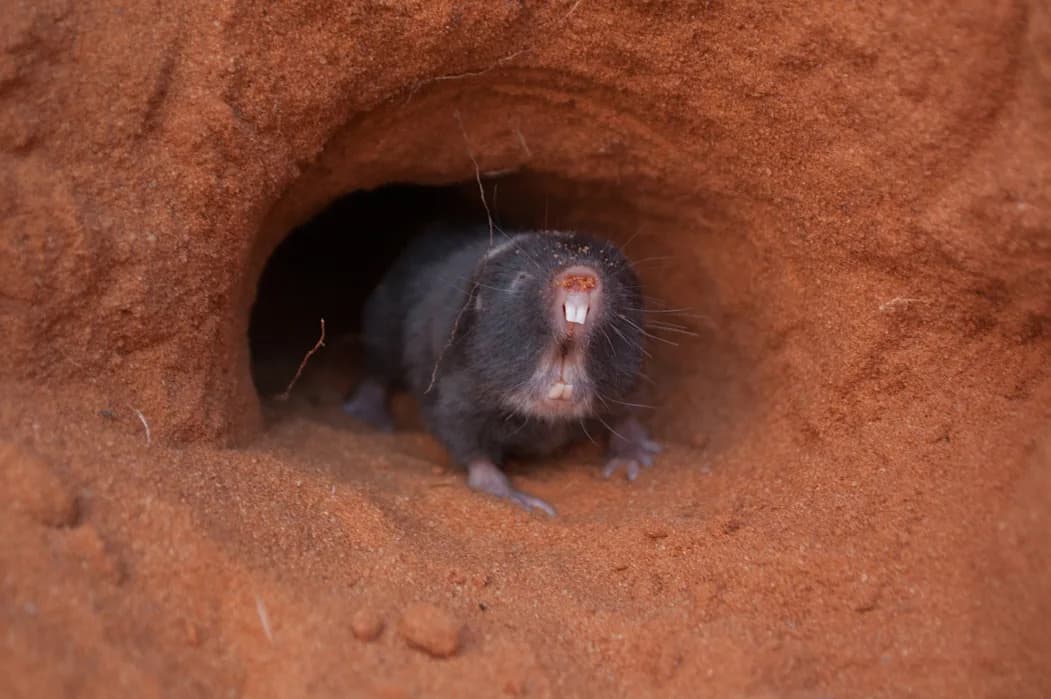
Some African mole-rats backfill their tunnels with soil to regenerate partially eaten plants—a practice that may predate humankind, and can arguably be considered farming.Dr. Kyle Finn
For decades humans were thought to be the only mammals that farmed. Recent fieldwork, however, suggests that several African mole-rat species practice a form of cultivation: harvesting geophytes (bulbs and tubers), backfilling tunnels to encourage regrowth, and returning later to feed.
What Researchers Found
Radio-tracking, targeted excavations, and repeated field observations have revealed sprawling subterranean networks built by mole-rats. In one landmark 2009 study, Radim Šumbera and his team uncovered nearly two miles of tunnels connecting family nests, food-storage chambers, latrines, and deeper transit corridors nicknamed “highways.” Many passages sit just inches below the surface; others run deeper for efficient travel.
Across multiple studies, zoologists have documented mole-rats deliberately partially consuming large tubers or bulbs, backfilling the connecting tunnel with soil, and returning later to feed on the regenerated plant. Their favored geophytes include wild ginger, fleshy cucumbers, and sweet potatoes. Evidence of this behavior has been reported in at least half a dozen academic papers and appears even in solitary species such as Heliophobius argenteocinereus.
How and Why They 'Farm'
These rodents do more than aerate and fertilize soil: they actively refill tunnels to speed plant regrowth. Mole-rats also navigate their intricate networks with surprising precision—using Earth’s magnetic field like a compass—and show an ultradian activity pattern (multiple short activity bouts per day). When a tuber is too large to finish, they may nibble, plug the opening with soil, and come back later. Over evolutionary timescales this behavior could have been selected for, even if it began as an incidental outcome of feeding.
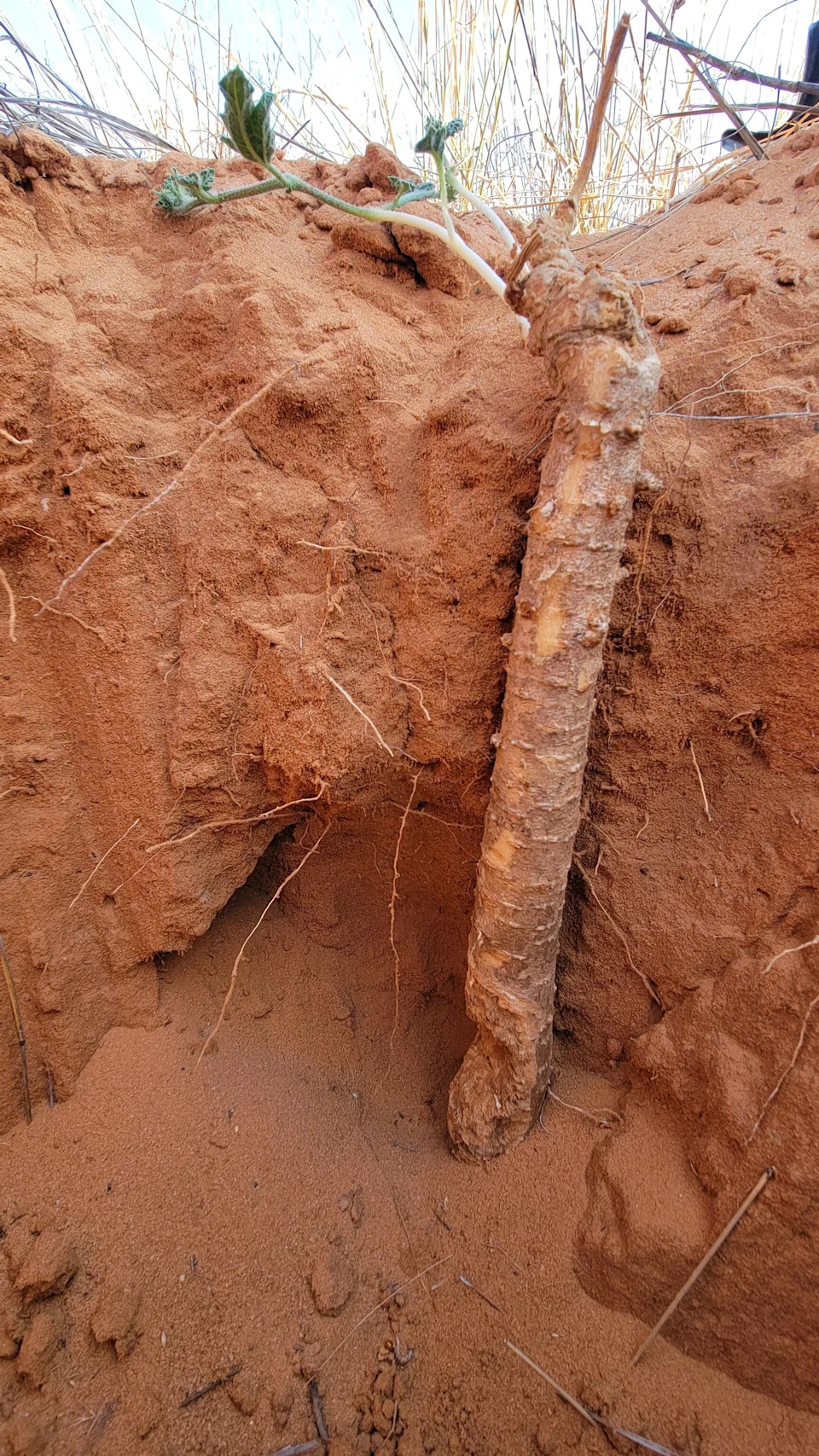
A crop regenerating in a mole-rat tunnel.Dr. Kyle Finn
“If farming is the management of crops, that’s what they’re doing,” said Francis Putz, lead author of a 2022 pocket-gopher study that first broadened the idea of mammalian farming.
Scale, Age, and Significance
Mapping efforts—like the cartographic work based on Šumbera’s field notes—have provided the first detailed visualizations of these underground communities. Fossil and genetic data show mole-rats have inhabited southern Africa since at least the Pleistocene (roughly 2 million years ago), which raises the possibility that some mole-rat lineages have practiced plant-management behaviors long before many other mammals.
Debates And Broader Context
Not everyone defines “farming” the same way. Some critics restrict the term to human-oriented agriculture, but many researchers argue that intentional or repeated actions that manage plant regrowth—regardless of species—fit a broader definition of cultivation. The discovery of similar behaviors in southeastern pocket gophers (which fertilize soil with feces) and in Aboriginal plant-management practices highlights the diversity of nonindustrial cultivation strategies across species and cultures.
Conclusion: Field evidence increasingly supports the idea that mole-rats practice a form of geophyte cultivation. Whether we call it farming or horticulture, these subterranean engineers reshape ecosystems in ways that challenge human-centered assumptions about agriculture.
Reporting and studies referenced include fieldwork by Radim Šumbera, observations by Kyle Finn, cartography by Oliver Uberti, and analysis and commentary from Francis Putz. This synthesis is based on published studies and recent field reports.
Help us improve.