Delcy Rodriguez is on a five-day visit to India to advance energy cooperation and secure larger Venezuelan crude shipments amid global supply disruptions. A longtime devotee of Sathya Sai Baba, Rodriguez plans to visit his birthplace in Puttaparthi; former Venezuelan leaders have also been publicly associated with the guru. Talks in New Delhi aim to build a long-term energy partnership and broaden economic ties, while observers note past controversies surrounding Sai Baba and the complex political context in Venezuela.
Why Venezuela’s Acting President Delcy Rodriguez Visited India: Oil Talks and a Pilgrimage to Sathya Sai Baba’s Birthplace
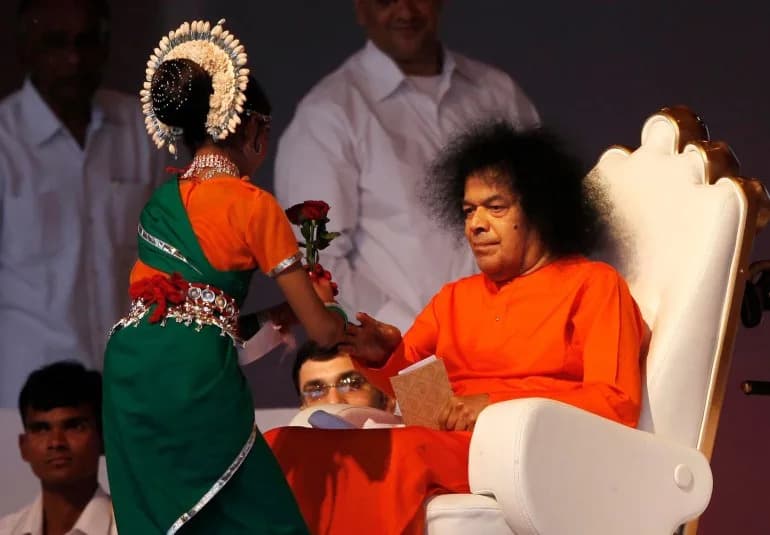
Indian spiritual leader Sathya Sai Baba, right, receives a flower from a girl at a function to meet his devotees in New Delhi on April 10, 2010 [File: Mustafa Quraishi/AP Photo]
Delcy Rodriguez is in India for a five-day visit that mixes high-stakes energy diplomacy with a personal spiritual pilgrimage. Official talks in New Delhi focus on expanding Venezuelan oil supplies to India as global energy routes are disrupted by the wider Middle East conflict. Rodriguez, a longtime devotee of Indian spiritual leader Sathya Sai Baba, is also expected to visit his birthplace in Puttaparthi, Andhra Pradesh.
Who Is Sathya Sai Baba?
Born Sathyanarayana Raju in November 1926 in Puttaparthi, Sathya Sai Baba became a prominent and controversial spiritual figure whose teachings on unity, service and love attracted a global following. He claimed in 1940, at age 14, to be the reincarnation of the 19th-century saint Shirdi Sai Baba and promoted a creed summarised by phrases such as "Love All, Serve All." Followers attribute miracles to him, including claimed materialisations and healings; critics and some investigators accused him of fraud.
Controversies and Legacy
Sathya Sai Baba's legacy is mixed. Allegations of sexual abuse were raised in several reports and documentaries, including inquiries noted by the British parliament and coverage by major media outlets. He was never criminally charged, and his organisation defended him. After his death in April 2011, reports of large sums of cash and valuables found in his quarters prompted further criticism, while his trust maintained that income and tax matters were properly handled.
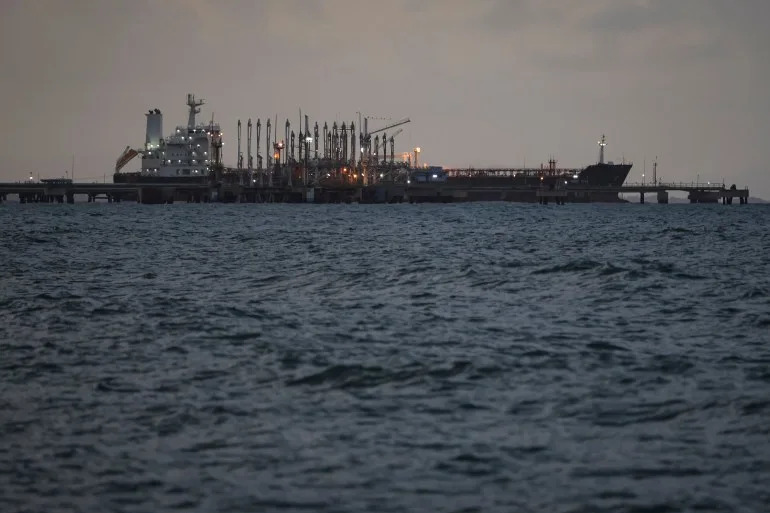
An oil tanker remains anchored at the dock during a walk around the outskirts of the ‘El Palito’ refinery on December 18, 2025 in Puerto Cabello, Venezuela. Following the removal of President Maduro, the US has allowed the sale of Venezuelan oil [File: Jesus Vargas/Getty Images]
Venezuelan Leaders and the Guru
Rodriguez is not the only Venezuelan leader linked to Sathya Sai Baba. Former president Nicolas Maduro and other officials have publicly expressed devotion to the same guru. Venezuelan media and international reports note photographs and public statements tying some Venezuelan figures to Sai Baba’s organisation; Maduro reportedly declared a national day of mourning after Sai Baba's death and praised him in glowing terms. The Sri Sathya Sai organisation has maintained a presence in Venezuela since the 1970s, including a centre in Caracas that promotes the guru’s teachings.
Energy Talks: Why India Wants Venezuelan Oil
Energy cooperation is the central objective of Rodriguez’s trip. Venezuela is estimated to hold some of the world’s largest proven oil reserves—commonly cited at around 303 billion barrels—though production has been hampered for years by sanctions and domestic challenges. Amid disruptions to Gulf supplies linked to the wider US–Israel–Iran tensions, India has moved to diversify crude sources.
According to Kpler data cited in recent reports, Venezuelan shipments to India rose sharply this month to roughly 417,000 barrels per day (bpd), up from about 283,000 bpd in April. India’s total crude imports have climbed toward roughly five million bpd amid the global supply squeeze. Venezuelan heavy, sulfur‑rich crude is well matched to some Indian refinery configurations—most notably at Reliance Industries—but only a limited number of facilities can process ultra‑heavy grades efficiently.
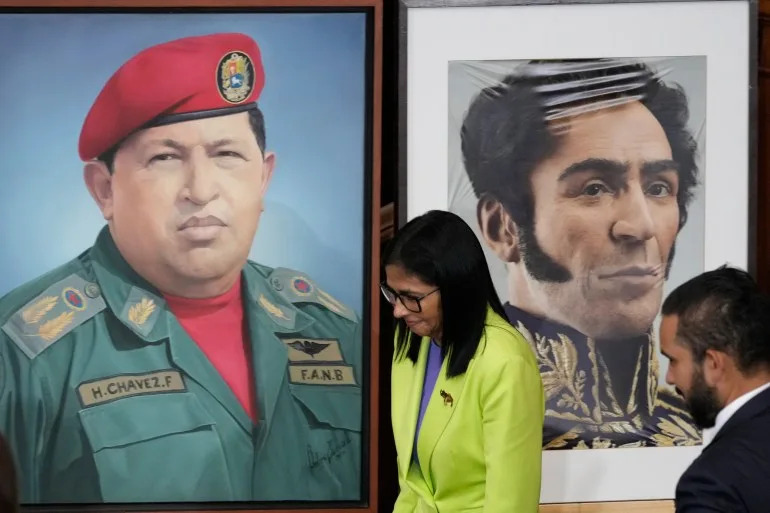
Venezuela’s acting President Rodriguez walks past a image of former President Hugo Chavez, left, and Independence hero Simon Bolivar at the National Assembly in Caracas, Venezuela on January 15, 2026 after Maduro’s abduction. The US-Venezuela ties were severely strained after Chavez nationalised the oil sector [File: Ariana Cubillos/AP Photo]
Sanctions, Agreements and Market Dynamics
U.S. sanctions on PDVSA, Venezuela’s state oil company, previously limited direct trade, but recent diplomatic and commercial arrangements have allowed some companies to transact with PDVSA again. Indian state-owned and private oil firms have long engaged with Venezuelan projects—ONGC Videsh and Indian consortia secured stakes in Orinoco Belt projects in the late 2000s and early 2010s—so renewed flows would restore a degree of previously established ties.
Indian foreign ministry officials say talks with Venezuelan representatives have emphasised forging a durable energy partnership and exploring broader cooperation in mining, agriculture, transportation and pharmaceuticals.
Context And Caveats
The political situation in Venezuela remains fluid, and some media references in earlier accounts described the transfer or detention of President Maduro in ways that are disputed or unverified. This piece avoids repeating unconfirmed claims and focuses on reported diplomatic and commercial developments, as well as the publicly visible religious affiliations of Venezuelan leaders.
Key quote: “Many times, when I was in danger, I felt Baba with me, my family and also with my country,” Rodriguez told the Sri Sathya Sai Trust’s media channel in a past interview, reflecting the personal role the guru plays in her public life.
Rodriguez’s India visit therefore combines two clear objectives: securing energy cooperation at a moment of global supply disruption, and affirming a personal spiritual connection by visiting a significant pilgrimage site linked to a long‑standing—and contested—religious movement.
Help us improve.