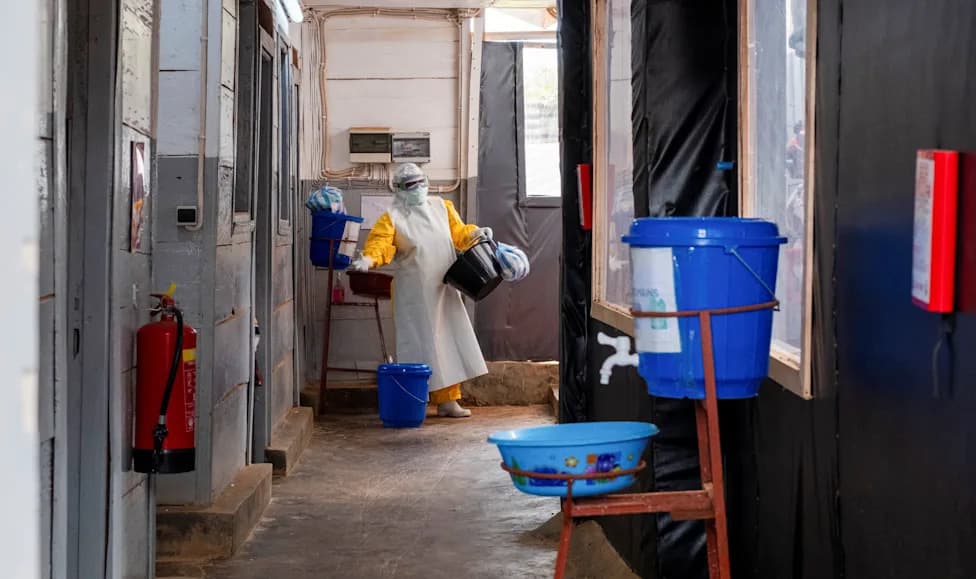
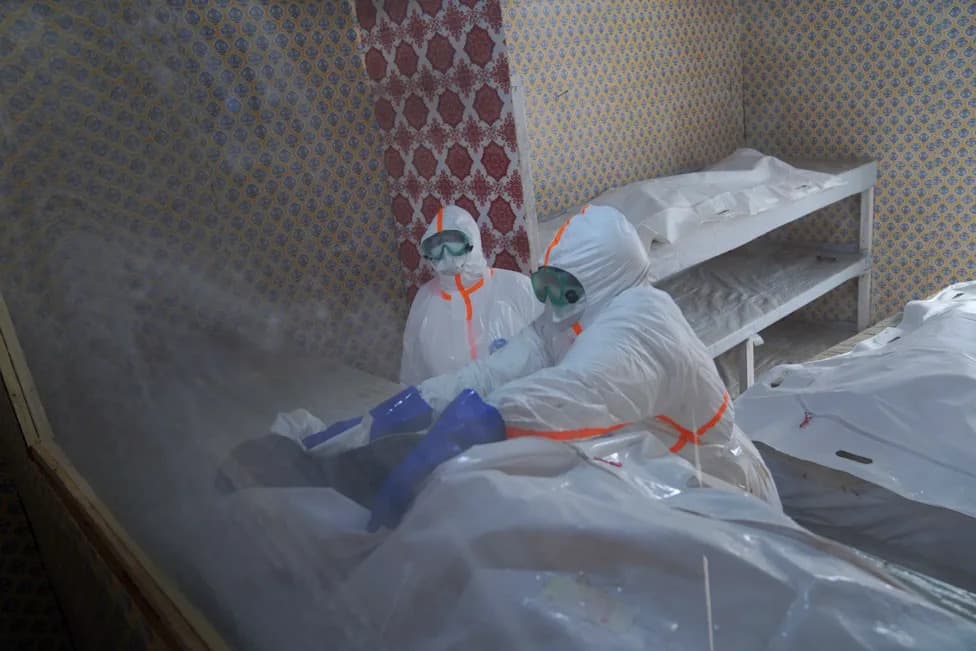
The Bundibugyo Ebola outbreak in eastern Democratic Republic of Congo is spreading rapidly and disproportionately threatens women, who are often primary caregivers and perform burial rites. Authorities have confirmed 344 cases and 60 deaths in DRC, with Uganda reporting 15 cases and one death. Shortages of personal protective equipment, delayed detection, security challenges and deep community mistrust are hampering the response and keeping many women — including pregnant patients — away from clinics, risking additional maternal and neonatal harm.
Women Bear the Brunt: Congo’s Bundibugyo Ebola Outbreak Puts Caregivers at Highest Risk
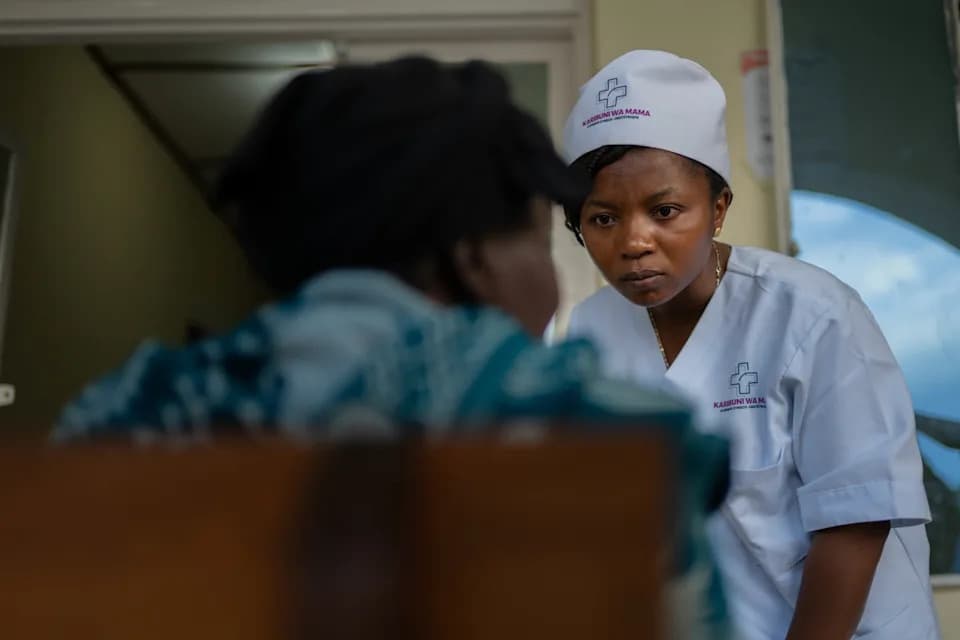
Dr Elizabeth Furaha, medical director of Karibuni wa Mama, speaks with a relative of a patient at Sofepadi Hospital in Bunia, Congo, Friday, May 29, 2026. (AP Photo/Moses Sawasawa)(AP Photo/Moses Sawasawa)
In Bunia, eastern Democratic Republic of Congo, 28-year-old Aline Kasiwa spends each day feeding her ailing mother, helping her drink and washing her clothes — all while fearing she may contract Ebola. Kasiwa says she is too afraid to take her mother to a hospital, where infections have been confirmed and health workers have also fallen ill.
With only a cheap face mask for protection, Kasiwa symbolizes the many women across eastern Congo who are almost always the first family caregivers. Health officials and aid workers say that caregiving roles, domestic labor and burial practices are concentrating risk among women during this fast-spreading outbreak.
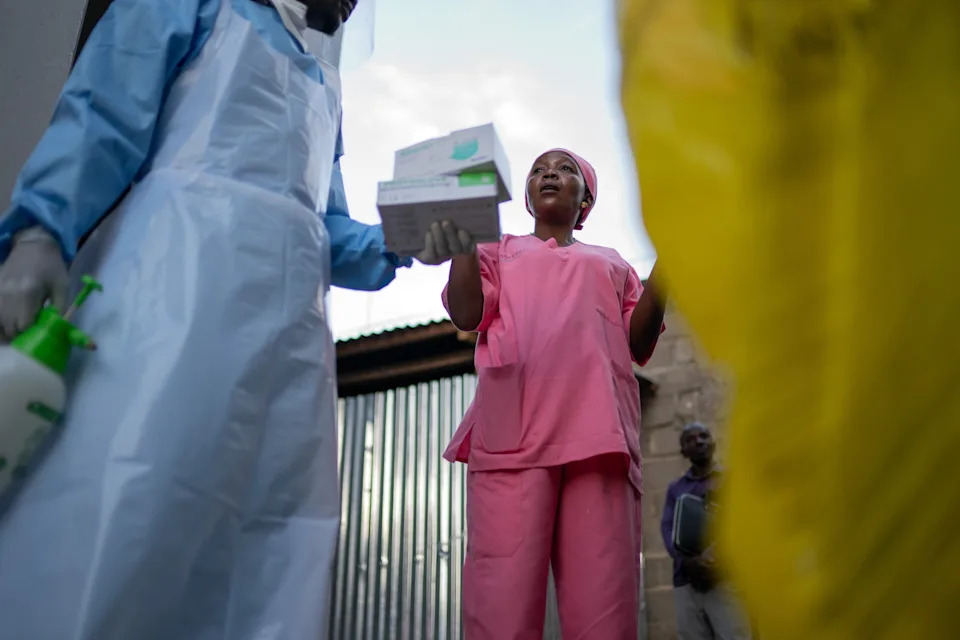
Manza Pantience, a midwife at Karibuni wa Mama, supervises health workers who collect patients' samples for Ebola testing at Sofepadi Hospital in Bunia, Congo, Friday, May 29, 2026. (AP Photo/Moses Sawasawa)(AP Photo/Moses Sawasawa)
Strain, Cases and Equipment Shortages
The outbreak is caused by the Bundibugyo strain of Ebola, for which there is no approved treatment or vaccine. Congolese authorities have confirmed 344 cases and 60 deaths so far, and Uganda has reported 15 confirmed cases including one death. Doctors and clinics report critical shortages of personal protective equipment (PPE) such as masks and gloves.
'It’s the woman who gives them a bath, it’s the woman who feeds them, and it’s the woman who’s there to wash the dirty clothes and everything else,' said Dr. Furaha Elisabeth, director of the Karibuni Wa Maman gynecology and obstetrics clinic in Bunia.
Pregnant Women and Home Care
Shortages of protective gear and fear of infection are forcing difficult choices, especially for pregnant women. 'When you see the way people die — even the nurses who treat us are dying — how can you not be afraid?' said Anny Ekyambo, a 32-year-old five months pregnant in Bunia who is avoiding clinic checkups.
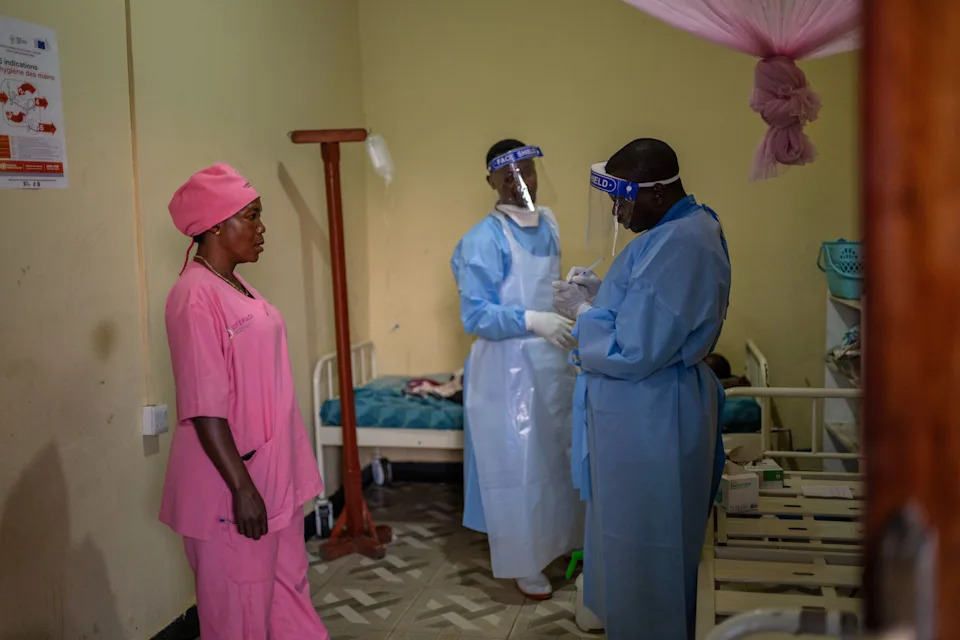
Manza Pantience, left, a midwife at Karibuni wa Mama, supervises health workers who collect patients' samples for Ebola testing at Sofepadi Hospital in Bunia, Congo, Friday, May 29, 2026. (AP Photo/Moses Sawasawa)(AP Photo/Moses Sawasawa)
UN Women and local advocates warn that pregnant women may be more exposed because they frequently seek health services, yet fear of clinics may simultaneously increase risks from missed prenatal and postnatal care.
Local Clinics Under Strain
The Karibuni Wa Maman clinic — run by Women’s Solidarity for Inclusive Peace and Development — says it has received little or no PPE despite repeated appeals. Symptomatic patients are screened locally and referred to larger treatment centers, which increases exposure risk for clinic staff and caregivers when basic safeguards are absent.
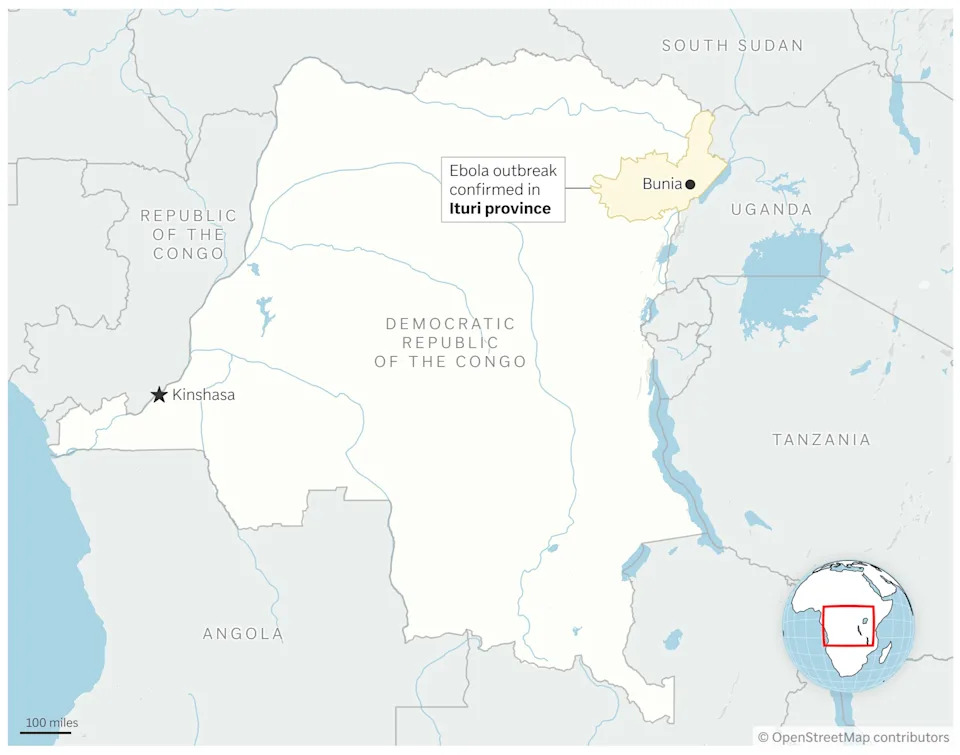
Map showing the location of Ituri province in the Democratic Republic of the Congo. (AP Digital Embed)(AP Photo/Will Jarrett)
'During previous outbreaks, many women died because they were the ones nursing sick family members,' said Julienne Lusenge, the group's president. Organizations that have begun responding, including Doctors Without Borders, warn that the virus is spreading faster than the response can contain.
Operational Challenges
The epidemic is unfolding in a region with poor road networks and under-resourced health facilities far from the capital. Ongoing violence — including attacks by the Allied Democratic Forces, a group aligned with the Islamic State, and activity by other armed groups such as the M23 — has obstructed response teams and complicated access to affected communities. Deep mistrust of outsiders after decades of conflict also keeps many people from seeking care.
Public-health officials emphasize that Ebola transmission mirrors social realities: it follows the lines of caregiving, domestic work, frontline health roles and burial practices. Without adequate PPE, timely testing for rarer strains like Bundibugyo, and community engagement, women who are primary caregivers remain among the most vulnerable.
Note: Case and death totals are those reported by Congolese authorities and partner agencies at the time of reporting and may change as investigations continue.
Help us improve.