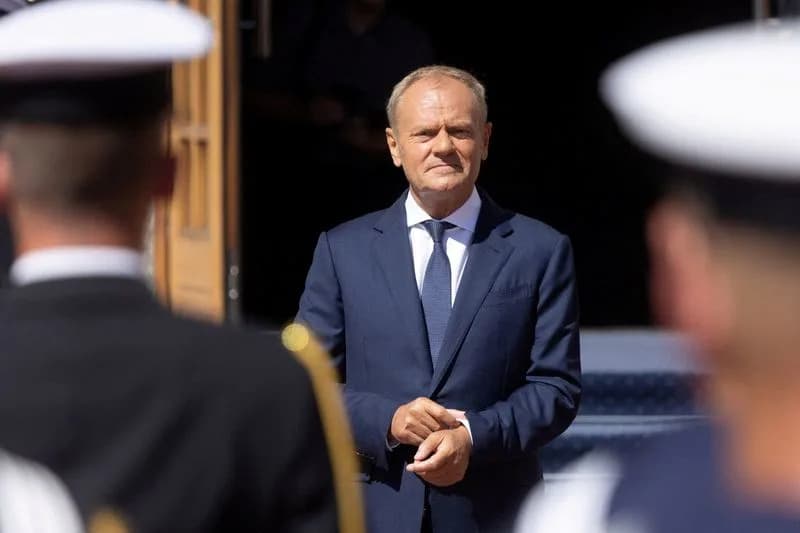
Poland and Lithuania confirmed they are participating in preliminary talks about taking on a larger role in NATO’s nuclear deterrence posture, which centers on U.S. weapons stationed in Europe. Officials emphasized there are no current plans to host warheads and said discussions are classified. Analysts propose options such as “nuclear sharing light”—certifying allied aircraft to carry U.S. warheads without stationing the weapons locally. NATO will discuss deterrence at a Brussels meeting on June 18.
Poland and Lithuania Join Early Talks To Expand Role In NATO Nuclear Deterrence
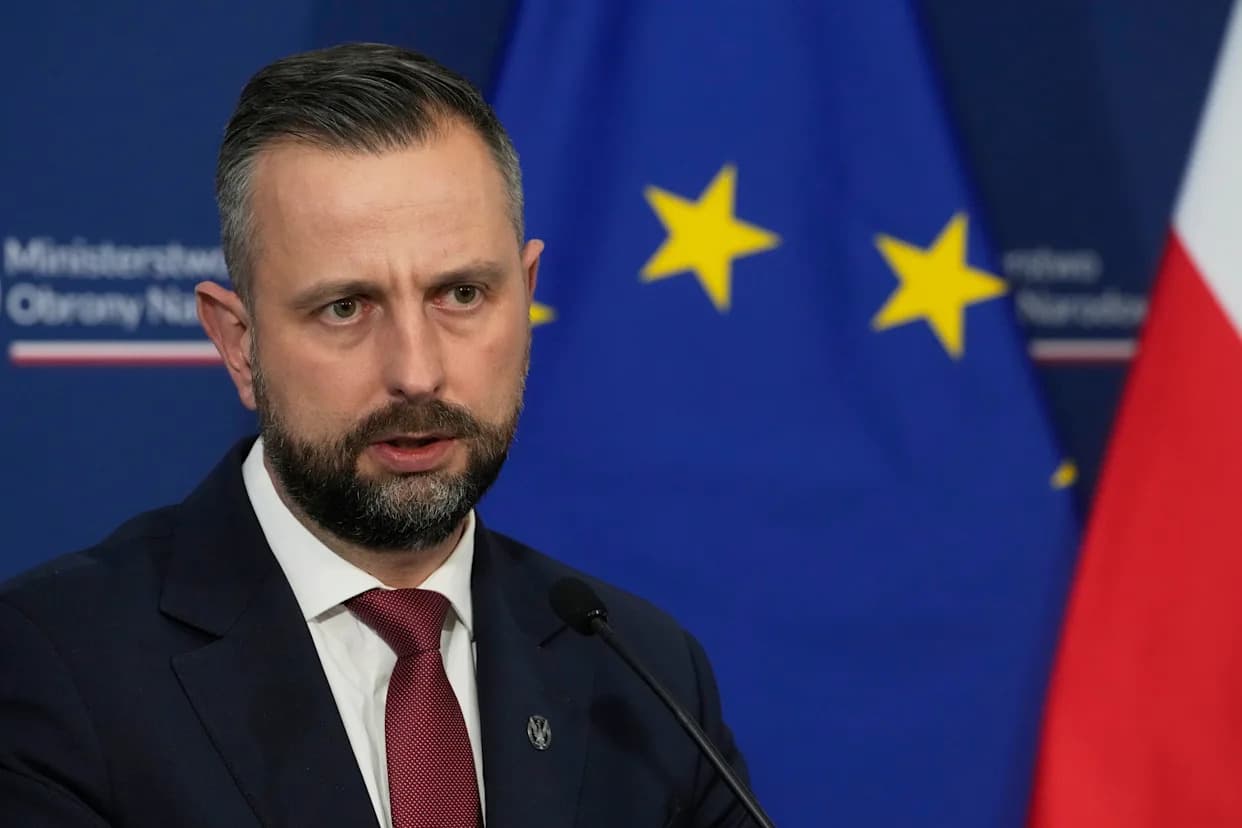
FILE - Poland's Deputy Prime Minister and Defence Minister Wladyslaw Kosiniak-Kamysz speaks during a news conference in Warsaw, Poland, Sept. 26, 2025. (AP Photo/Czarek Sokolowski, File)(AP Photo/Czarek Sokolowski)
Poland and Lithuania have confirmed they are taking part in early-stage discussions about enlarging their roles within NATO’s nuclear deterrence framework, which remains centered on U.S. nuclear weapons stationed in Europe.
What Officials Are Saying
Polish Deputy Defense Minister Paweł Zalewski said the talks aim to “create better conditions for nuclear deterrence and for Poland to play an important role in that,” while stressing Warsaw has no current plans to host nuclear warheads. “That would be an extremely serious matter, which is serious in terms of political consequences,” he added.
Lithuanian Defense Minister Robertas Kaunas likewise confirmed discussions are under way but said details are classified. “Discussions are indeed taking place. I do not want to go into details at this point as they are classified, but discussions are ongoing, and Lithuania is certainly not standing on the sidelines,” he told reporters.
Context And Options
The ministers were responding after the Financial Times reported, citing anonymous sources, that the United States has signaled openness to deploying elements of its nuclear arsenal in additional European countries beyond the six currently thought to host U.S. nuclear weapons.
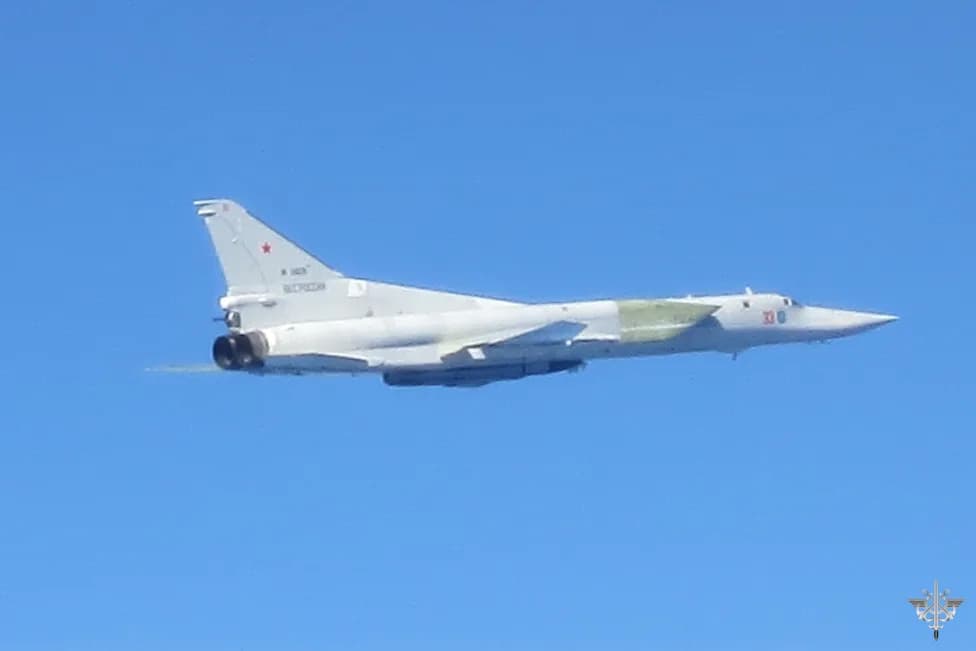
The FT said Poland and the Baltic states — Estonia, Latvia and Lithuania — have expressed interest in hosting bases for U.S. dual-capable aircraft (aircraft able to deliver either conventional or nuclear weapons).
A Pentagon official declined public comment; another Defense Department official, speaking on background, said the U.S. and NATO “continuously assess the security environment” and work to maintain effective deterrents.
Existing Arrangements And Alternatives
NATO’s nuclear-sharing arrangement currently involves U.S. nuclear weapons deployed in Belgium, Germany, Italy, the Netherlands, Turkey and Britain, together with dual-capable aircraft operated by the U.S. and partner nations. The U.S. retains full control of its weapons.
Analysts caution that stationing warheads in eastern NATO states could be seen as highly provocative by Russia. Artur Kacprzyk, a nuclear deterrence analyst at the Polish Institute of International Affairs, described a compromise he called “nuclear sharing light” — for example, certifying Polish aircraft to carry U.S. nuclear weapons without permanently stationing the warheads in Poland, allowing eastern-based aircraft to act as a backup if Western platforms were degraded.
European Cooperation And NATO Deliberations
Earlier this year Poland agreed to join a French initiative to coordinate France’s nuclear deterrence capabilities with European partners. France remains the only EU member with its own nuclear arsenal following Britain’s exit from the bloc.
Polish Defense Minister Władysław Kosiniak-Kamysz said NATO will address nuclear deterrence at a meeting in Brussels on June 18, and that both the French initiative and U.S. programs will be part of the discussion.
Expert View
“Expanding nuclear cooperation could help the U.S. offset reductions in conventional forces, but it cannot fully substitute for a forward conventional presence,” Kacprzyk said. “You need coherent signals at all levels of deterrence.”
Reporting: Zosia Wanat McNeil in Brussels and John Toropin in Washington. Sylvie Corbet contributed from Paris.
Help us improve.