Iran’s water crisis — long driven by drought, climate change and mismanagement — has been aggravated by wartime damage to desalination plants and pipelines. Key reservoirs and rivers are critically low (Amir Kabir Dam at about 8% capacity; 19 major dams dry by November 2025), and attacks have disrupted supplies to villages on Qeshm Island. Reconstruction needs and environmental damage from the war risk deepening shortages, while authorities implement emergency measures such as cloud seeding and penalties for excessive use.
How War Has Deepened Iran’s Water Crisis: Dams Dry, Desalination Hit and Reconstruction Risks
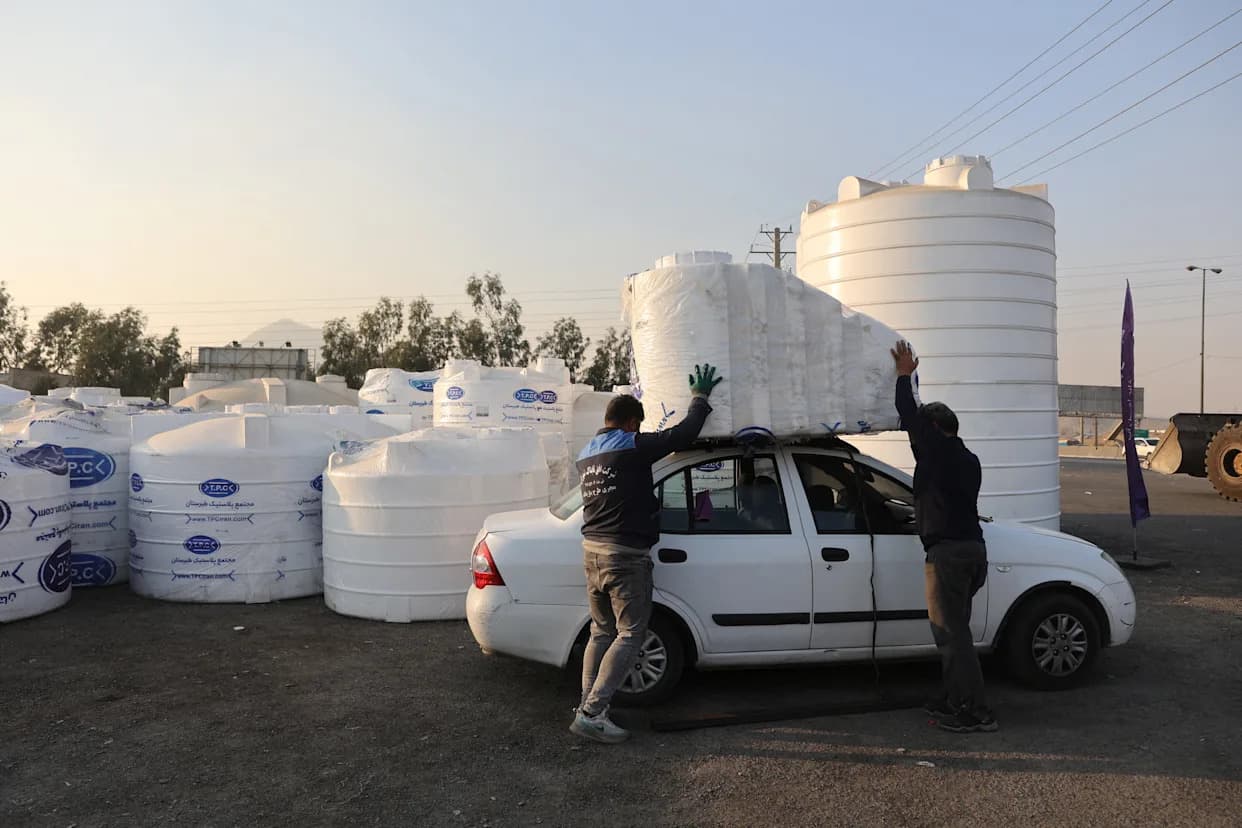
People shop for water storage tanks following a drought crisis in Tehran, Iran, November 10, 2025 [Majid Asgaripour/WANA via Reuters]
As Iran negotiates an end to a three-month war, the country faces a deepening water emergency that has largely been overshadowed by the conflict. Years of drought and chronic mismanagement left key supplies strained, and recent strikes on civilian infrastructure have compounded shortages.
What Is Happening
Reservoirs, rivers and groundwater that sustain Iran’s cities and farms are being depleted after decades of unsustainable water use. The World Resources Institute’s Aqueduct tool classifies Iran’s baseline water stress as "extremely high," meaning the country uses more than 80% of its renewable water in an average year.
In November 2025 Iran experienced its worst shortages in decades after a fifth consecutive dry year. Reports said Tehran’s Amir Kabir Dam was at roughly 8% capacity and that 19 major dams across the country had run dry. Those shortages contributed to protests in late 2025 and early 2026 over living conditions and rising costs.
Root Causes
Experts point to a combination of factors: persistent drought driven by climate change, higher evaporation rates, inefficient agricultural choices, subsidised water prices, excessive groundwater drilling and a proliferation of dams that have not always been managed sustainably. Since the 1979 revolution, a national focus on agricultural self-sufficiency — intensified by international sanctions — has encouraged cultivation of water-intensive crops in unsuitable regions and limited investment in modern water infrastructure.
How the War Has Made Things Worse
Officials say attacks linked to the US‑Israel conflict have damaged desalination plants, pipelines and other civilian water systems. On March 7, Iranian Foreign Minister Abbas Araghchi said a desalination plant on Qeshm Island in the Strait of Hormuz was bombed, disrupting supplies to about 30 villages. The full environmental and infrastructure impacts of the fighting remain under assessment while the conflict continues.
The war has also produced acute environmental damage: burning oil and gas facilities and destroyed buildings released greenhouse gases. A LiveScience analysis estimated nearly 5.6 million tonnes of CO2-equivalent emissions from infrastructure destruction between February 28 and March 14, 2026.
Government Response and Risks Ahead
With government attention focused on security and reconstruction, experts warn that rebuilding after strikes could divert funding, engineering capacity and materials away from long-term water management. In response to the immediate shortages, authorities began emergency measures in November, including cloud seeding to try to induce rainfall and announcements of penalties for excessive household and business water use.
President Masoud Pezeshkian has publicly urged bans on unauthorised well drilling, tighter groundwater controls and the adoption of modern agricultural and production techniques. He called for increased investment in advanced greenhouse cultivation, hydroponics, aeroponics and other water-efficient systems, according to state media.
Outlook
Iran faces a difficult mix of short-term shocks from war damage and long-term structural challenges. Addressing the crisis will require coordinated water pricing reforms, agricultural shifts toward low-water crops and investments in resilient infrastructure — actions made harder by sanctions and competing reconstruction priorities. The situation remains dynamic and the humanitarian and environmental stakes are high.
Help us improve.