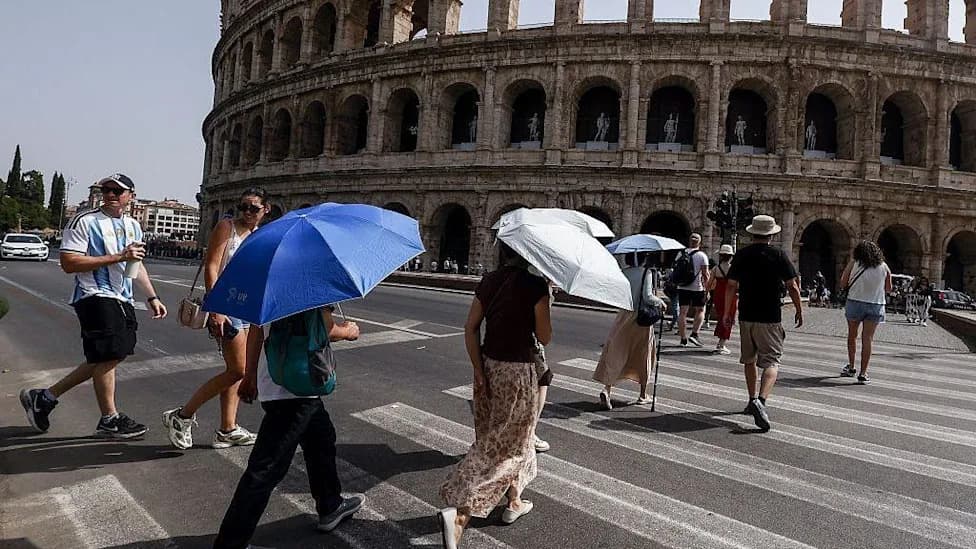
The United Nations warns global temperatures are likely to break key records within the next five years, with a high chance of a new hottest year. There is about a 75% chance the 2026–2030 average will exceed 1.5°C above preindustrial levels, a 91% probability that at least one year will cross that threshold, and an 86% chance one year will surpass 2024. The WMO foresees annual temperatures of 1.3°C–1.9°C above preindustrial averages, an Arctic warming of nearly 3°C by 2030, and a likely strong El Niño that could last into 2028.
UN Warns Next Five Years Likely To Break Global Heat Records — Arctic Could Warm Nearly 3°C
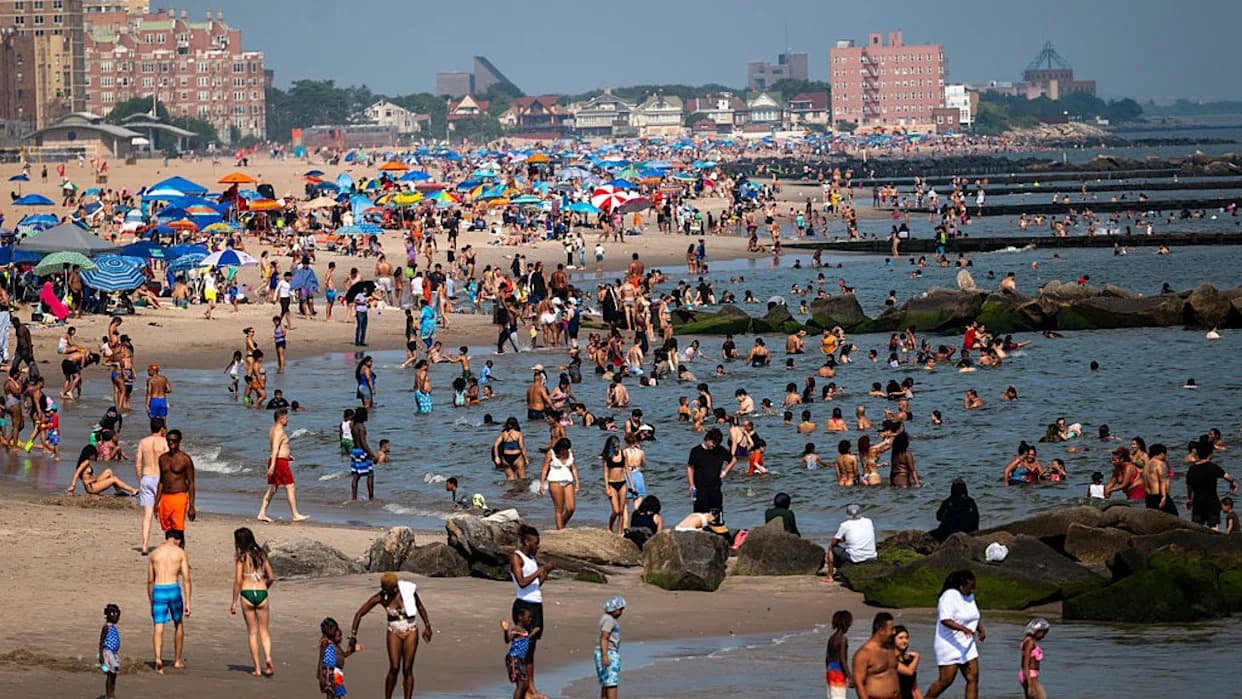
FILE-People try to stay cool at the beach at Coney Island in Brooklyn as the region experiences another heatwave on July 30, 2025 in New York City. (Photo by Spencer Platt/Getty Images)
The United Nations has released short-term climate projections indicating the planet is likely to breach key temperature thresholds within the next five years and may record a new hottest year on record.
Key Projections
The U.N. climate agency and the U.K. Met Office estimate there is about a 75% chance that the average global temperature for 2026–2030 will exceed 1.5°C above preindustrial levels. The World Meteorological Organization (WMO) further reports a 91% probability that at least one of the next five years will pass the 1.5°C mark and an 86% chance that one of those years will surpass the record set in 2024.
What Temperatures Are Expected?
The WMO projects each year between now and 2030 will fall between 1.3°C and 1.9°C above preindustrial averages. If the 2026–2030 five-year average exceeds 1.5°C, it would imply the planet warmed by roughly 0.25°C in the past decade — a faster rate than the previous ten years.
Regional Risks And Drivers
UN experts warn the Arctic could warm by almost 3°C between now and 2030, accelerating ice melt and related impacts. They also highlight a heightened risk of severe drought and potential wildfires in the Amazon, threatening a crucial carbon sink.
Most short-term forecasts point to a strong El Niño — a natural warming of parts of the central Pacific — which may form soon and could extend into 2028, further increasing global temperatures.
Why This Matters
These short-term projections do not change long-term climate commitments, but they signal increased near-term risks to ecosystems, agriculture, and communities. Crossing 1.5°C in a multi-year average would be a major milestone with practical implications for weather extremes, sea level rise, and biodiversity.
Source
This report and probabilities are summarized from Associated Press coverage of the World Meteorological Organization and the U.N. climate agency, with reporting from Washington, D.C.
Help us improve.