The Deir el-Balah cemetery was established in October 2025 as an emergency site for unidentified bodies recovered during the Israel–Hamas conflict. Many remains arrive severely disfigured or decomposed, making visual identification nearly impossible. Gaza lacks operational DNA laboratories, limiting forensic identification despite ICRC support for storage and burial operations. Authorities and families are calling for international assistance to enable DNA testing or transfer of samples abroad so unknown victims can be named.
Bodies With Numbers: Inside Deir el-Balah — Gaza’s Cemetery For The Missing
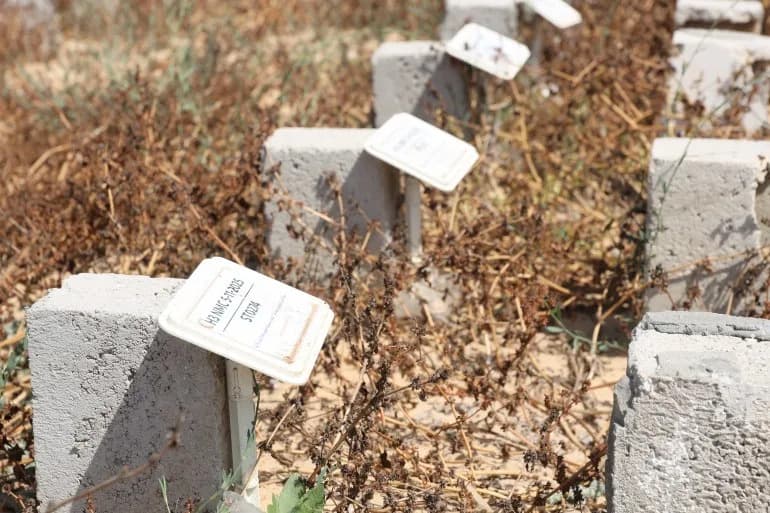
Officials in Deir el-Balah put identification codes on unknown graves [Abdelhakim Abu Riash/Al Jazeera]
Deir el-Balah, Gaza Strip — Beside an unmarked, numbered plot, Lina al-Assi arranges flowers and pours water over the soil, convinced the grave holds her missing husband.
Her husband, Jihad Tafesh, disappeared at the start of the October 2023 conflict between Israel and Hamas. Lina, 26, is among the many relatives who visit a site known locally as the “cemetery of the missing” — a burial ground created in October 2025 to hold unidentified remains recovered across Gaza.
Searching For Answers
Lina says she lost contact with Jihad on 8 October 2023, the second day of intense fighting. Under heavy bombardment she fled Gaza City’s Shujayea neighbourhood with their two children, while he stayed behind with his parents. “The shelling was everywhere and the area where my house was located was very dangerous and close to the border,” she recalls. Over the following days she searched during brief lulls in the strikes but never found him.
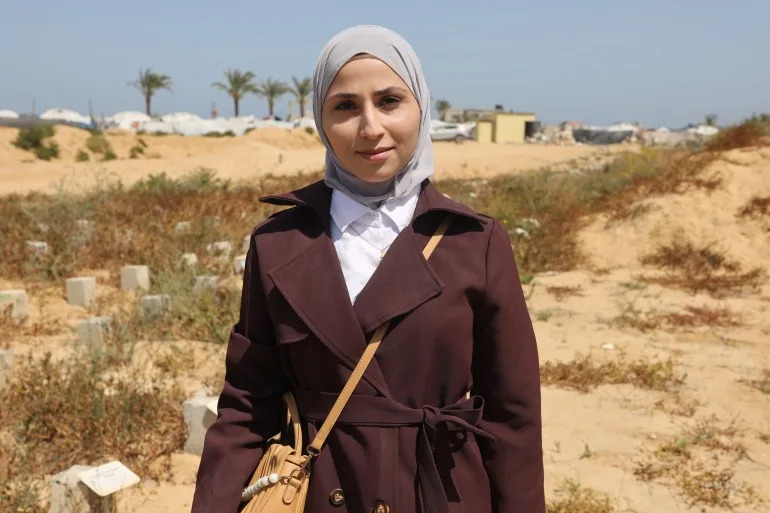
Lina al-Assi’s husband Jihad disappeared on the second day of Israel’s genocidal war on Gaza [Abdelhakim Abu Riash/Al Jazeera]
“We contacted the Red Cross to check his fate, but with no result. We did not know whether he was detained, injured, or killed. Nothing.” — Lina al-Assi
When a partial ceasefire was negotiated in October 2025, phased returns of Palestinian mortal remains were arranged through the International Committee of the Red Cross (ICRC), and dozens of bodies were transferred to hospitals in Gaza for identification. By 5 November, 285 bodies had been received at the Nasser Medical Complex in Khan Younis as part of staged returns.
Why So Many Unidentified?
Authorities and aid organisations say identification has been hampered by the condition of many remains. “The main challenge is not only the number of bodies, but their condition, as many arrive severely decomposed or disfigured, making visual identification nearly impossible,” says Ziad Obaid, head of the cemeteries department at Gaza’s Ministry of Religious Endowments.
Bodies recovered under rubble, from streets, or from hastily used burial sites at hospitals and schools have been moved to main hospitals where forensic teams photograph remains, collect samples, preserve belongings and assign each case a unique code. Remains are typically displayed in hospital rooms for six to ten days to allow families to attempt recognition before burial in the numbered cemetery when no identification is made.
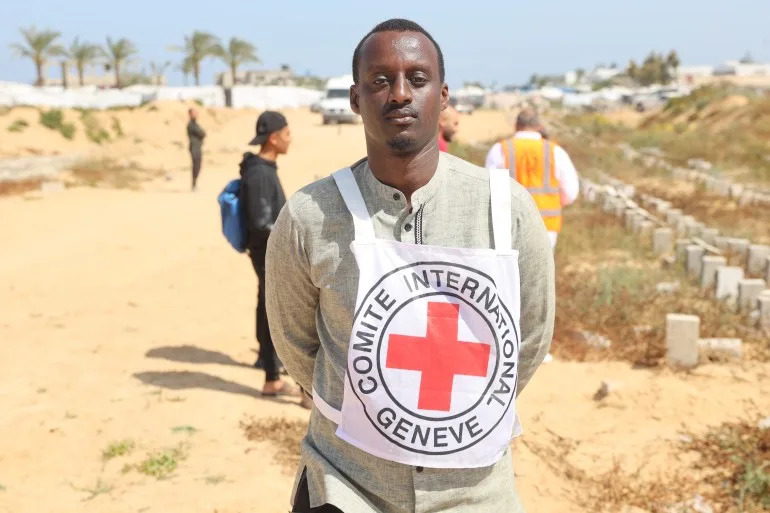
Herbert Mushumba, an International Committee of the Red Cross forensic specialist [Abdelhakim Abu Riash/Al Jazeera]
Estimates of the cemetery’s scale vary: local officials and the ICRC report roughly 1,200–1,400 graves, with several hundred still unused. The discrepancy reflects the chaotic conditions and ongoing recoveries across Gaza.
Forensic Limits And Calls For Help
Gaza currently lacks operational DNA-analysis laboratories, leaving reference codes or genetic data accompanying returned remains effectively unusable locally. “Despite repeated calls over the past year and a half to introduce DNA facilities or transfer samples abroad, no progress has been made,” Obaid said.
Herbert Mushumba, a forensic specialist with the ICRC, confirmed the gap: samples are collected and stored under proper conditions with ICRC support for storage infrastructure, pending possible future analysis locally or overseas. The ICRC also helped open the Deir el-Balah cemetery after the outbreak of war.
Obaid and other officials warn that the absence of forensic testing and delays in identification are deepening the humanitarian and psychological crisis for families who remain suspended between hope and grief. They are urging international assistance to enable DNA testing or the transfer of samples abroad so unknown victims can be given names and families can find closure.
“The hardest feeling is when a loved one is buried as unknown, without a name or official identification, under a number… a deep pain that still lives in my heart.” — Lina al-Assi
For Lina and many others, the cemetery is both a place of sorrow and a fragile sanctuary where they can grieve and still hope to one day reclaim the identity of those they have lost.
Help us improve.