New X-ray and CT scans of artifacts stored by Pompeii Archaeological Park uncovered a small case inside a cast from the Garden of the Fugitives that likely held a medical kit. The case contained bronze and silver coins, a slate tablet for preparing compounds, several small metal implements resembling surgical tools, and a toothed-wheel closure. The 13 victims in the garden are thought to have perished when a pyroclastic cloud hit as they fled through Porta Nocera. Non-invasive imaging is allowing archaeologists to reveal hidden objects and connect them to individual lives.
New Scans Suggest Pompeii Cast Belonged To a Doctor — Surgical Kit Found in Plaster
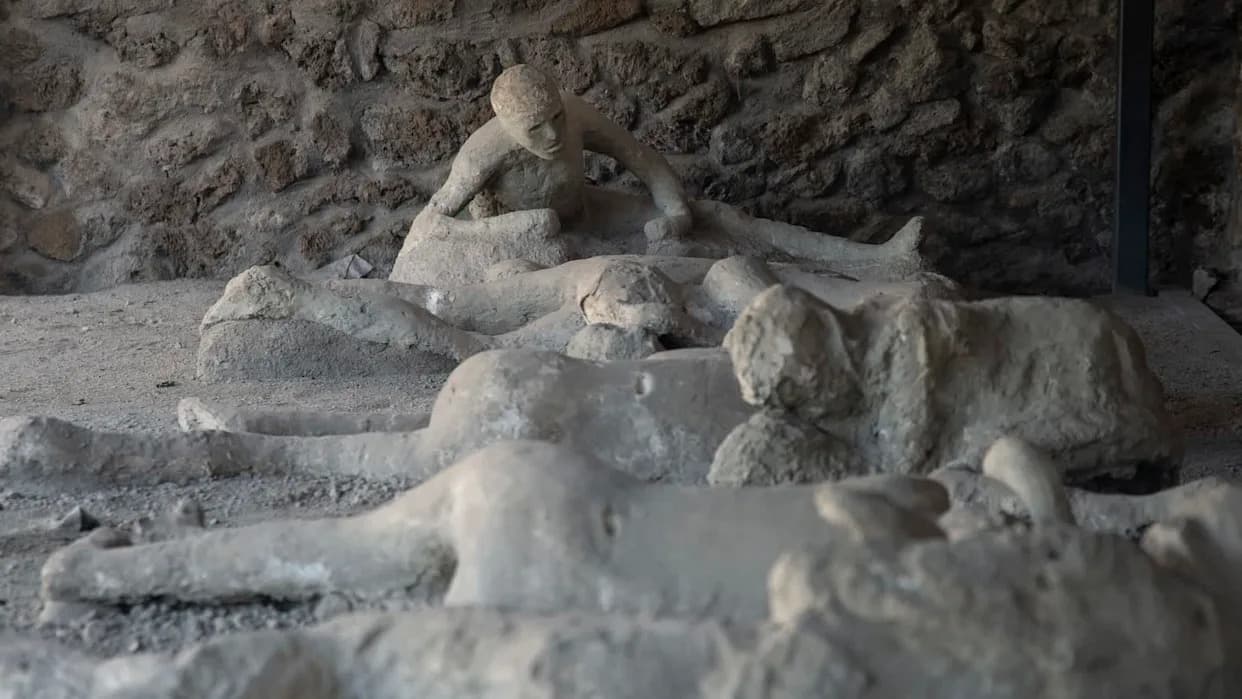
Photo Credit: Getty Images
The plaster casts from Pompeii's A.D. 79 eruption have long been poignant reminders of the disaster. New X-ray and CT imaging of stored artifacts, however, has revealed an intimate detail about one victim from the Garden of the Fugitives: a compact case containing coins and instruments consistent with a medical kit, pointing to a possible physician among the fleeing group.
Pompeii Archaeological Park says researchers identified the small container inside a human cast after scanning items held in the site's storage facilities. The case appears to be made of organic material reinforced with metal elements and held a fabric pouch filled with bronze and silver coins alongside a set of small metal tools.
High-resolution X-rays and CT scans performed at the Casa di Cura Maria Rosaria nursing home in Pompeii allowed specialists to map the case's contents in detail. Experts report finding a small slate tablet likely used to prepare medicinal or cosmetic compounds, multiple fine metal implements that match the scale and shape of surgical tools, and an intricate closing mechanism that includes a toothed wheel.
Context: The Garden of the Fugitives
All 13 people preserved as casts in the Garden of the Fugitives are believed to have died when a pyroclastic cloud struck as they tried to flee through Porta Nocera. The garden, in Pompeii's southeastern quarter, had been part of a busy urban block before being converted into a vineyard in the years before the eruption.
Archaeologists have identified other members of the group as a merchant, a mother with two children, a young couple with an infant daughter, and a teenage servant. The discovery of a probable medical kit adds a personal and humanizing dimension to the scene: it suggests the presence of a healthcare practitioner who carried tools and supplies even while fleeing.
Modern Tools Reveal Hidden Lives
Non-invasive imaging techniques such as X-rays and CT scans are transforming how archaeologists study fragile finds. By peering inside casts and sealed containers without opening them, researchers can spot concealed objects, understand manufacturing techniques, and connect material remains to the daily lives of individuals preserved by the eruption.
The park has also trialed newer digital tools: in late April, teams used artificial intelligence to reconstruct the face of a different victim found near one of the city's southern gates. That AI-generated reconstruction prompted mixed reactions online, with some praising the technological leap and others arguing that human artists should play a central role in such reconstructions.
"Already two thousand years ago, there were those who did not practice medicine only during consulting hours, but who were simply doctors at all times, even at the moment of fleeing the eruption," said Gabriel Zuchtriegel, Director General of Pompeii Archaeological Park. "We dedicate this small but significant discovery to all the women and men who today continue to carry out this profession with a very high sense of responsibility and service to the community."
Further analysis will continue as researchers refine imaging techniques and compare the finds with other medical toolkits from the ancient world. For now, the discovery enriches the human story preserved in Pompeii's ash and plaster—and underscores how modern technology can reveal private objects once hidden for nearly two millennia.
Help us improve.