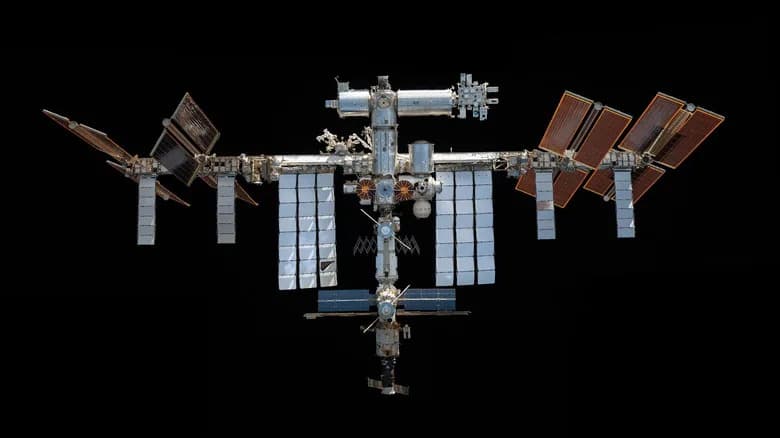
The ISS orbits Earth every 92 minutes, producing about 16 sunrises and sunsets per day and depriving crews of regular solar cues. To stay coordinated and protect health, the station runs on Coordinated Universal Time (UTC) and follows a fixed daily routine with a protected sleep window. LED lighting mimics a dawn‑to‑dusk cycle to stabilize circadian rhythms, but astronauts still average under seven hours of sleep and show measurable cognitive decline. Religious practices and celebrations are pragmatically adapted and essential to crew morale, and even time itself ticks a fraction differently in orbit.
Life at 17,500 mph: How ISS Crews Manage 16 Sunrises, Sleep and Rituals
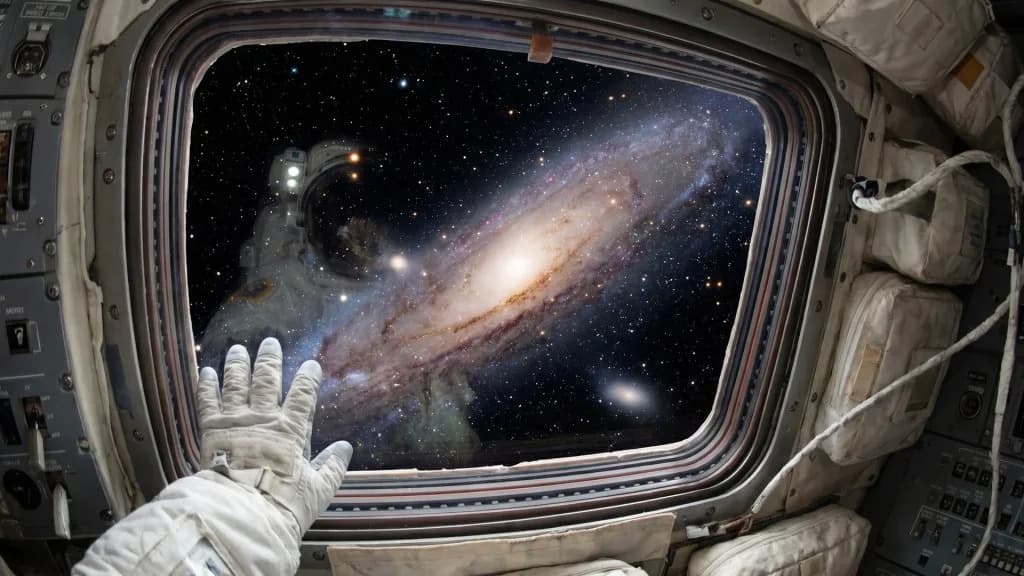
Aboard the International Space Station (ISS), astronauts experience roughly 16 sunrises and 16 sunsets every 24 hours. The station completes an orbit about every 92 minutes, so the sun can disappear behind Earth's curve in roughly 10 seconds and return about 45 minutes later—far from the gradual dawn and dusk people on the ground know.
Orbit And The Loss Of Solar Cues
The familiar solar cues that shape daily life—when to sleep, when to fast, where to face in prayer—stop working in any obvious way once you climb into orbit. One person’s “morning” will be another’s “night” within hours if there is no shared reference clock, and the human circadian system, tuned to a single daily solar cycle, fragments under 16 light‑dark periods each day.
Why The ISS Uses UTC
To maintain coordination, the ISS operates on Coordinated Universal Time (UTC). Crew members who launch from Kazakhstan, Florida or Japan all synchronize to that single anchor. The daily routine is fixed: a wake time, about 12 hours allocated to work (science, maintenance, exercise, meals and planning), and a protected sleep window. That structure is not bureaucratic convenience; it is a physiological and operational necessity.
Circadian Disruption And Artificial Lighting
Human circadian timing is governed by the suprachiasmatic nucleus in the hypothalamus and takes cues from light falling on the retina. In orbit those cues become unreliable: melatonin release can become irregular, cortisol rhythms flatten, and measurable cognitive performance declines within days—even when crew members feel they are performing normally.
The station’s LED lighting is a practical countermeasure. Panels in the U.S. segment shift color temperature over the day—bluer, more alerting light for the artificial morning and warmer, dimmer tones for evening—creating a calibrated photon gradient that mimics a dawn‑to‑dusk cycle. Even so, crew members typically average fewer than seven hours of sleep and often underestimate degraded reaction‑time performance recorded by ground teams.
Adapting Religious Practices And Rituals
Religious observances require pragmatic adaptations. When Malaysian astronaut Sheikh Muszaphar Shukor visited the ISS during Ramadan in 2007, Malaysia’s National Fatwa Council consulted scientists and scholars. The practical solution: prayer times follow the launch‑site time rather than the station’s orbital day. The qibla (direction of prayer) is approximated—first toward the Kaaba, then toward Earth if necessary, and otherwise by intention when precise geometry is impossible. Jewish astronauts have used a similar convention: Ilan Ramon observed the Sabbath on Cape Canaveral time during STS‑107.
Celebrations, Morale And The Sense Of Time
Simple rituals—birthdays chosen within the UTC day, cakes, Velcroed decorations cleared for flammability, songs in the Unity node—are more than nice extras. Over 25 years of continuous habitation, mission planners learned that ceremonies and shared markers are essential to psychological structure. Without them, long missions risk collapsing into an undifferentiated stretch of time; rituals help turn mission days into a lived life.
A Relativistic Footnote
Scott Kelly returned from his year‑long mission a few milliseconds younger than his identical twin on the ground—a tiny, measurable consequence of spending a year at orbital velocity.
Running the station on UTC is, in one sense, a chosen fiction: it creates a shared weekday and a common midweek for a multinational crew. Crews adopt that fiction deliberately because allowing each person’s body clock to drift across 16 sunrises with no common reference has been tried and found to fail.
Help us improve.