Summary: This article fact-checks 28 false or misleading claims President Trump made during a single week, covering inflation, prices, investment, manufacturing, Social Security taxes, election integrity, migration and the war with Iran. Many assertions are demonstrably incorrect—ranging from overstated investment totals and wrong inflation figures to exaggerated migration counts and incorrect claims about Iran and the Strait of Hormuz. Where claims included partial truths, the article supplies the correct data and context.
Fact Check: 28 False or Misleading Claims President Trump Made This Week
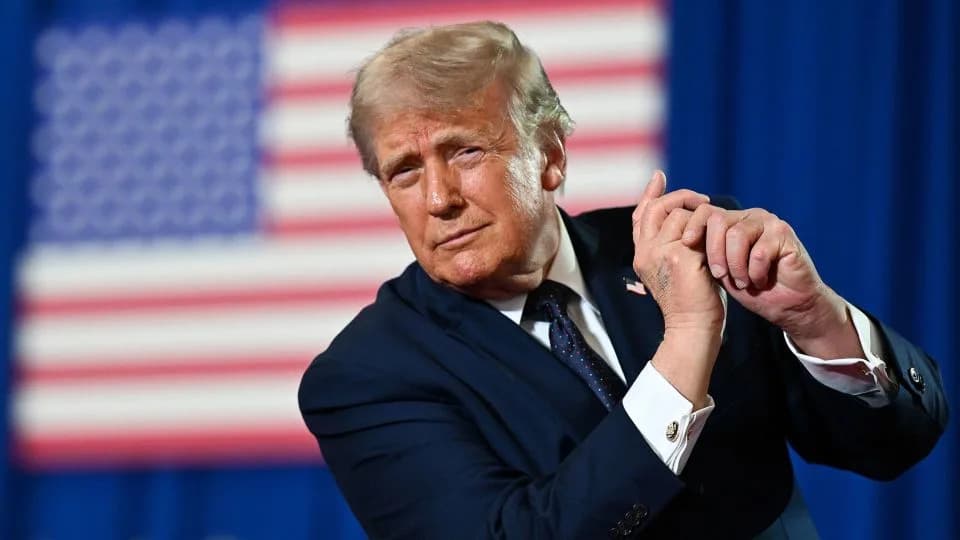
President Donald Trump dances on stage after delivering remarks during a campaign and economic policy event at SUNY Rockland Community College on Friday, May 22, in Suffern, New York. - Roberto Schmidt/Getty Images
Updated Fact Check: President Donald Trump made a wide range of false and misleading statements in public remarks over the course of a week. Below is a clear, numbered rebuttal of 28 separate claims, with concise corrections and the relevant factual context.
At a Glance
This fact check addresses claims about inflation and prices, the economy, investment and manufacturing, Social Security taxes, election integrity and mail-in voting, border policy and migration totals, the war with Iran, and statements about the Lincoln Memorial Reflecting Pool. Each numbered entry summarizes the claim, states why it is incorrect or misleading, and provides the correct data or context.
Detailed Corrections
- The inflation Trump inherited: False. Year-over-year inflation was about 2.9% in December 2024 and 3.0% in January 2025 when Trump took office—not the highest in US history. Historical peaks include 23.7% (1920) and 14.8% (1980).
- The state of inflation: Misleading. Inflation had not been brought down under Trump when he claimed it had; the most recent published rate cited was 3.8% in April 2026, higher than the 3.0% in January 2025.
- Prices before the war: Incorrect. Overall consumer prices were rising before the Iran war; through February 2026 average prices were about 2.9% higher than at the start of Trump’s second term.
- The pre-war inflation rate: False. Inflation was not 1.6% for the three months prior to the war; reported year-over-year rates were roughly 2.7% (Nov and Dec 2025) and 2.4% (Jan and Feb 2026).
- Pre-war gas prices: Exaggerated. While some rare stations sold gas under $2/gal, nationwide averages on Feb. 28, 2026, were roughly $2.98/gal (AAA), and only a handful of stations were under $2.
- Beef prices: Wrong direction. Beef prices rose during Trump’s second term; ground beef hit a record average of $6.90/lb in April 2026, above the $5.55/lb average in January 2025.
- Investment in the U.S. under Trump: Overstated. The claim of $18 trillion in investment is fiction. The White House listed $10.6 trillion in major announced items, a figure widely criticized as counting vague pledges and trade commitments rather than concrete, realized US investment.
- Factory construction: Misleading. Manufacturing construction spending (the metric cited by the administration) declined month-to-month through March 2026. Comparing selectively to 2022 can produce a misleading impression.
- Taxes on Social Security: Incomplete. A 2025 law created a temporary additional deduction for older taxpayers, but millions of Social Security recipients will still pay taxes on their benefits.
- Democrats’ election victories: False. The blanket claim that Democrats can only win by cheating is baseless; elections are decided legitimately through established processes.
- Democrats and Supreme Court size: Incorrectly generalized. While a few Democrats have proposed expanding the Court to 13 or, rarely, discussed higher numbers, there is no partywide plan to pack the Court to 21 justices.
- Kamala Harris and the border: False. Vice President Harris visited the southern border during her vice presidency (2021 and 2024) and was assigned a narrower "root causes" diplomatic mission rather than full operational border control.
- Reflecting Pool spending by Obama and Biden: Exaggerated. Obama-era work cost about $35 million; the Biden administration received estimates above $100 million for a full rehabilitation but did not carry out a $100m+ project. Trump’s claims of hundreds of millions spent earlier are unsupported.
- Status of the Reflecting Pool under Obama/Biden: Incorrect. The pool reopened in August 2012 after repairs and has been open most of the time since, with only occasional short closures and a limited multi-year partial closure in 2015–2016 related to nearby construction.
- Biden and electric vehicles: Mischaracterized. The Biden administration advanced tailpipe rules to increase electric vehicle (EV) market share for new car sales, but it never mandated that all Americans must own EVs by 2030.
- Legitimacy of U.S. elections: False. Characterizations that US elections are more corrupt than those in developing countries or that large regions were "rigged" lack evidence; U.S. elections are generally free and fair.
- The 2020 election and presidential terms: Incorrect. Trump lost in 2020; he is in his second term after winning in 2016 and 2024, not a ‘‘three-term president.”
- Mail-in voting legitimacy: Incorrect characterization. Mail-in voting is a legitimate method used by voters. Fraud rates in federal elections remain vanishingly small, though some contexts show slightly higher risk for certain types of mail ballots.
- Who uses mail-in ballots: False. The U.S. is not unique; many democracies including Canada, Australia, Germany, Switzerland and the U.K. use mail-in voting options.
- Trump’s election losses in California: False. California vote counts are accurate; Trump lost the state by large margins in 2016, 2020 and 2024 (roughly 30, 29 and 20 percentage-point deficits, respectively).
- Ballots in California: Incorrect. California mails ballots to active registered voters; the state had roughly 22.6–23.1 million registered voters in recent counts, not 38 million ballots mailed as claimed.
- Maryland ballot-mailing error: Misstated as corruption. Maryland had a printing error that sent wrong-party ballots to some voters for a primary; affected ballots were voided and replacements issued—this was an administrative mistake, not corrupt ballots.
- Control of the Strait of Hormuz: Overstated. The U.S. does not have "total control" of the Strait; Iran at times restricted passage and imposed fees, and international maritime access remains contested during the conflict.
- The state of Iran’s military: Oversimplified. U.S. and Israeli strikes have damaged Iranian capabilities, but intelligence and reporting indicate Iran retains significant missile launchers, drones, and anti-air systems and has capacity to reconstitute production.
- Birthright citizenship: False claim of uniqueness. About three dozen countries grant automatic citizenship by birth on their soil, including Canada and Mexico and many South American nations.
- Migration totals under Biden: Grossly inflated. The Biden administration recorded under 11 million border "encounters" through Dec. 2024; even with additional estimates of undetected crossers, totals fall far short of 25 million.
- Migration under Trump: Exaggerated. While officials said migrants were not released into the country over a 12-month stretch, some migrants did evade detection during Trump’s months in office; the number of "gotaways" was not zero.
- Migrants and murder convictions: Mischaracterized. The figure cited appears to reference noncitizens listed on ICE's non-detained docket with homicide convictions spanning multiple decades; many convictions occurred after arrival and the data do not show the Biden administration admitted nearly 12,000 convicted murderers during its term.
Sources and context: This summary relies on published inflation and price data, AAA and GasBuddy price surveys, White House announcements and reporting analyses, Department of Homeland Security and Customs and Border Protection records, ICE docket descriptions, and multiple contemporary news reports. Where claims mixed partial truths with incorrect context, the accurate, verifiable figures are noted above.
Bottom line: Many of the statements reviewed are demonstrably false or misleading. Some reflect selective comparisons or partial facts taken out of context; others are clear numerical or factual errors. Readers should rely on primary data releases and multiple reputable sources when evaluating such claims.
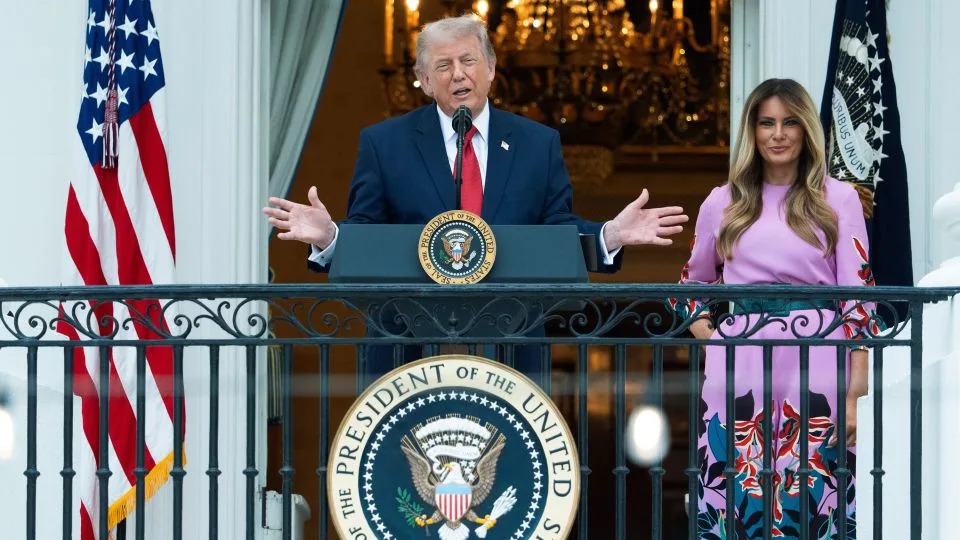
President Donald Trump with first lady Melania Trump addresses the attendees of the Congressional Picnic on the South Lawn at the White House, Tuesday, May 19, in Washington, DC. - Manuel Balce Ceneta/AP
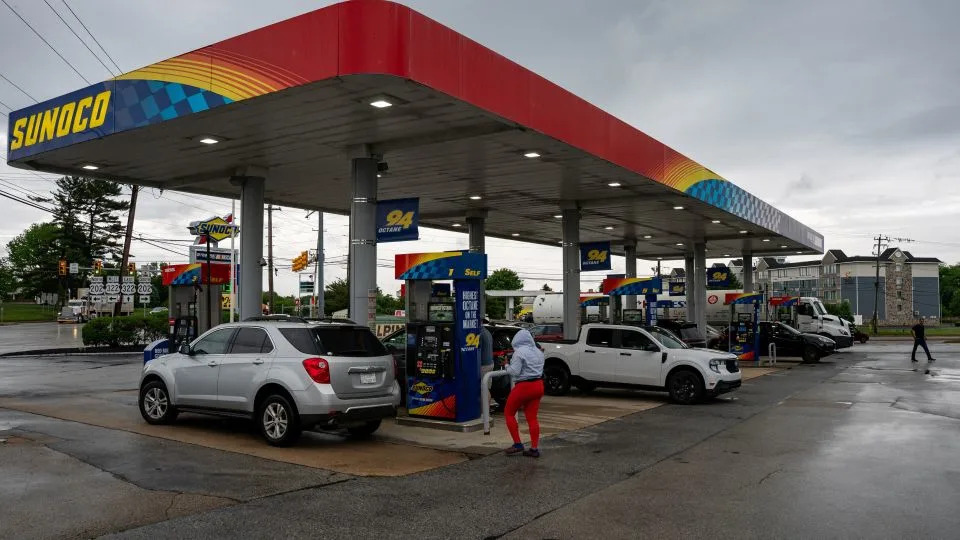
People purchase gasoline at a Sunoco gas station ahead of the Memorial Day weekend in Philadelphia, on Thursday, May, 21. - Seth Herald/Reuters
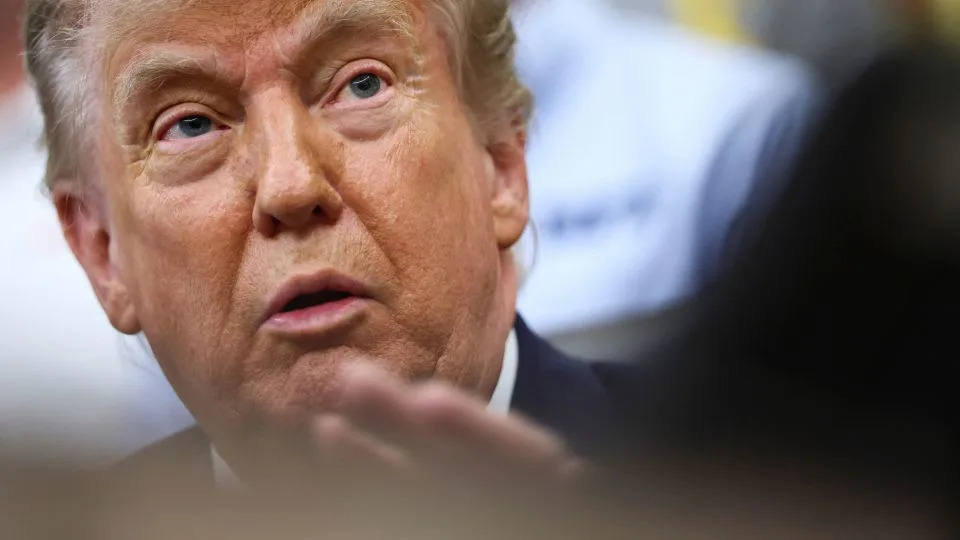
President Donald Trump speaks during an announcement in the Oval Office at the White House, in Washington, DC, on Thursday, May 21. - Kevin Lamarque/Reuters
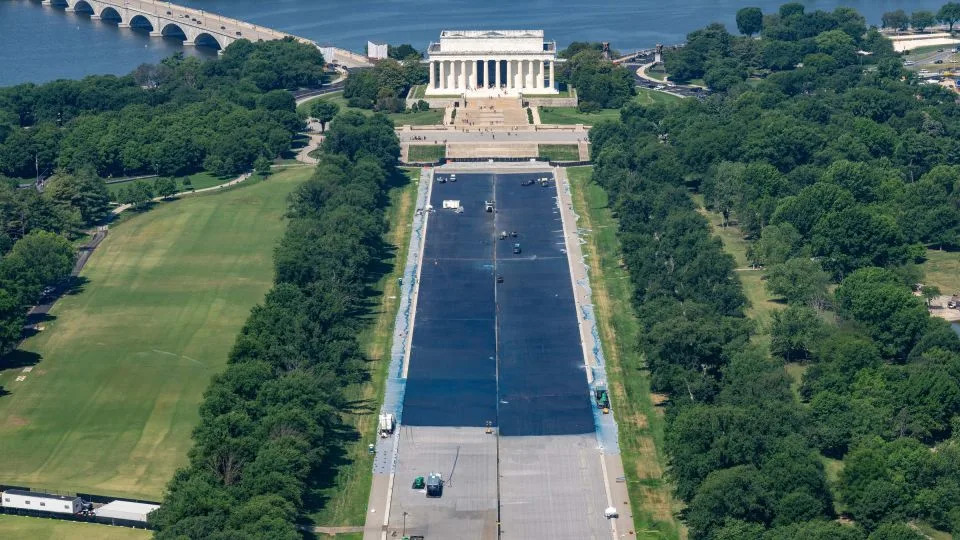
The Lincoln Memorial is seen at the top as the blue coating of the Reflecting Pool continues, Tuesday, May 19, in Washington, DC. - Alex Brandon/AP

Ohio voters walk to drop off their ballots at the Board of Elections in Dayton, Ohio on April 28, 2020. - Megan Jelinger/AFP/Getty Images

Ships remain anchored on May 16, 2026 in the Strait of Hormuz near Larak Island, Iran. - Majid Saeedi/Getty Images
Help us improve.