
SpaceX launched the redesigned Starship V3 successfully on its second attempt. Liftoff occurred at 11:30pm BST and the flight lasted just over an hour; one of six engines failed but remaining engines compensated and mission objectives were met. The Super Heavy booster splashed down in the Gulf of America while the upper stage re-entered and impacted in the Indian Ocean. The mission released dummy payloads and two camera-equipped Starlink satellites to study heat-shield performance. The launch comes as SpaceX readies filings for a potential $1.75tn valuation public listing that disclosed significant cumulative losses and major Starship investments.
SpaceX’s Starship V3 Scores Successful Second Launch Despite Engine Failure
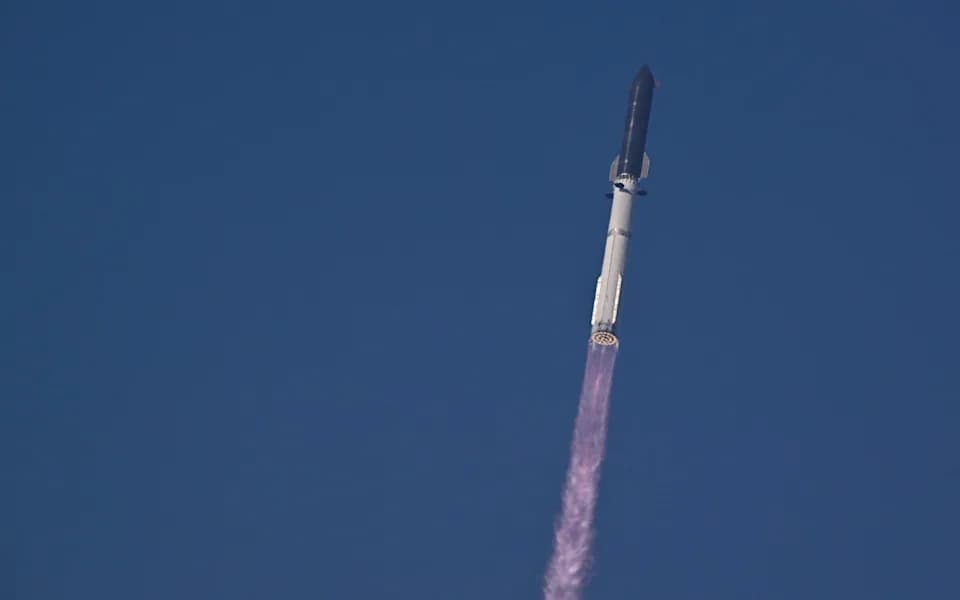
A SpaceX Super Heavy booster carrying the Starship spacecraft lifts off - Steve Nesius/REUTERS
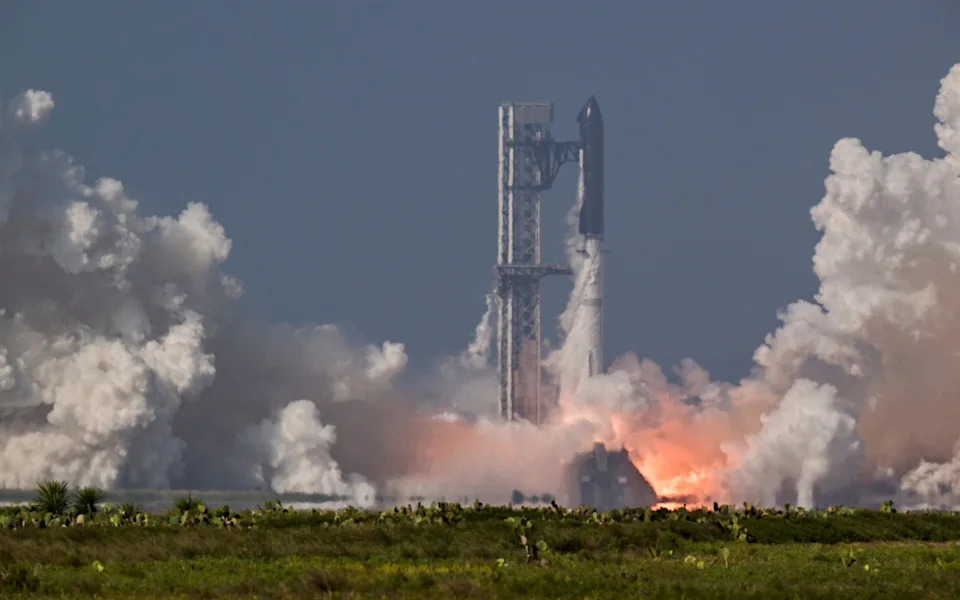
Elon Musk’s SpaceX successfully launched the redesigned Starship Version 3 on Friday after an aborted attempt the previous day. The test — the programme’s 12th flight — debuted the 400-foot vehicle and gathered critical data for future Moon and Mars missions.
Launch and Flight Profile
The rocket lifted off at 11:30pm BST (6:30pm EST). About one hour and six minutes after liftoff, the second-stage vehicle re-entered the atmosphere and splashed down in the Indian Ocean, where it ignited on impact. The 237-foot Super Heavy booster separated as planned and splashed down in the Gulf of America.
In-Flight Anomaly and Response
During ascent, one of the Starship’s six engines stopped functioning. Flight controllers compensated by burning the remaining five engines longer, allowing the mission to continue and complete its primary objectives. SpaceX livestream commentator Dan Huot later said the Super Heavy booster did not complete a burn needed for a precision controlled landing, meaning a planned precision touchdown was unlikely on this flight.
Payloads and Test Objectives
The upper stage successfully deployed a set of dummy satellites and two specially modified Starlink satellites equipped with cameras. Those cameras will analyze the spacecraft’s heat shield performance during re-entry; for this flight SpaceX deliberately removed one heat-shield panel to test durability under peak heating.
Steve Nesius/REUTERS
Context and Strategic Stakes
The launch comes days after SpaceX filed paperwork outlining plans for a potential public listing that could value the company at as much as $1.75 trillion and raise up to $75 billion. The filing also disclosed more than $40 billion in cumulative losses since founding and a net loss of $4.9 billion last year on $18.7 billion of revenue. In its prospectus SpaceX framed Starship as central to ambitions to protect humanity from catastrophic risks by enabling settlement beyond Earth and ultimately building a colony of one million people on Mars.
Reaction and Significance
SpaceX employees cheered as the spacecraft completed deployments and the camera-equipped Starlinks began their observations. While Starship’s test campaign has seen setbacks — five of the previous 11 flights ended in total or partial failure — this mission marked meaningful progress: successful separation, payload deployment, and retrieval of re-entry data despite an engine outage.
Quick Facts
• 12th Starship test flight; V3 is 400 ft tall.
• Liftoff: 11:30pm BST (6:30pm EST).
• One engine failed in flight; others compensated.
• Super Heavy booster splashed down in the Gulf of America; upper stage splashed down in the Indian Ocean.
• Mission released dummy payloads and two camera-fitted Starlink units to inspect the heat shield.
• Filing reveals SpaceX’s public-listing ambition, large historic losses and heavy Starship investment.
“We do not want humans to have the same fate as dinosaurs,” SpaceX wrote in its prospectus, restating its long-term rationale for off-world settlement.
This flight advances SpaceX’s data collection and hardware validation as the company prepares future missions to the Moon and, eventually, Mars.
Help us improve.





















