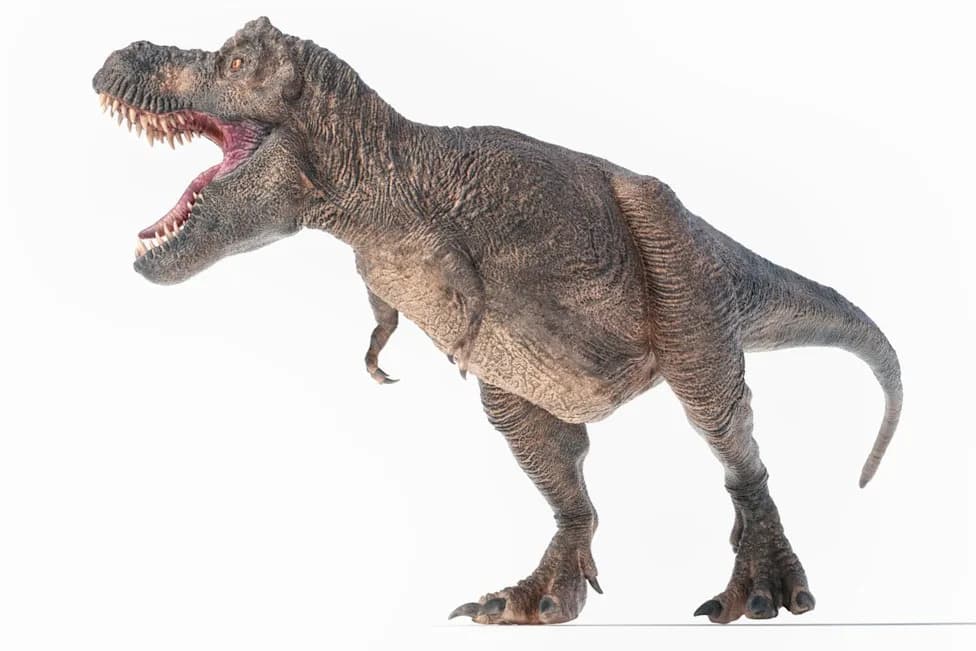
A new biomechanical proposal — the "accidental amputation" hypothesis — suggests T. rex evolved shorter arms to avoid catastrophic bites during close-quarter group feeding. Muscle scars show the arms retained strength but lost reach, reducing the chance of being grasped or bitten. The model is plausible and testable but needs biomechanical simulations and clearer fossil evidence of group feeding before it can be confirmed.
New Study: T. rex's Tiny Arms May Have Evolved to Avoid Lethal Bites During Group Feeding
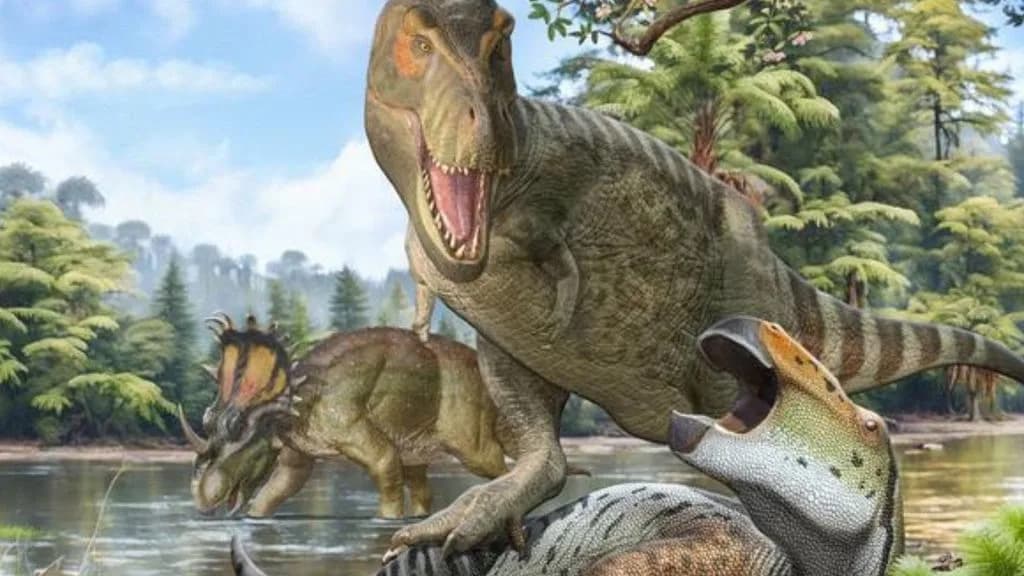
A new biomechanical hypothesis offers a clear, testable explanation for one of paleontology's longest-standing puzzles: why Tyrannosaurus rex had such disproportionately short forelimbs. The model argues the arms were shortened by natural selection to keep them out of harm's way when multiple large predators fed on the same carcass.
The "Accidental Amputation" Hypothesis
Researchers propose that in close-quarter feeding scenarios, longer arms would have been placed in the strike zone of neighboring jaws capable of delivering bite forces measured in the tens of thousands of newtons. Individuals whose forelimbs stayed tucked safely away from the skull and jaws of other theropods would have faced a lower risk of catastrophic injury, increasing their chances to survive and reproduce. Over geological time, this selective pressure could favor progressively shorter forelimbs — a process the authors call the "accidental amputation" model.
Arms Were Strong — But Lacked Reach
Bone surface features indicate substantial muscle attachments on T. rex forelimbs, including areas for powerful biceps and other flexors. That suggests the arms retained functional strength even as they shortened. The crucial biomechanical change was loss of reach: a limb that cannot be extended far from the torso is harder to grasp, pin, or catch in a lateral bite from a feeding neighbor.
Competing Explanations and Limitations
Previous ideas for the reduced arms — such as helping to brace prey during a bite, aiding the animal to rise from a prone position, or functioning in mating — remain plausible and are not fully excluded. The accidental amputation hypothesis faces several important challenges: direct fossil evidence for coordinated group feeding by T. rex is sparse and often contested, and other large theropod lineages reached similar body sizes without comparable forelimb reduction. Any robust explanation must account for why this selective pathway would act specifically in tyrannosaurs.
What We Need Next
Biomechanical simulations that model lateral bite trajectories against realistic forelimb geometries across growth stages of tyrannosaurs could directly test the injury-risk mechanism. Improved taphonomic and trackway data that distinguish cooperative feeding from sequential scavenging would strengthen the behavioral evidence. Mapping arm-size reduction across tyrannosaur phylogeny and body-size trends (for example, comparing early taxa such as Guanlong and Dilong with later, giant forms) would also provide crucial context.
In short: The accidental amputation model is a plausible, mechanistically explicit explanation that makes clear predictions — but it remains provisional until supported by targeted biomechanical modeling and better fossil evidence for group feeding.
Why This Matters: The idea links to broader questions in evolutionary biomechanics about how severe injury risk can shape anatomy across generations. If validated, the hypothesis would be an elegant example of how social feeding dynamics and catastrophic-risk avoidance can drive major morphological change.
Help us improve.