
Blue Origin’s New Glenn has been cleared by the FAA to resume flights after an April upper-stage thermal anomaly caused one of three engines to underperform, resulting in the loss of an AST SpaceMobile satellite. The company reported the incident to regulators and said it implemented corrective measures but did not disclose technical details. The failure occurred on New Glenn’s third flight, which still achieved booster reuse and a successful ocean landing. FAA approval allows Blue Origin to continue pursuing plans for up to 12 launches by the end of 2026, though the grounding’s impact on that timeline remains uncertain.
FAA Clears Blue Origin’s New Glenn to Fly After Upper-Stage Thermal Anomaly
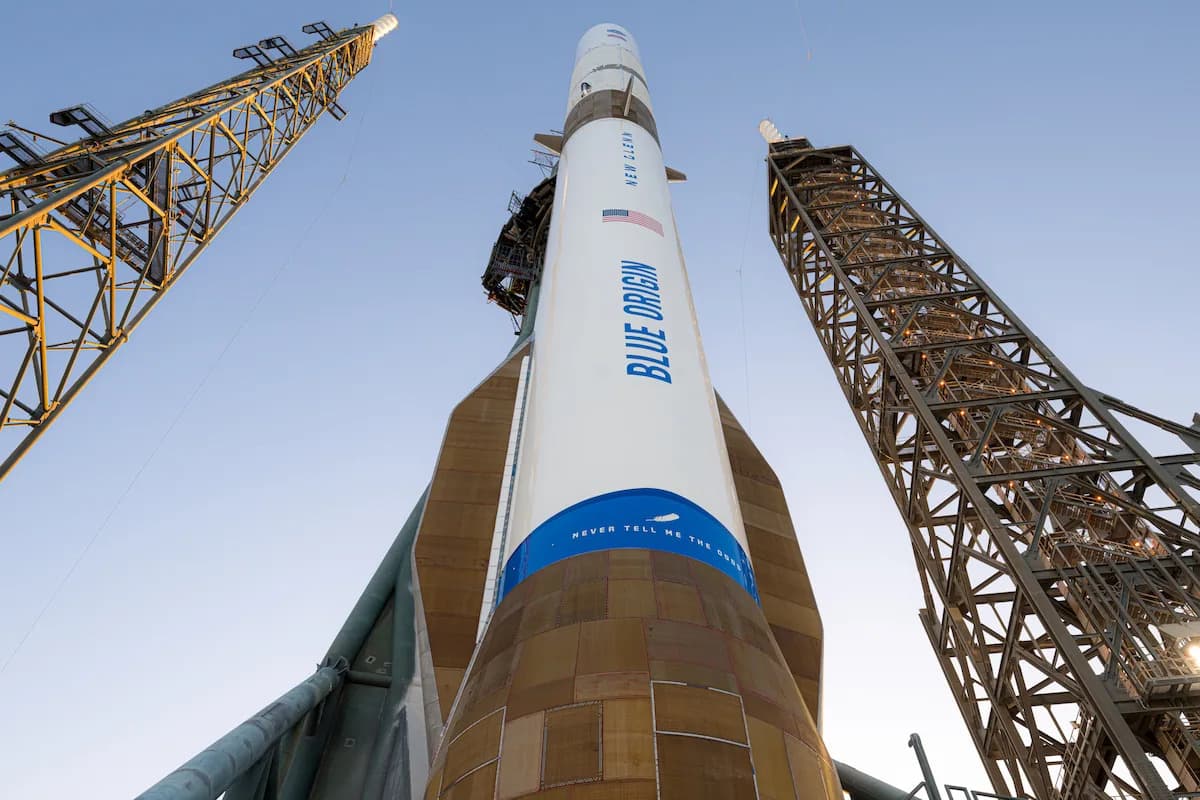
Blue Origin's New Glenn rocket on the launch pad in Cape Canaveral, Florida | Image Credits:Blue Origin
Blue Origin’s heavy-lift rocket New Glenn has been cleared to resume flights after the Federal Aviation Administration lifted a temporary grounding following an April upper-stage malfunction that prevented a commercial satellite from reaching orbit.
The company said the New Glenn upper stage experienced an "off-nominal thermal condition" that led one of the stage’s three engines to produce lower-than-expected thrust. Because of the thrust shortfall, the AST SpaceMobile satellite that New Glenn was carrying failed to reach orbital velocity and burned up during reentry. AST SpaceMobile confirmed the satellite was insured and that the loss was covered by its policy.
Blue Origin filed a report with the FAA and said it implemented "corrective measures," but the company has not disclosed the technical details of those fixes. The anomaly occurred during New Glenn’s third flight, which nonetheless achieved two notable successes: the first reuse of the New Glenn booster and a second successful ocean landing on a drone ship.
What This Means Going Forward
With FAA approval, Blue Origin can resume its planned launch cadence for New Glenn. The company has indicated it could fly the rocket as many as 12 times by the end of 2026. It is unclear how much the roughly one-month grounding will affect that schedule; Blue Origin will likely need to finalize and validate its corrective actions before a full ramp-up.
Technical Oversight: The FAA’s review and the company’s internal corrections aim to ensure the root cause of the thermal anomaly is addressed before subsequent flights.
Blue Origin and industry observers will be watching the next New Glenn missions closely for confirmation that the fixes are effective and that the vehicle can meet commercial reliability expectations going forward.
Help us improve.





















