Janez Janša has been nominated to return as Slovenia's prime minister after his candidacy was submitted to Parliament, positioning him to lead a right-leaning coalition nearly two months after the April 22 election. RTV Slovenia reports he currently has the support of 48 of 90 lawmakers. If confirmed, his government would mark a shift away from the outgoing liberal administration led by Robert Golob. The election period was marred by allegations of foreign influence and corruption, reflecting deep political polarization.
Janez Janša Poised To Return As Slovenia's Prime Minister, Signaling A Right-Wing Shift
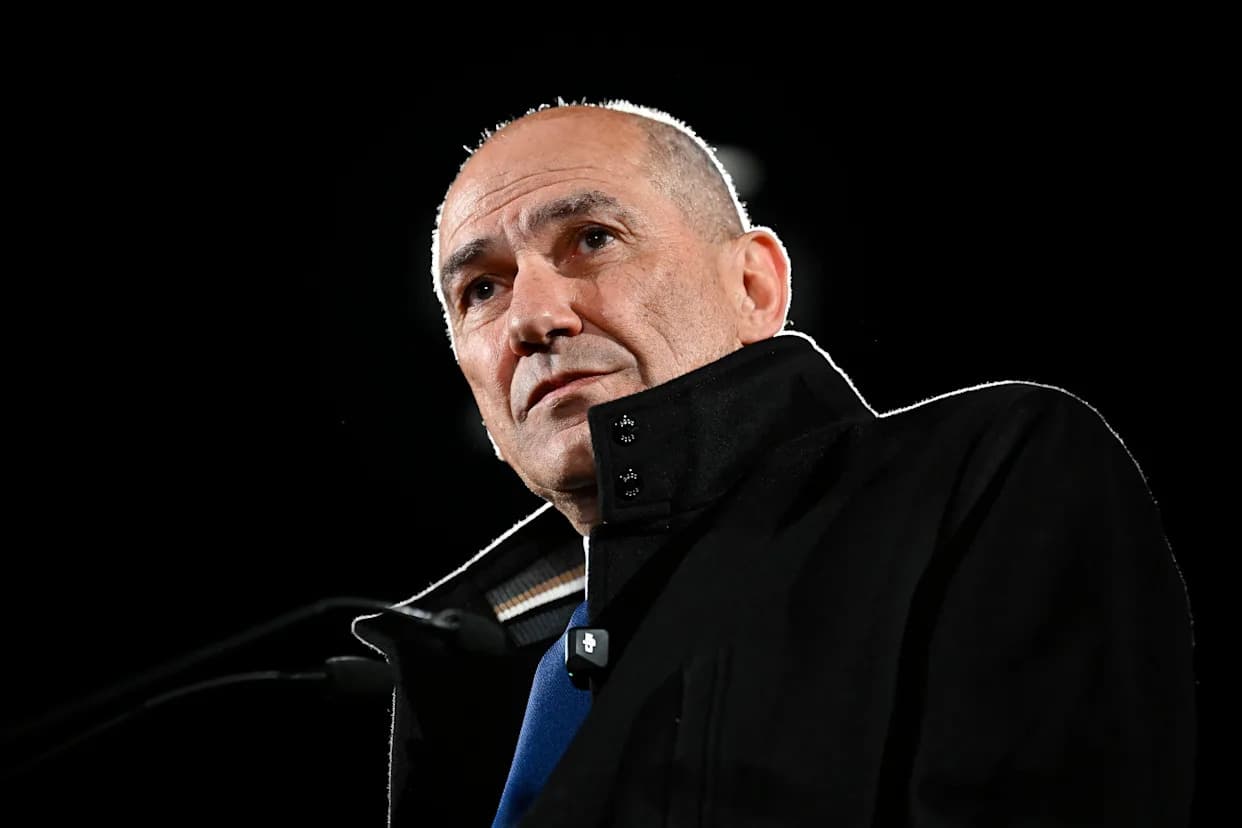
FILE - Former Prime Minister of Slovenia Janez Jansa addresses the media at his election headquarters in Ljubljana, Slovenia, March 22, 2026. (AP Photo/Denes Erdos, file)(AP Photo/Denes Erdos)
Janez Janša is poised to return as Slovenia's prime minister after lawmakers formally submitted his candidacy to Parliament on Tuesday, clearing the way for a new government nearly two months after the parliamentary vote.
Janša, 67, who has already served three previous terms as prime minister, was officially nominated by members of his Slovenian Democratic Party (SDS). He is expected to lead a coalition of right-leaning parties and to receive support from an anti-establishment newcomer group.
No date has yet been set for Parliament to give formal approval to the new government. Slovenia's public broadcaster, RTV Slovenia, reported that Janša currently has the backing of 48 lawmakers in the 90-member National Assembly — a narrow majority that would allow him to form a government if confirmed.
What This Would Mean
If Parliament confirms him, Janša's election would mark a shift to the right for the European Union member that had been governed by a liberal administration led by Robert Golob. Janša has been a vocal critic of the outgoing government, including its 2024 recognition of a Palestinian state.
The veteran politician is known for his admiration of U.S. President Donald Trump and for previously aligning closely with Hungary's Viktor Orbán, who was reportedly defeated in a recent election. Janša most recently served as prime minister from 2020 to 2022, when he lost to the liberal Freedom Movement led by outgoing Prime Minister Robert Golob.
Background And Context
The April 22 parliamentary election left the Freedom Movement and the SDS essentially tied, but Golob was unable to assemble a new liberal coalition, opening the door for Janša's comeback. The vote period was overshadowed by allegations of foreign influence and corruption, contributing to deep polarization among Slovenia's roughly 1.7 million eligible voters.
Next steps: Parliament must schedule a confirmation vote. If Janša secures a majority in that session, he will form a new government and present his cabinet to the assembly.
Help us improve.