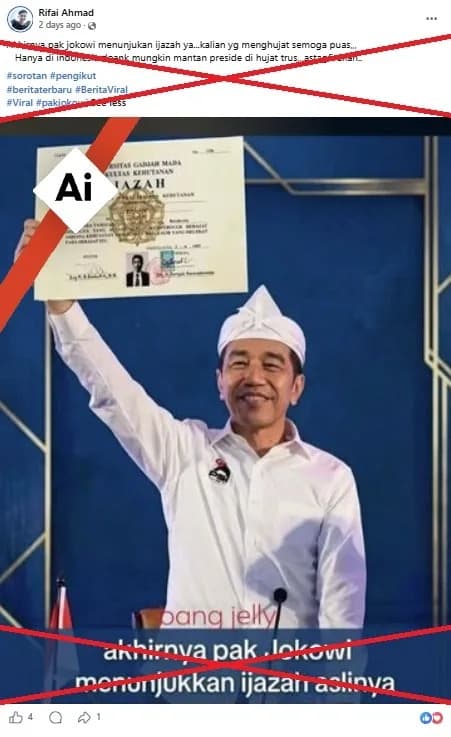
Amnesty International's report "Building Up Imaginary Enemies" alleges that Indonesian authorities, including accounts linked to the military and the Gerindra party, ran coordinated online disinformation campaigns to label activists and journalists as 'foreign agents'. The group ties dozens of accounts to these efforts and documents cases where online smears preceded physical threats, including an acid attack. Amnesty says the campaigns have intensified since President Prabowo took office in 2024 and criticizes social platforms for allowing the content to spread.
Amnesty: Indonesian Authorities Used Coordinated Online Disinformation To Brand Critics As 'Foreign Agents'
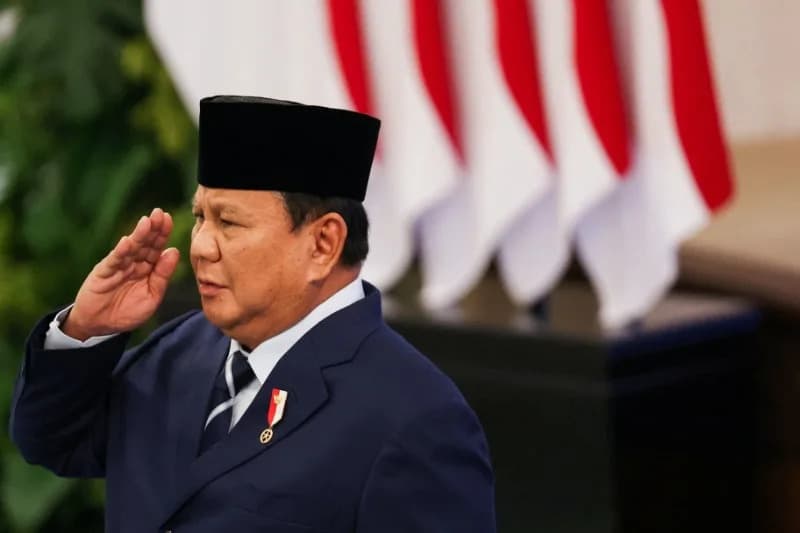
Indonesian President Prabowo Subianto salutes for the National anthem during reshuffle cabinet ceremony at a Presidential Palace in Jakarta, Indonesia, April 27, 2026. REUTERS/Ajeng Dinar Ulfiana
JAKARTA, May 19 — Amnesty International says Indonesian authorities, including elements linked to the military and a major political party, ran coordinated online disinformation campaigns that labeled activists and journalists as 'foreign agents' to silence dissent — sometimes with real-world consequences.
Key Findings
The human rights group sets out its findings in a report titled "Building Up Imaginary Enemies." Amnesty documents that many viral smear posts originated from social media accounts appearing to be tied to Prabowo Subianto's Gerindra party and accounts affiliated with military units. The report says these campaigns have intensified since President Prabowo took office in 2024.
Online Attacks, Offline Harm
Amnesty describes a March incident in which human rights campaigners, including Andrie Yunus of the Commission for Missing Persons and Victims of Violence, protested the military's expanded civilian role. A video falsely accusing protesters of being 'foreign agents' went viral the next day. Amnesty's metadata analysis found the clip was first posted by three accounts associated with Gerindra offices and was amplified by 31 accounts linked to 27 military units across Instagram, Facebook, X and YouTube.
A year later, Andrie Yunus was the victim of an acid attack; four alleged military officers are now on trial in a military court, the report says. Separately, accounts tied to military units amplified baseless claims that Tempo magazine was a foreign agent, and Tempo later received decapitated animal carcasses as an apparent intimidation tactic.
"In the 18 months since Prabowo took power, online disinformation has emerged as a key tactic to systematically discredit government critics, shut down public debate and justify repression," Amnesty Secretary General Agnes Callamard said in a statement accompanying the report.
Political Rhetoric And Platform Failures
Amnesty notes President Prabowo referenced 'foreign agents' repeatedly in key speeches and that senior officials, including the energy minister, have publicly accused NGOs such as Greenpeace of acting for foreign interests. Those accusations, the report says, have triggered online campaigns that attempted to link civil society groups to separatist violence.
The report also criticizes major social platforms and their engagement-driven algorithms for allowing false content to spread quickly; many documented posts reportedly remained online for months. Meta told Reuters it had disrupted multiple adversarial networks targeting Indonesia and has removed more than 200 such networks globally since 2017. Of the other platforms Amnesty contacted, only TikTok publicly pledged increased monitoring.
Amnesty warns that coordinated disinformation, combined with inflammatory official rhetoric, can delegitimize civil society and create an environment that permits or encourages physical attacks on critics and journalists.
Reporting by Ananda Teresia; editing by Gibran Peshimam, David Stanway and Gareth Jones.
Help us improve.