
Genome and isotope analyses of 49 17th‑century burials at the Brick Chapel in St. Mary’s City reveal an eight‑year‑old boy with majority African ancestry buried in a gable‑lidded coffin alongside European‑ancestry colonists. The study identified colonial governors Thomas Greene and Philip Calvert through DNA and genealogical matches and traced most settlers to western England and Wales. Two other unusual burials likely represent Irish immigrants who show signs consistent with indentured servitude. Ancient DNA sheds new light on migration, burial customs, and social status in early colonial Maryland.
Unexpected Burial: 8-Year-Old With Majority African Ancestry Interred Among Colonial Elites in Maryland
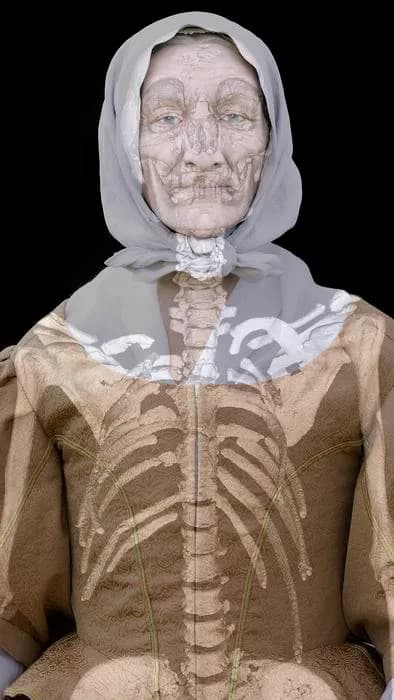
A composite image of Anne Wolseley Calvert, whose skeletal remains excavated from a 17th-century cemetery have been superimposed onto an image of what she may have looked like in life. | Credit: Chip Clark/Smithsonian Institution
Researchers analyzing 17th-century remains from St. Mary's City, Maryland's first colonial settlement, report a surprising burial: an eight-year-old boy with predominantly African-derived ancestry was buried in a gable‑lidded coffin alongside European‑ancestry colonists. The finding, published May 14 in Current Biology, complicates assumptions about social status and burial practices in early colonial America.
Key Findings
The child, who died sometime between 1667 and 1704, carried roughly 70% African-derived ancestry and about 25%–30% European ancestry. He was wrapped in a shroud and placed in a gable‑lidded coffin, and isotope analysis of his bones indicates he was born in America. These burial treatments follow English funerary customs of the period.
The study analyzed genomes from 49 individuals interred at the Brick Chapel cemetery in St. Mary's City, with burials dating from 1634 to 1730. Most skeletons showed ancestral ties to western England and Wales. By cross-referencing genomes with data contributed by 23andMe research participants, the authors estimate more than 1.3 million living genetic relatives of this founding colonial population and detect a strong genetic signal tied to later migration of Maryland Catholics to Kentucky.
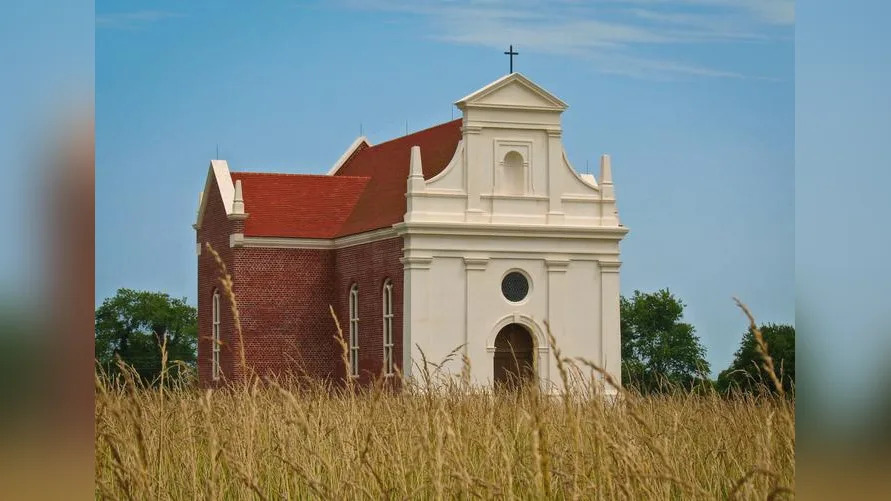
A photograph of the reconstructed 17th-century Brick Chapel in St. Mary's City, Maryland. | Credit: Donald Winter/Historic St. Mary's City
Identifications and Context
Two prominent colonial figures were identified among the burials: Thomas Greene, Maryland's second colonial governor, and Philip Calvert, the colony's fifth governor. Philip Calvert and his first wife, Anne Wolseley Calvert, were interred in rare lead coffins; DNA and genealogical matching (including comparisons to the 23andMe database) helped confirm Greene's identity—an early example of ancient DNA aiding identification of unknown historical individuals.
Unusual Burials and Social Status
Three burials stood out: the eight‑year‑old boy and two young men in their 20s. The men had isotope signatures consistent with recent immigration from Ireland, were buried without coffins, and showed skeletal signs of heavy physical labor and poor health—traits consistent with indentured servitude, though records do not conclusively establish their legal status.
“This is a significant finding that warrants additional consideration,” wrote the authors, noting that burial in a marked cemetery following English customs may indicate a different social standing than that of enslaved people typically buried in isolated or unmarked locations.
Historians caution that the boundary between indentured servitude and slavery in the 17th century could be fluid. Some people of African ancestry experienced long terms of forced service that sometimes resembled lifelong bondage, and local practices varied by time and place.
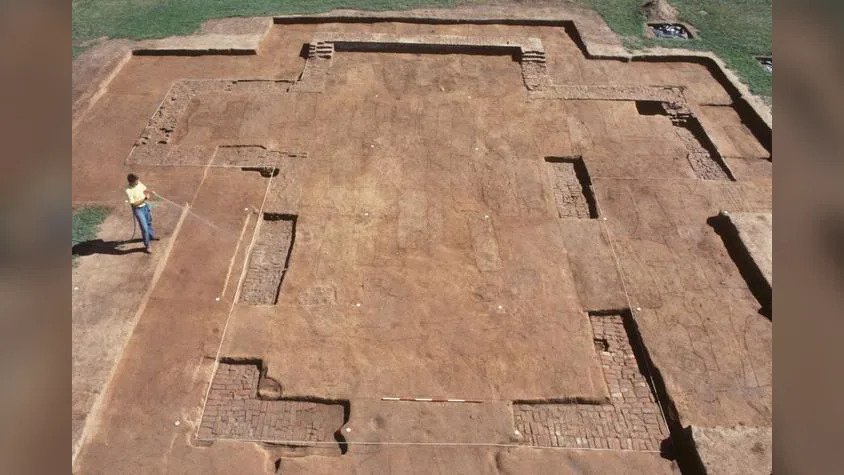
The foundation of the Brick Chapel in St. Mary's City. Burials were found in and around the outside of the chapel. | Credit: Henry M. Miller/Historic St. Mary's City
Why It Matters
The study demonstrates how ancient DNA and isotope chemistry can fill gaps in historical records, reveal migration patterns, and challenge assumptions about race and status in early colonial America. While the presence of a child with majority African ancestry in a prominent cemetery does not by itself settle whether he was enslaved, it opens important questions about identity, community membership, and burial practices in the 17th century.
Researchers: Éadaoin Harney (23andMe Research Institute), Douglas Owsley (Smithsonian National Museum of Natural History), David Reich (Harvard University), and collaborators.
Source: Study published May 14 in Current Biology.
Help us improve.





















