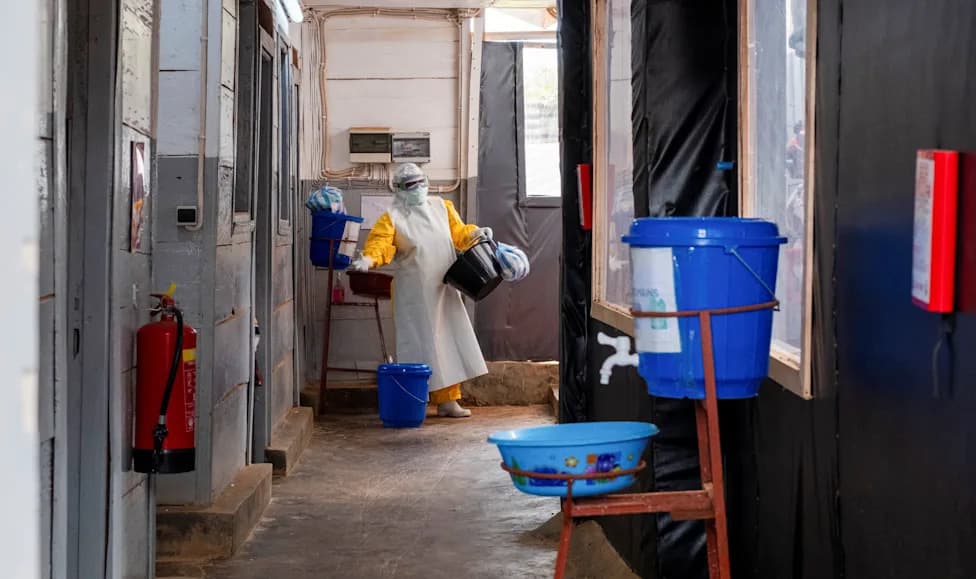
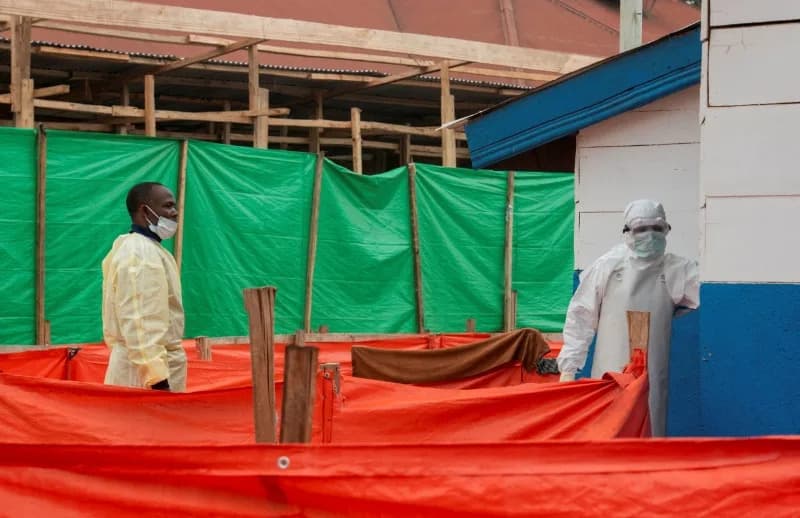
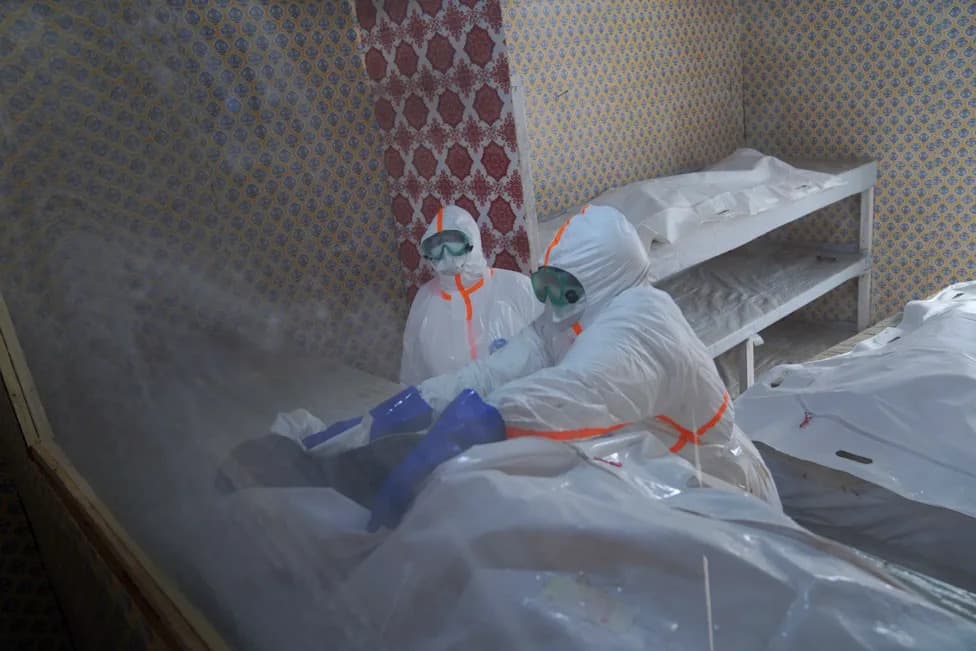
The DRC has declared a new Ebola outbreak caused by the Bundibugyo strain, for which there is currently no vaccine or specific treatment; health officials warn the strain can have a lethality rate up to 50%. Authorities reported 80 deaths and 246 suspected cases, and one confirmed death occurred in Uganda. The index patient was a nurse who sought care in Bunia on April 24. WHO and regional partners are mobilizing supplies and support amid concerns about cross-border spread.
DRC Confirms New Ebola Outbreak: Bundibugyo Strain Lacks Vaccine as Death Toll Rises to 80
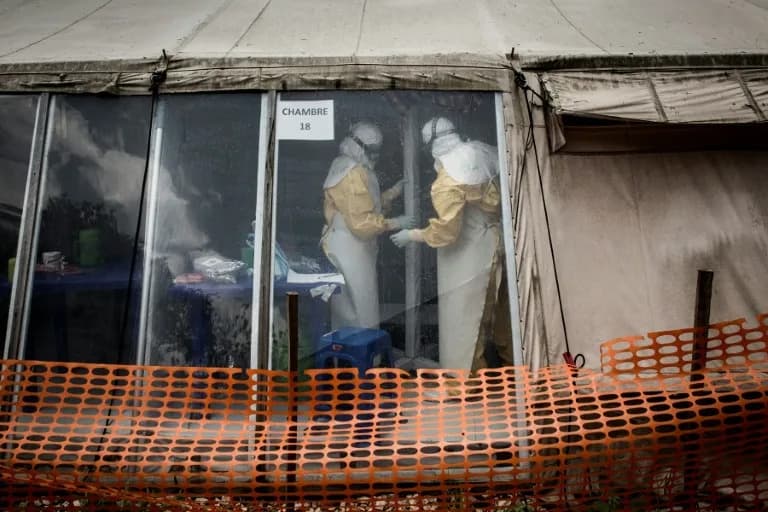
Officials have warned of a high risk of spread in what is the 17th Ebola outbreak the DRC has suffered (JOHN WESSELS)(JOHN WESSELS/AFP/AFP)
The Democratic Republic of Congo (DRC) is confronting a new Ebola outbreak caused by the Bundibugyo strain, which health authorities say currently has no vaccine or specific antiviral treatment. Officials reported a rising death toll and dozens of suspected cases, and neighbouring countries are on alert due to cross-border movement.
Current Situation
Health Minister Samuel-Roger Kamba said the Bundibugyo strain "has no vaccine, no specific treatment" and warned it can have a "very high lethality rate which can reach 50 percent." Authorities reported 80 confirmed deaths and 246 suspected cases, up from 65 deaths reported the previous day.
Cross-Border Case
One death linked to the outbreak was confirmed in neighbouring Uganda: a 59-year-old man from the DRC who died in Kampala after being admitted earlier in the week. Laboratory testing confirmed infection with the Bundibugyo strain, first identified in 2007; his body was repatriated the same day.
Index Case and Local Spread
According to the health ministry, the index patient (patient zero) was a nurse who sought care in the provincial capital Bunia on April 24, presenting with symptoms consistent with Ebola, including fever, bleeding and vomiting. The outbreak was reported in Ituri province in northeastern DRC, which borders Uganda and South Sudan.
"This strain has a very high lethality rate which can reach 50 percent," — Samuel-Roger Kamba, DRC Health Minister.
Response and Risks
The Africa Centres for Disease Control and Prevention (CDC Africa) and the World Health Organization (WHO) have confirmed the outbreak and warned of a high risk of further spread because of significant cross-border population movements. The WHO said it was preparing to airlift about five tonnes of supplies, including infection prevention equipment, from Kinshasa to support response efforts.
Vaccines that exist target the Zaire strain (identified in 1976), which has historically been associated with higher case fatality rates (60–90%). Those vaccines are not effective or available for the Bundibugyo strain, limiting immediate medical countermeasures.
Context
This is the DRC's 17th recorded Ebola outbreak. Past outbreaks in the country have ranged from dozens to thousands of deaths — notably the 2018–2020 epidemic that killed nearly 2,300 people. Ebola is a severe viral haemorrhagic fever believed to originate in bats and spreads through direct contact with bodily fluids of symptomatic patients. The incubation period can be up to 21 days.
What To Watch For
- Updates to confirmed case and death counts as laboratory results are returned
- Cross-border surveillance and travel advisories in neighbouring countries
- Deployment timeline and reach of WHO and partner support shipments
- Local infection prevention measures at health facilities, especially in Bunia and surrounding areas
Given the evolving situation, authorities urge communities to report suspicious symptoms promptly, avoid direct contact with the bodily fluids of sick or deceased persons, and follow public-health guidance to reduce transmission.
Help us improve.