Six years after sensational headlines about "cyborg locusts," researchers are focused on replicating the insect’s powerful sense of smell in engineered sensors rather than releasing live insects as bomb-sniffers. The work began with a $750,000 Office of Naval Research grant and expanded after a four-year, $4.3 million NSF award in October 2023 to create the CyBoR center at Washington University. Key advances include nanoparticles that amplify neural responses (January 2024) and studies applying hydrogels to locust antennae (October 2025). The long-term goal is locust-inspired sensors for robots or drones, not live-animal deployment.
Cyborg Locusts: From Viral Headlines to a $4.3M NSF Push — What’s Real and What’s Next
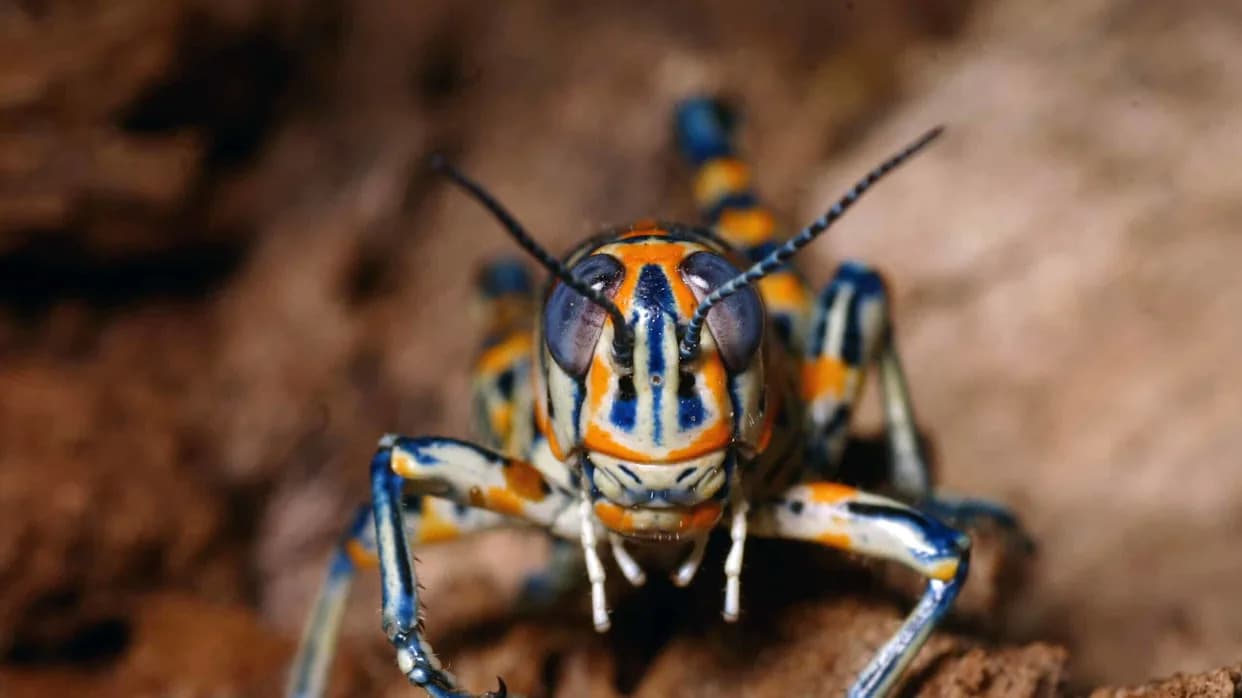
Rainbow grasshopper (Dactylotum bicolor)© Michael Benard/Shutterstock.com
Six years after sensational headlines about “cyborg locusts” capable of sniffing out explosives, the reality is more measured but no less interesting. Researchers have spent years decoding the locust’s extraordinary olfactory system with the explicit aim of reproducing — not releasing — that capability in scalable robotic sensors.
Origins: From a $750,000 ONR Idea to Proof of Concept
The work began with a $750,000 grant from the Office of Naval Research to examine whether locust olfaction could be understood and translated into engineered devices. Early studies showed researchers could reliably read and interpret neural signals from locust antennae linked to distinct odor signatures — a crucial first step toward bioinspired sensing.
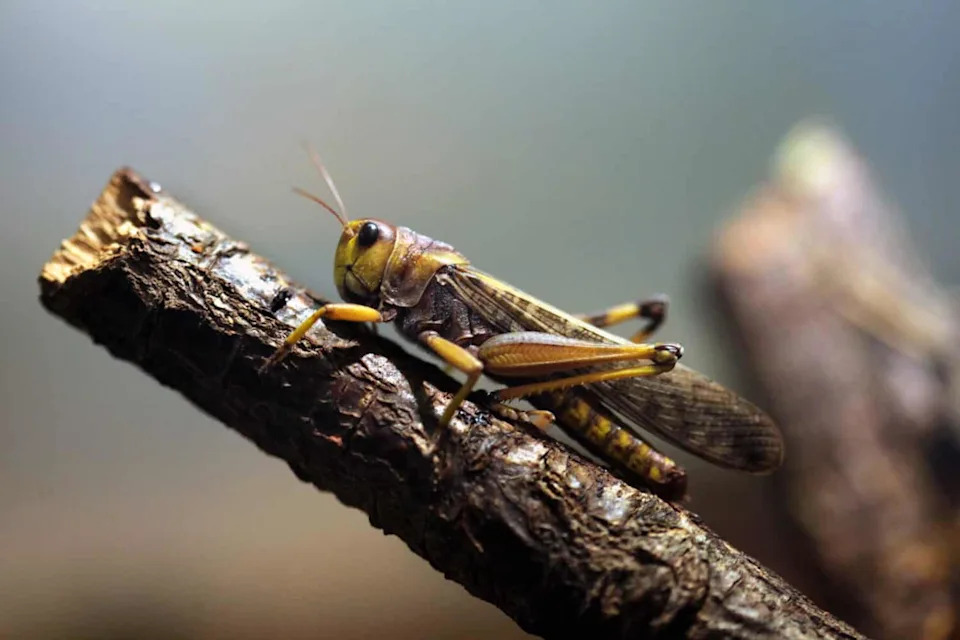
Researchers have been studying the olfactory system of locusts for six years.©Vladimir Wrangel/Shutterstock.com
NSF Funding and the Creation of CyBoR
In October 2023 the team at Washington University’s McKelvey School of Engineering won a four-year, $4.3 million National Science Foundation award to establish the Center for Cyborg and Biorobotics Research (CyBoR). The center’s mission is to convert biological olfactory insights into practical sensing modules that could be mounted on small robots or drones.
Technical Advances: Boosting Sensory Responses
In January 2024 CyBoR researchers reported a technical advance: custom nanoparticles that absorb light and convert it into heat. Placed near tiny electrodes, these particles enhanced neural responses in the locust brain and improved odor discrimination. Rather than simply passively recording signals, the team could now amplify sensory responses — a step toward reproducing or augmenting the biology in engineered systems.
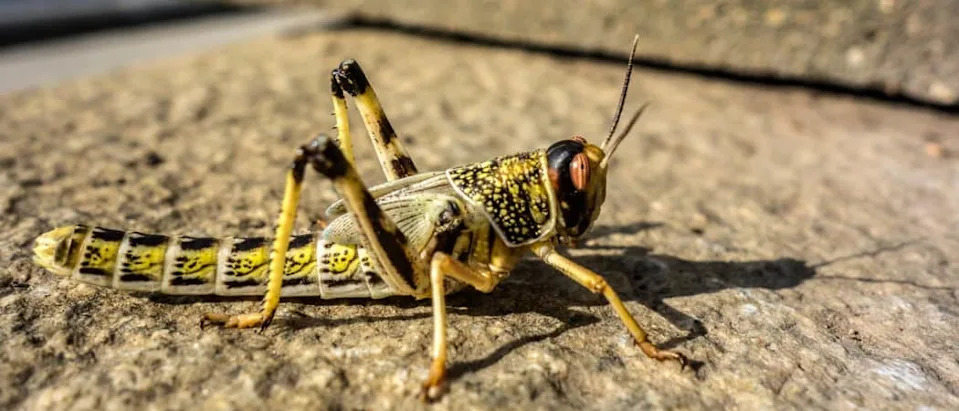
The goal is to build a replica of the locust’s sense of smell and implant it into robot locusts.©iStock.com/ivanoel28
Broader Experiments: Hydrogels and Biomedical Tests
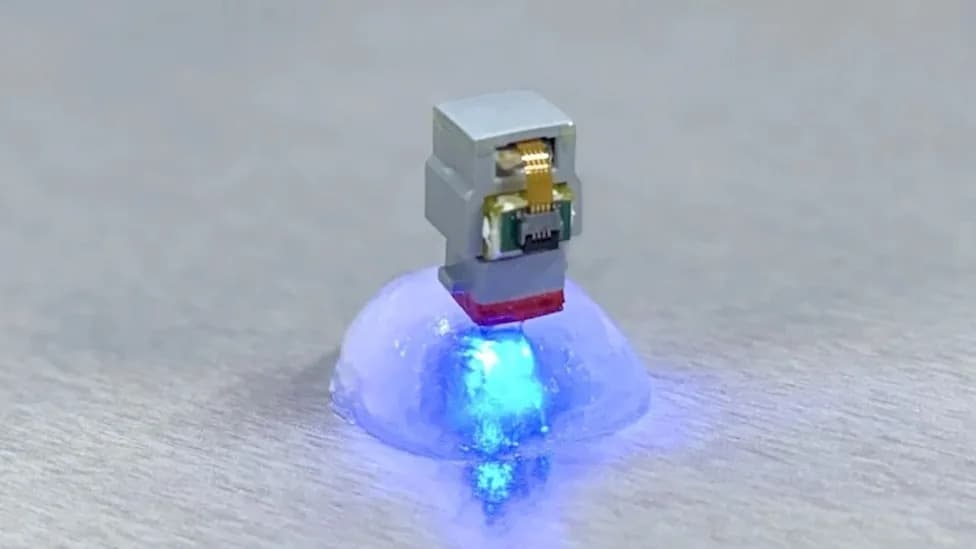
In October 2025 the group published a separate line of work using locust antennae to evaluate hydrogels — microparticles designed for injectable biomedical monitoring or stimulation. By measuring how olfactory neurons responded when hydrogels were applied to the antennae, researchers explored interactions between synthetic materials and living sensory tissue. That study highlights the lab’s multidisciplinary approach, though it doesn’t directly advance immediate bomb-detection deployments.
Key point: The objective has consistently been to replicate and adapt the locust’s olfactory prowess for engineered sensors — not to deploy living insects as detectors.
Where This Research May Lead
Barani Raman, PhD, the CyBoR founding director, was recently named the Dennis and Barbara Kessler Professor of Biomedical Engineering in recognition of this work and its potential applications across security and health. With funding secured, documented technical progress, and ongoing interdisciplinary experiments, locust-inspired biohybrid sensing modules remain a plausible future tool for security contexts — but practical deployment as airport screening tools remains a longer-term goal rather than a current reality.
Bottom line: The “cyborg locust” headline captured attention, but the research story is about turning insect olfaction into dependable, scalable sensing technology for robots and devices — not unleashing live locusts in public spaces.
Help us improve.