SNAPPY, the first neutrino detector flown in space, launched on May 3 aboard a SpaceX CAS500-2 rideshare and is now testing detection methods from a 3U CubeSat in a ~310-mile (500 km) orbit. The gallium- and tungsten-crystal sensor aims to prove that compact instruments in space can measure solar neutrinos — particles that escape the sun’s core within seconds and could reveal fusion processes inaccessible to light-based observations. If successful, SNAPPY could pave the way for missions that place detectors closer to the sun to image the star’s fusion layers.
SNAPPY: World’s First Space-Based Neutrino Detector Launches to Orbit to Probe the Sun
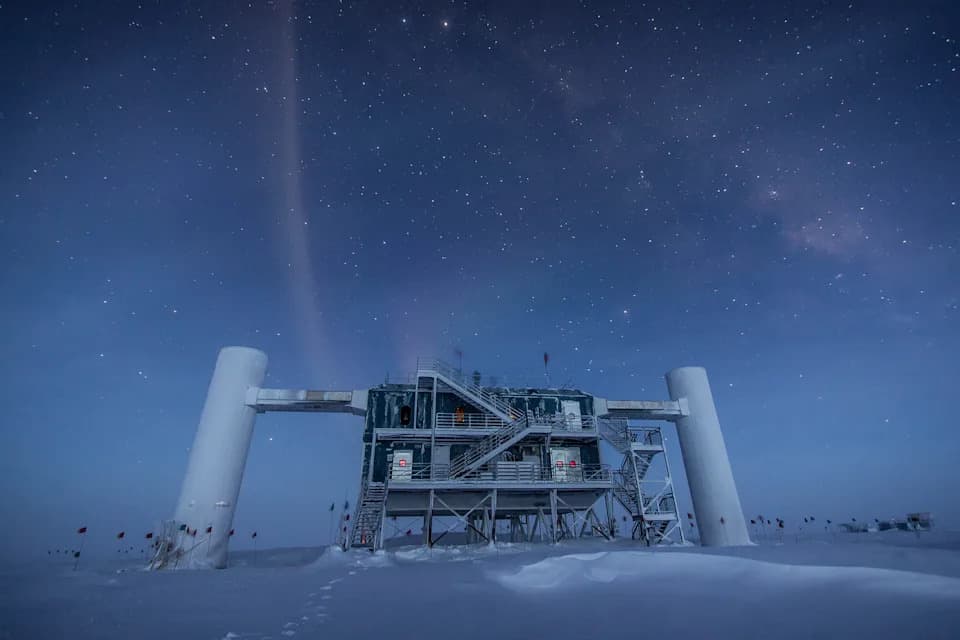
The IceCube Neutrino Observatory in Antartica. | Credit: Courtesy of IceCube Neutrino Observatory
The first-ever neutrino detector flown in space — SNAPPY — launched on May 3 and is now testing whether tiny, hard-to-catch particles from the sun can be observed above Earth. The instrument, built from gallium and tungsten crystals, rides inside a 3U CubeSat (roughly 12 × 4 inches, or about 30 × 10 cm) that will circle Earth at an altitude of approximately 310 miles (500 km) for about two years.
What Is SNAPPY?
SNAPPY (Solar Neutrino Astro-Particle PhYsic) is a technology-demonstration experiment proposed by Nickolas Solomey, a professor of physics and mathematics at Wichita State University. Its primary goal is to validate whether a compact, gallium-based detector can reliably register solar neutrinos from orbit — a step toward future missions that might place detectors much closer to the sun, where neutrino fluxes are far higher.
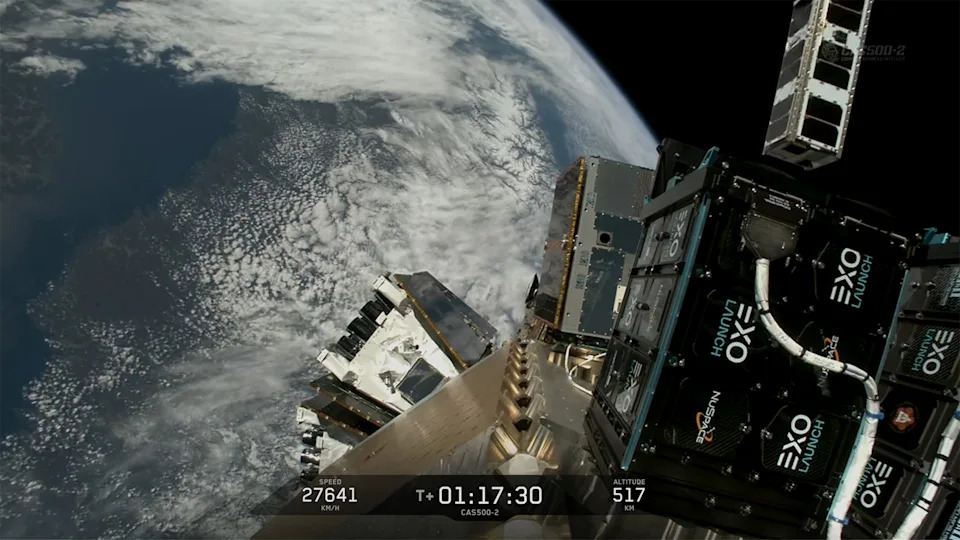
The SNAPPY cubesat is deployed during SpaceX's CAS500-2 rideshare mission on May 3. | Credit: Kongsberg/NanoAvionics
How It Works
The detector uses gallium and tungsten crystals to register interactions between neutrinos and atomic nuclei. Neutrinos are nearly massless, chargeless particles produced in nuclear decay, reactor fission and, most importantly for SNAPPY, the fusion reactions at the core of the sun. Although trillions of neutrinos pass through our bodies every second, they interact so weakly with matter that detecting them normally requires massive, deeply buried instruments.
Why Space-Based Detection Matters
Closer to the sun the density of solar neutrinos rises dramatically. As Solomey explains, a small detector nearer the sun can achieve sensitivity equivalent to a much larger terrestrial instrument: "A one-kilogram detector placed closer to the sun can behave like a thousand-kilogram detector on Earth." Space-based detectors could therefore enable high-cadence measurements and potentially resolve spatial structure in the sun's fusion zones.
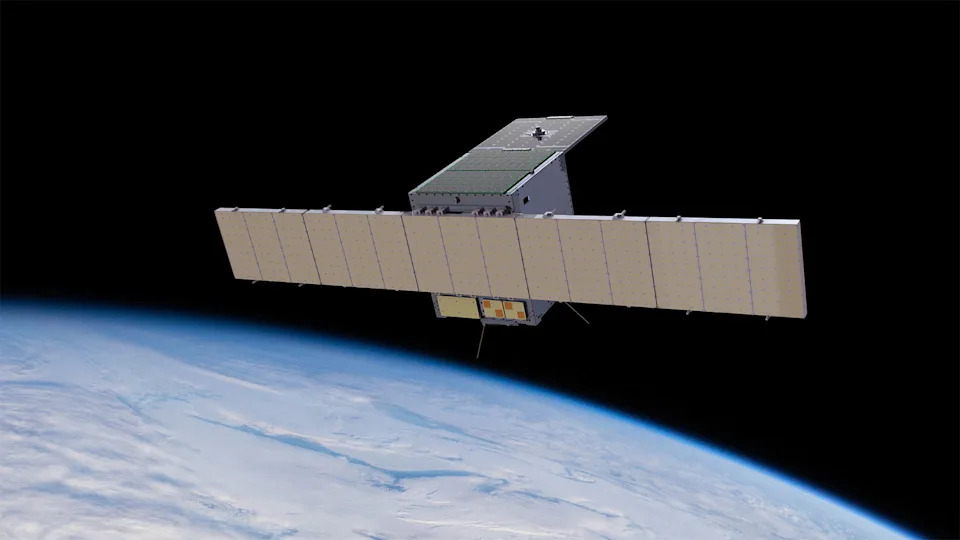
An illustration of the SNAPPY neutrino detector in orbit. | Credit: Kongsberg/NanoAvionics
Context: Earth-Based Observatories
On Earth, neutrino observatories such as China’s Jiangmen Underground Neutrino Observatory and the IceCube Neutrino Observatory at the South Pole are buried deep underground or embedded in ice (hundreds to thousands of meters) to shield them from cosmic-ray backgrounds. SNAPPY is testing whether meaningful neutrino measurements can be made in orbit without those bulky shielding requirements.
Scientific Potential
When neutrinos interact with nuclei, they can produce electrons, muons or tau particles. Because neutrinos come in different "flavors" and energy ranges, the gallium-based sensor aboard SNAPPY — which is particularly sensitive to certain low-energy solar neutrinos — could pick up signals that many argon-based Earth detectors miss. Measuring the flux and composition of solar neutrinos could reveal details about the fusion processes and particle-transport physics within the sun's core.
"It's like putting a microscope into the core of the sun," Solomey said. Neutrinos escape the sun’s interior within seconds of being produced, while photons and physical matter take roughly 100,000 years to travel from the core to the surface.
Next Steps
SNAPPY's current mission is an in-orbit technology validation effort. If the experiment demonstrates reliable in-space neutrino detection, it could support proposals for future missions that place larger or more sensitive detectors on trajectories toward the sun, enabling new probes of solar fusion and particle physics.
Mission Details: Launched May 3 on the SpaceX CAS500-2 rideshare; 3U CubeSat; orbit ≈ 310 miles (500 km); planned operations ≈ 2 years.
Help us improve.