New geochemical data suggest the Kafue Rift in southern Africa may be entering an early stage of rifting. Researchers found elevated helium-3/helium-4 ratios in hot springs and geothermal wells in Zambia, a signature often linked to mantle-derived fluids rising toward the surface. The results are preliminary — samples came from six clustered sites — and broader sampling is underway to determine whether the signal extends along the proposed rift. If sustained, rifting could evolve into a new plate boundary over millions to tens of millions of years, with nearer-term opportunities for geothermal energy and helium extraction.
New Rift Rising? Geochemical Evidence Suggests Kafue Rift May Be Evolving Into A Plate Boundary
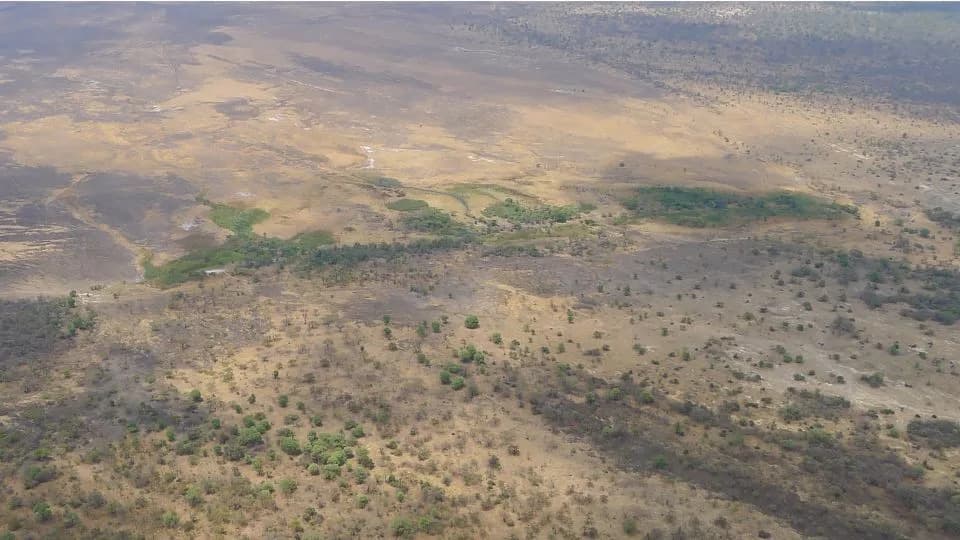
An aerial view shows the Gwisho hot springs and the southern Kafue Rift fault zone, where researchers say a new continental rift could be forming. - P. Vivien-Neal/Kalahari Geo-Energy & M. C. Daly/University of Oxford, UK
Scientists report new geochemical evidence that the Kafue Rift in southern Africa may be showing early-stage tectonic activity that could, over millions of years, evolve into a new plate boundary.
What the Study Found
A team led by Rūta Karolytė published the first geochemical measurements from springs and geothermal wells above the Kafue Rift in Frontiers in Earth Science. Samples from six clustered sites in Zambia showed elevated helium-3 to helium-4 ratios — a signature commonly associated with mantle-derived fluids. Two additional springs about 60 miles (95 km) away lacked the same helium-3 signal, suggesting the anomaly is localized to the suspected rift zone.
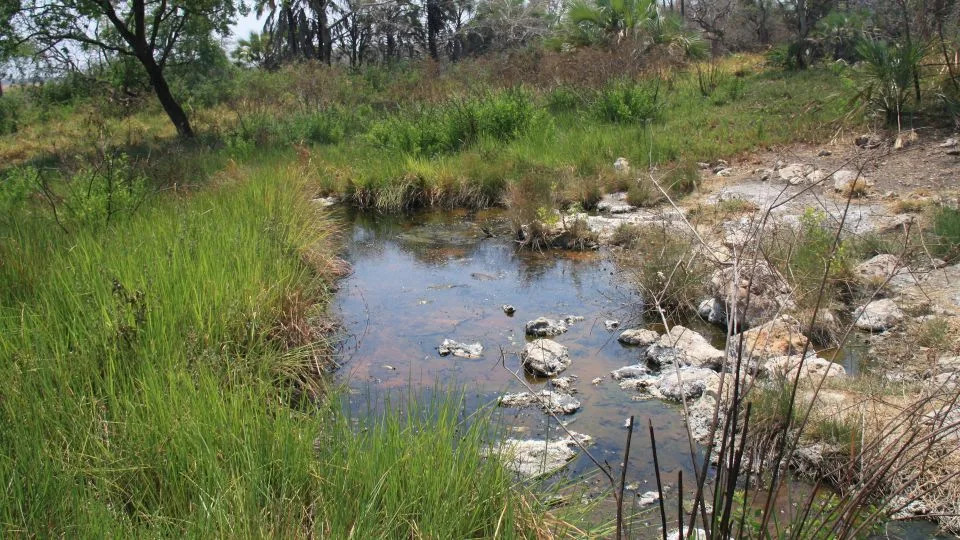
The researchers collected gas samples for the study from a hot spring in Zambia's Gwisho area. - P. Vivien-Neal/Kalahari Geo-Energy & M. C. Daly/University of Oxford, UK
Why Helium-3 Matters
Helium-3 is rare in Earth’s crust but relatively more abundant in the mantle. Detecting elevated helium-3/helium-4 ratios in surface waters indicates a direct pathway for deep fluids to reach the surface, which is consistent with crustal stretching and nascent rifting.
Context And Timeframes
Geophysical indicators recorded in recent decades — faint instrument-detected earthquakes, subtle ground changes seen by satellites, and rising subsurface temperatures — had already hinted at renewed activity along the Kafue Rift, part of a roughly 1,500-mile (2,500-km) rift system stretching from Tanzania to Namibia. Study coauthor Mike Daly estimates that if rifting progresses, it could take a few million to tens of millions of years to develop into a full plate boundary.
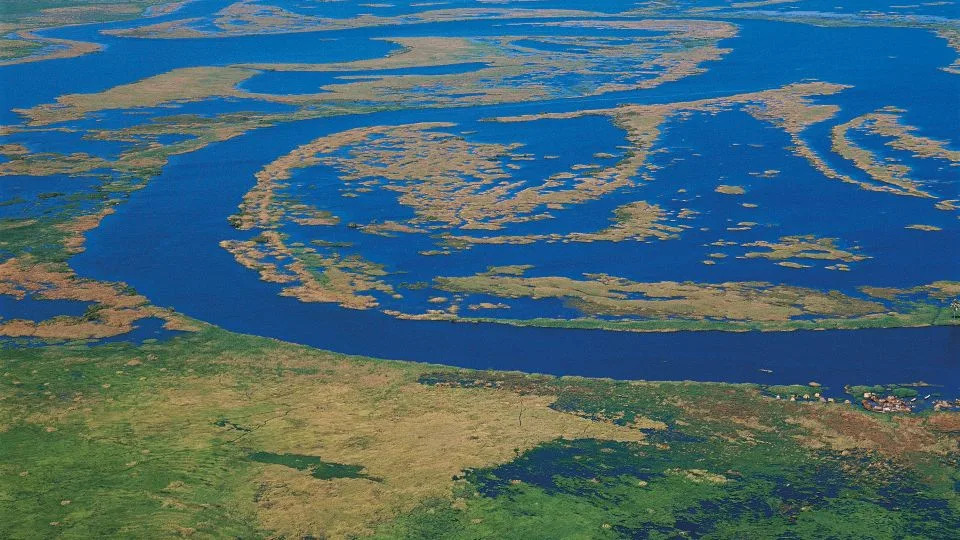
An aerial view captures the Kafue River marshes in Zambia. - DeAgostini/Getty Images
"If the Kafue Rift is part of a newborn plate boundary, it gives us a rare opportunity to study the birth of a plate boundary before volcanism, large earthquakes, and major surface deformation have overprinted the original conditions." — Estella Atekwana, University of California, Davis
Implications And Near-Term Benefits
Although continental breakup would require geological time, nearer-term effects could include increased seismicity, localized volcanism, and the formation of deeper rifts and lakes. Economically, the region could benefit from expanding geothermal development and the potential extraction of helium, a gas in demand for medical and technological applications.
Limitations And Next Steps
The study's sample size and geographic concentration make the results preliminary. Researchers are expanding gas sampling along the proposed rift to determine whether the mantle helium signature is continuous or localized. As experts note, confirming a new plate boundary requires coherent evidence at plate-boundary scale, so broader geochemical, geophysical, and geological data are needed.
Bottom line: The helium isotope data strengthen the case that the Kafue Rift is active at depth and may represent an early stage of rifting, offering a rare opportunity to observe plate-boundary birth — but much more data are required before declaring a new tectonic plate boundary.
Help us improve.