A team led by UNSW has applied an apsidal precession technique to TESS data and identified 27 candidate circumbinary (two‑sun) planets. Unlike the transit method, this approach can detect planets regardless of orbital alignment with Earth by measuring unexplained shifts in binary eclipse timings. The candidates range from about 650 to 18,000 light‑years away and remain unconfirmed pending follow‑up observations.
Scientists Identify 27 Potential 'Tatooine' Worlds Using A New Two‑Sun Detection Method
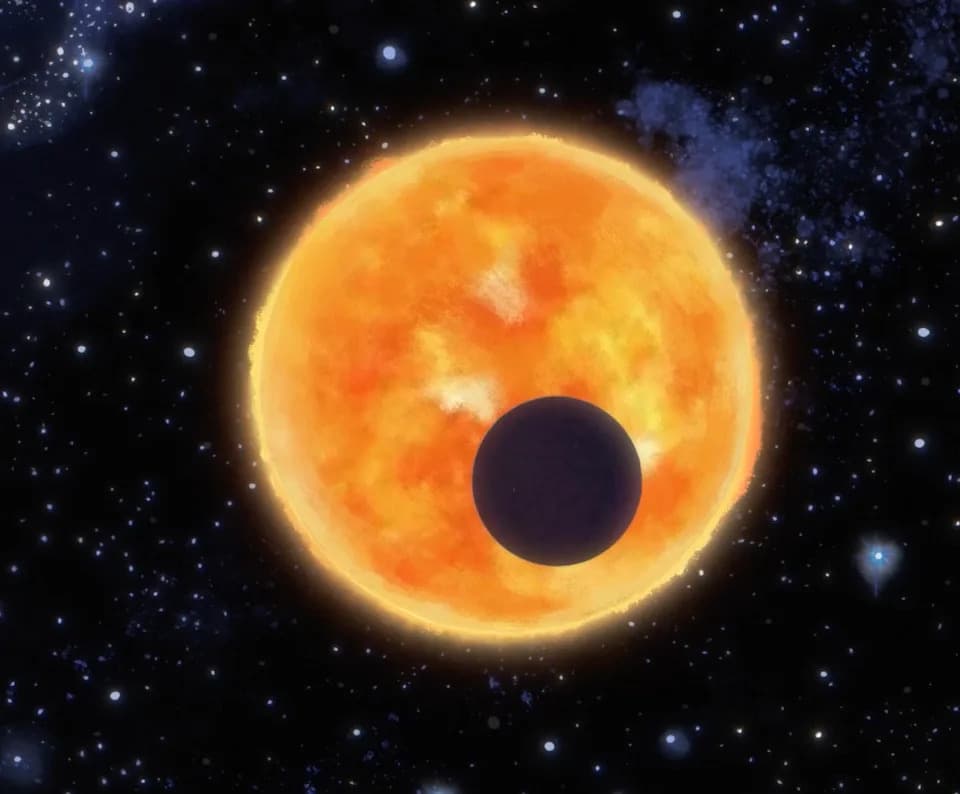
The transit method -- where a planet crosses its star from our perspective, causing a mini-eclipse -- is how most planets have been discovered. It's shown here in an artist's rendition.UNSW Media
One of the most enduring images from Star Wars is Luke Skywalker watching two suns set over his home world, Tatooine. Worlds that orbit two stars are real and are called circumbinary planets — but they remain rare in astronomical surveys.
Until now, astronomers have confirmed just 18 circumbinary planets among roughly 6,000 known exoplanets. A team led by researchers at the University of New South Wales (UNSW) in Sydney says it has developed a new way to find these elusive two‑sun planets and has identified 27 candidate circumbinary systems in data from NASA's Transiting Exoplanet Survey Satellite (TESS).
How the New Method Works
Most exoplanets are found with the transit method, which detects tiny dips in a star's brightness when a planet passes between the star and Earth. That approach only works when a planet's orbit is aligned with our line of sight.
The UNSW team instead used a technique based on apsidal precession — the slow rotation of the elliptical orbit of a binary star system. In eclipsing binary stars (where one star periodically passes in front of the other from our viewpoint), the timing and shape of eclipses reveal the pair's orbital geometry. If those eclipse timings shift in a way the two stars alone cannot explain, a third body tugging on the system could be the cause. That third body may be a circumbinary planet.
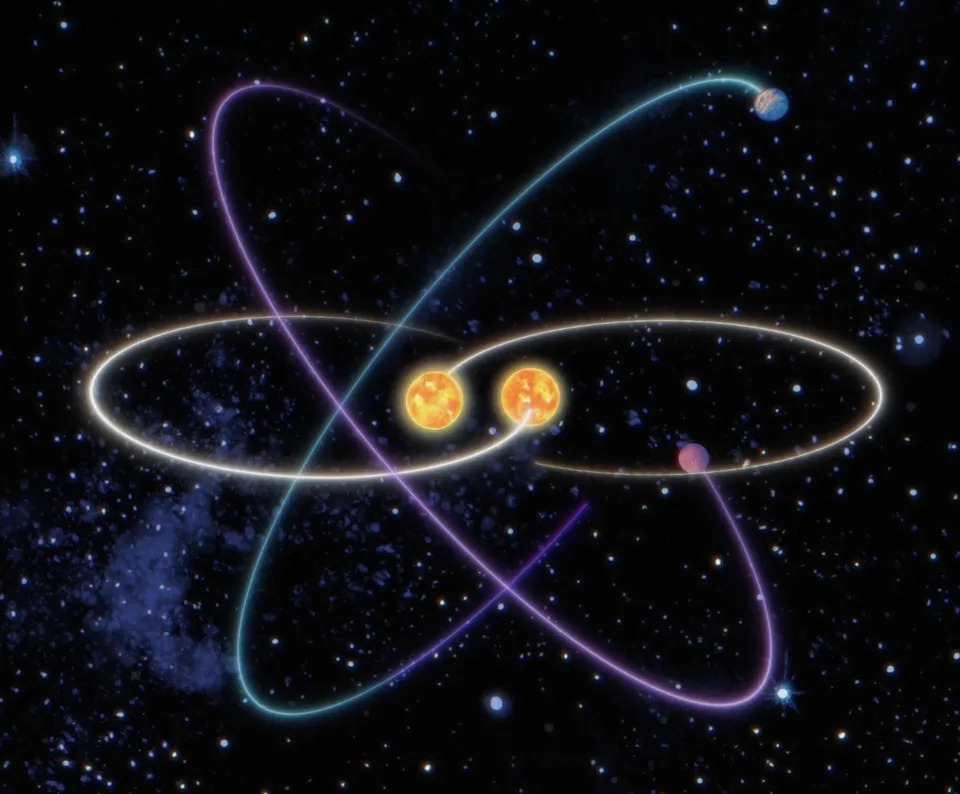
The apsidal precession method, shown here in an artist's rendition, helps astronomers detect planets that the transit method might have missed.UNSW Media
"It's important to be clear that these are all candidates, not confirmed planets yet,"said Margo Thornton, a UNSW Ph.D. candidate who led the study.
"Follow‑up observations will tell us for sure."
What Makes This Significant
This approach is not limited by orbital alignment with Earth: "Our method doesn't have that restriction," Thornton said. "It can find planets orbiting at all kinds of angles." The team argues the technique opens a view onto a population of circumbinary planets that previous transit‑based surveys were blind to.
Data and Distance
The candidates come from analysis of TESS observations. The nearest candidate system identified by the team lies at about 650 light‑years from Earth and the farthest at roughly 18,000 light‑years. These systems will need targeted follow‑up — for example, additional photometric monitoring or radial velocity measurements — to confirm whether the candidate signals are truly planets.
Reflecting on the work, Thornton described the thrill of early discovery: "There's a strange and wonderful feeling that comes with discovery: for a brief window, we were the only people on Earth who knew these planet candidates existed." The team now hopes other observers will help confirm which of the 27 candidates are genuine circumbinary planets.
Help us improve.