
WHO Director‑General Tedros Adhanom Ghebreyesus said the agency's work continues after a hantavirus outbreak aboard the cruise ship MV Hondius killed three passengers and sickened others. Health officials say the global risk is low but warn more cases may emerge because the Andes variant can spread between people and the incubation period can last up to six weeks. Over 120 passengers and crew were evacuated from the Canary Islands; most countries are following WHO guidance for a 42‑day quarantine and close monitoring.
WHO Chief Says “Our Work Is Not Over” After Deadly Hantavirus Outbreak Aboard MV Hondius
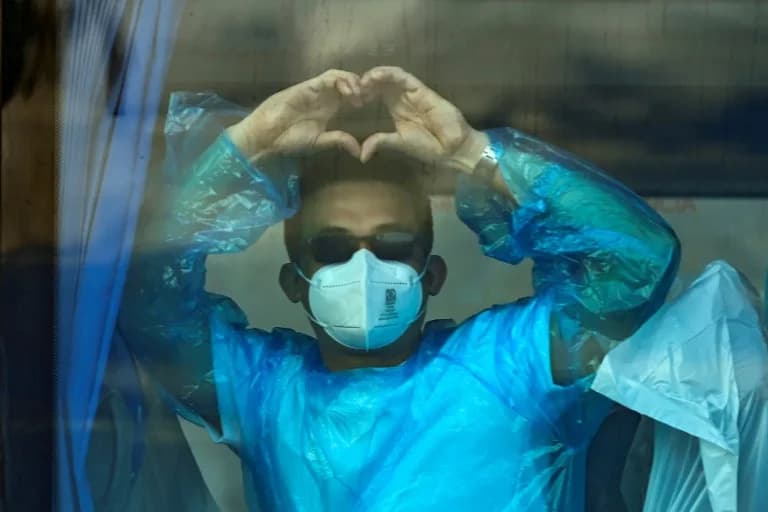
A passenger of the MV Hondius is pictured leaving by military bus after disembarking in Tenerife on May 11, 2026 (JORGE GUERRERO)(JORGE GUERRERO/AFP/AFP)
World Health Organization Director‑General Tedros Adhanom Ghebreyesus warned on Tuesday that "our work is not over" after a hantavirus outbreak aboard the cruise ship MV Hondius led to an international evacuation and three confirmed deaths. While officials stress the global public health risk remains low, they urge vigilance because of the virus's long incubation period and the human‑to‑human capability of the Andes variant.
What Happened
The MV Hondius, which sailed from Argentina on April 1 for an Atlantic crossing to Cape Verde, saw an outbreak of hantavirus that has so far resulted in three fatalities among passengers. According to official tallies, seven living passengers or crew members have tested positive and one additional case is considered "probable." Affected nationalities include the United States, the United Kingdom, France, Spain, Switzerland and the Netherlands.
Public Health Response
More than 120 passengers and crew were flown out from the Canary Islands during an evacuation operation over the weekend. Most countries receiving evacuees followed WHO guidance recommending a 42‑day quarantine and active monitoring of high‑risk contacts, reflecting the virus's incubation period of up to six weeks.
"There is no sign that we are seeing the start of a larger outbreak," Tedros said at a joint news conference in Madrid with Spanish Prime Minister Pedro Sanchez, while adding that "the situation could change" and more cases may appear in the coming weeks.
Diplomatic and Operational Challenges
The incident created diplomatic tensions as states negotiated who would accept the vessel and care for its passengers. Cape Verde declined to receive the ship, leaving it anchored off Praia while several patients were evacuated to Europe. Spain permitted the MV Hondius to anchor off the Canary Islands to complete the evacuation despite regional opposition from the archipelago's government. Prime Minister Sanchez defended the move, saying the world needs "countries that show solidarity" rather than fear or selfishness.
The MV Hondius departed Tenerife with a skeleton crew and is scheduled to arrive in the Netherlands for disinfection.
About Hantavirus
Hantaviruses are typically transmitted to humans via contact with infected rodents' urine, feces or saliva. There are no vaccines or specific antiviral treatments for hantavirus infections; care focuses on supportive treatment. The Andes variant is noteworthy because it has demonstrated the ability to transmit between people, which is why health authorities remain cautious.
Key actions: continued monitoring of evacuees, follow‑up testing for symptomatic contacts, and adherence to WHO quarantine recommendations.
Help us improve.





















