Salt-pan labourers in Gujarat’s Little Rann of Kutch endure extreme dry heat—often above 45°C—using simple, time-tested methods such as staggered hours, dung-coated shelters and evaporatively cooled water bottles. Up to 50,000 workers spend eight months a year on remote pans without electricity or formal healthcare, receiving tanker water roughly every 25 days. A shift from diesel to solar pumps has extended the working season into hotter months, heightening heat-related health risks including dehydration, heat stress and early signs of kidney damage.
No Trees, No Fans: How Gujarat’s 50,000 Salt-Pan Workers Endure Brutal 45–48°C Heat
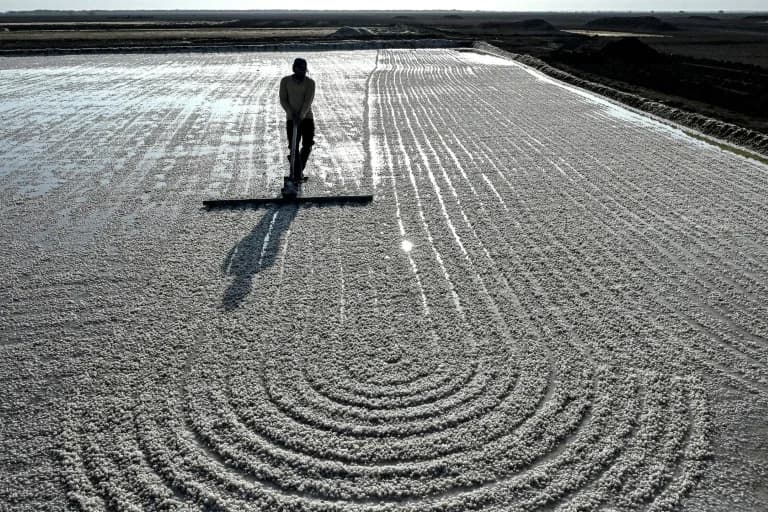
In Gujarat's Little Rann of Kutch summer temperatures routinely cross 45 degrees Celsius and can climb to 47–48C (Shammi MEHRA)(Shammi MEHRA/AFP/AFP)
India’s western salt pans are among the country’s most unforgiving workplaces. In Gujarat’s Little Rann of Kutch, up to 50,000 people spend roughly eight months a year on remote flats without electricity or formal healthcare, relying on a water tanker that visits about every 25 days.
Everyday Survival
Workers use simple, time-tested methods to cope with scorching, dry heat that often exceeds 45°C and can climb to 47–48°C. Staggered shifts keep the heaviest labour to early mornings and evenings. During peak heat they retreat to improvised shelters: stick frames draped with coarse homespun cloth and coated with wild donkey dung, which blocks direct sun while allowing heat to escape.
“We work in staggered timing...doing our work in early mornings and after sunset,” said 42-year-old Babulal Narayan, who rakes brine as it evaporates in shallow pans.
Cooling Tricks and Daily Routines
Small adaptations make a big difference. Workers hang bottles wrapped in wet cloths so passing wind cools the water by evaporation. Some drink hot tea to induce sweating in arid air, which helps lower body temperature. Rubber boots are rare but used by some to protect feet from brine that can crack and bleed the skin.
Salt Production and Longer Seasons
Gujarat’s dry climate is ideal for salt production; the state provides about three-quarters of India’s salt. Saline water is pumped from bore-wells into shallow pans where sun and wind drive evaporation. Workers rake the brine daily to ensure even crystallisation; after weeks a thick crust forms, which they break and pile into mounds.
A shift from diesel pumps to cheaper solar-powered pumps has cut costs and extended the season. Tasks that once finished in March now continue into the hottest months, prolonging workers’ exposure to dangerous heat.
Health Risks and Economic Strain
Heat stress on the pans is common: fatigue, dizziness and nausea frequently affect labourers and can escalate to organ failure or death if the body’s cooling systems are overwhelmed. Several studies have documented high levels of dehydration, heat strain and early signs of kidney dysfunction in salt-pan communities.
“I take a paracetamol whenever fever becomes high,” said Kanchan Narayan, who wears rubber boots to shield her feet from corrosive brine.
Workers face unpredictable losses from weather: dust storms and sudden rains can destroy crystallised salt overnight, forcing costly restarts. One worker reported losing salt worth 200,000 rupees (~$2,100) to a dust storm. For a season, a family of six earned about 250,000 rupees (~$2,635), roughly $450 per person for eight months of strenuous labour.
Policy Gaps and Climate Pressure
India has no legally mandated stop-work temperature for outdoor labour; authorities use India Meteorological Department (IMD) thresholds—around 40°C to trigger heat alerts and 47°C to label conditions “severe”—and local officials may impose restrictions. Low humidity in the desert helps sweat evaporate, offering some relief, but rising heatwave frequency and intensity, together with erratic storms, are increasing risks for livelihoods and health.
Conclusion
The salt pans exemplify the intersection of climate vulnerability, economic necessity and limited protections. Workers’ improvisations help them survive today, but growing heat and unstable weather underline the need for stronger workplace safeguards, regular water and medical access, and policies that protect these communities as climate risks intensify.
Help us improve.