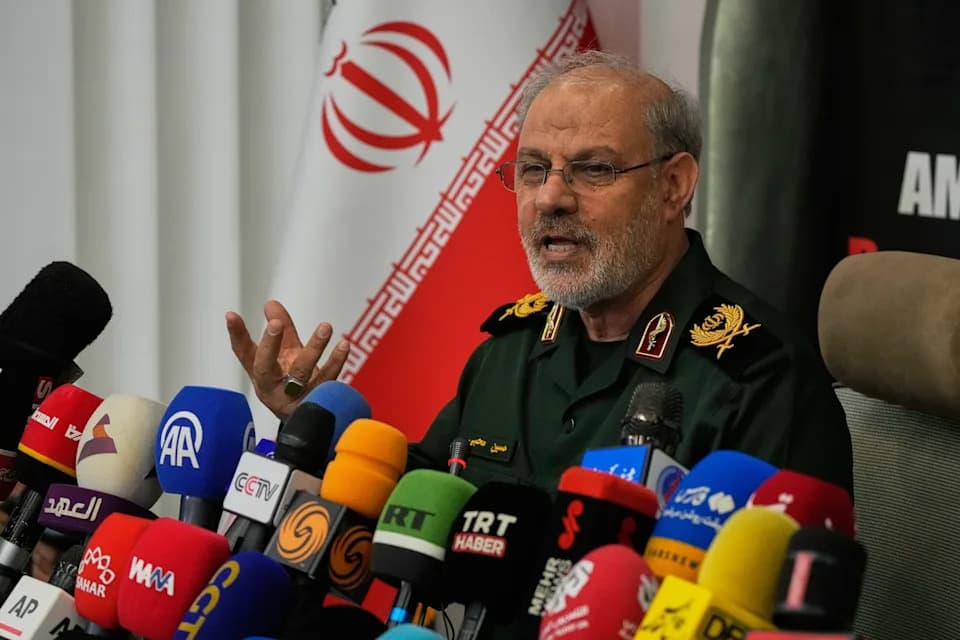
The US and Iran traded strikes after an incident in the Strait of Hormuz that Washington says targeted three US destroyers and Tehran says began with a US attack on civilian vessels. The exchanges threaten a fragile ceasefire in effect since April 8 and have worsened a shutdown that has trapped roughly 1,500 ships and 20,000 crew in the Gulf. Diplomatic mediation through Pakistan and upcoming Israel‑Lebanon talks aim to calm tensions, but violence in Lebanon and civilian skepticism underline how precarious any agreement remains.
US and Iran Exchange Fire After Strait of Hormuz Incident, Threatening Fragile Ceasefire
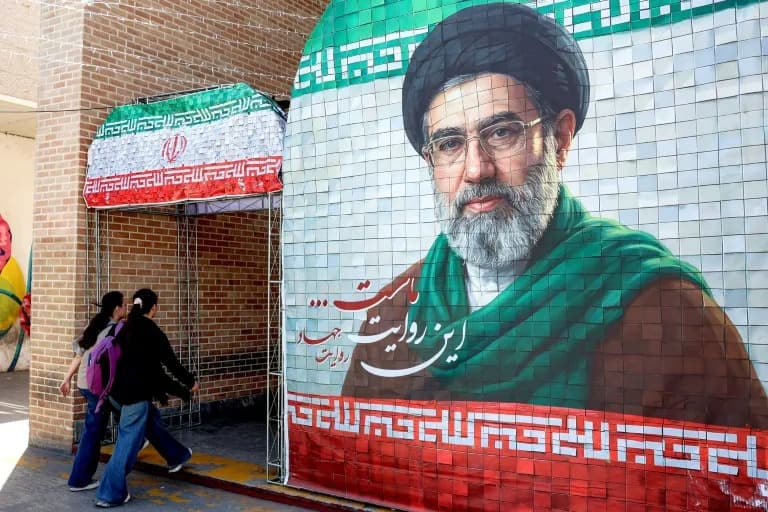
Women walk past a banner depicting Iran's current supreme leader Ayatollah Mojtaba Khamenei on a street in Tehran (-)(-/AFP/AFP)
The US military said on Thursday it struck Iranian military targets after what it described as an attack on three American destroyers in the Strait of Hormuz, while Tehran accused Washington of firing first. The exchanges risk undermining a fragile truce that has been in place since April 8 and have further disrupted maritime traffic in the Gulf.
Strait of Hormuz Incident
US Central Command (CENTCOM) reported that "Iranian forces launched multiple missiles, drones and small boats" toward three US warships, but said no US vessels were hit. CENTCOM said it "eliminated inbound threats and targeted Iranian military facilities responsible," while stressing that it "does not seek escalation but remains positioned and ready to protect American forces."
Iran's central military command responded by accusing the United States of violating the ceasefire, saying US forces struck an oil tanker and another vessel and that Iranian forces "immediately and in retaliation attacked American military vessels." The competing accounts have heightened uncertainty over which side fired first and increased the risk of further clashes.
Diplomatic Efforts and Mediation
Diplomatic efforts are continuing amid the flare-up. Iran's foreign ministry spokesman Esmaeil Baqaei said Tehran would communicate its position to mediator Pakistan "after finalizing its views." Pakistani Prime Minister Shehbaz Sharif had earlier expressed optimism about the ceasefire, saying on television: "I firmly believe that this ceasefire will turn into a long‑term ceasefire."
US President Donald Trump had raised hopes of a deal just a day earlier, saying an agreement might be near while warning he could resume bombing if Tehran did not back down. Senator Marco Rubio described a peace deal between Israel and Lebanon as "eminently achievable," while identifying Hezbollah as a central obstacle to a broader stabilization in the region.
Lebanon and Broader Regional Tensions
The US‑Iran tensions are entwined with violence in Lebanon. Renewed Israel‑Lebanon talks are scheduled for May 14–15, but the truce there has come under strain after an Israeli strike on southern Beirut killed a Hezbollah commander. Hezbollah has carried out strikes targeting Israeli forces in southern Lebanon, and Israel has continued limited operations against the group.
Lebanon's health ministry reported at least 12 people killed in a series of Israeli airstrikes on Thursday, underscoring how fragile local ceasefires remain even as larger diplomatic talks continue.
Impact on Shipping
Since the start of the conflict on February 28, Iran has largely shuttered the Strait of Hormuz at times. The closure has contributed to a major disruption in commercial shipping: the United Nations' International Maritime Organization (IMO) told a meeting in Panama that about 1,500 ships and roughly 20,000 international crew are currently stranded in the Gulf region.
Earlier in the week, President Trump briefly ordered a naval operation intended to reopen the strait to commercial traffic, but he stood that operation down within hours, citing progress in negotiations with Iran. The situation remains volatile and diplomatic initiatives are continuing as regional and international actors monitor developments closely.
Bottom line: Conflicting claims over the Thursday exchanges heighten the risk of escalation, and fragile ceasefires both between the US and Iran and in Lebanon face renewed strain amid ongoing military and diplomatic activity.
Help us improve.