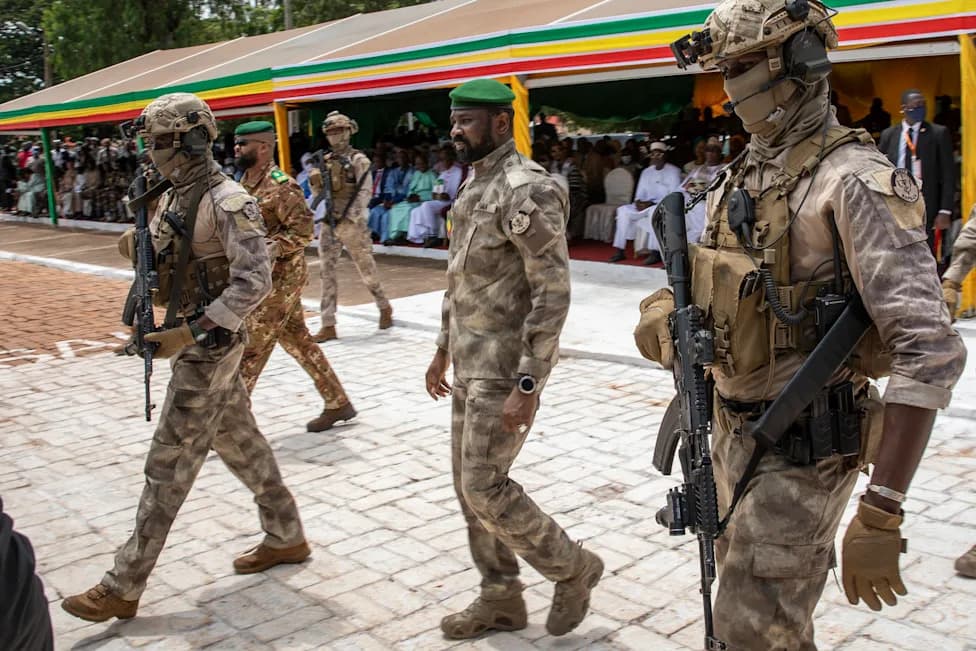
JNIM militants attacked Kenieroba Central Prison about 60 km southwest of Bamako and set fire to food trucks headed for the capital, deepening fears of a humanitarian crisis. The detention centre holds about 2,500 inmates, including roughly 72 considered 'high value,' and Malian forces were reported to be trying to repel the assault. The violence follows coordinated April 25–26 attacks that seized Kidal and killed Defence Minister Sadio Camara, prompting mass arrests and UN concerns about alleged extrajudicial killings. Observers warn that the blockade around Bamako could cause severe food shortages across Mali.
Al‑Qaeda‑Linked Fighters Storm Mali Prison Nicknamed 'Africa's Alcatraz' and Burn Food Convoys Bound for Bamako
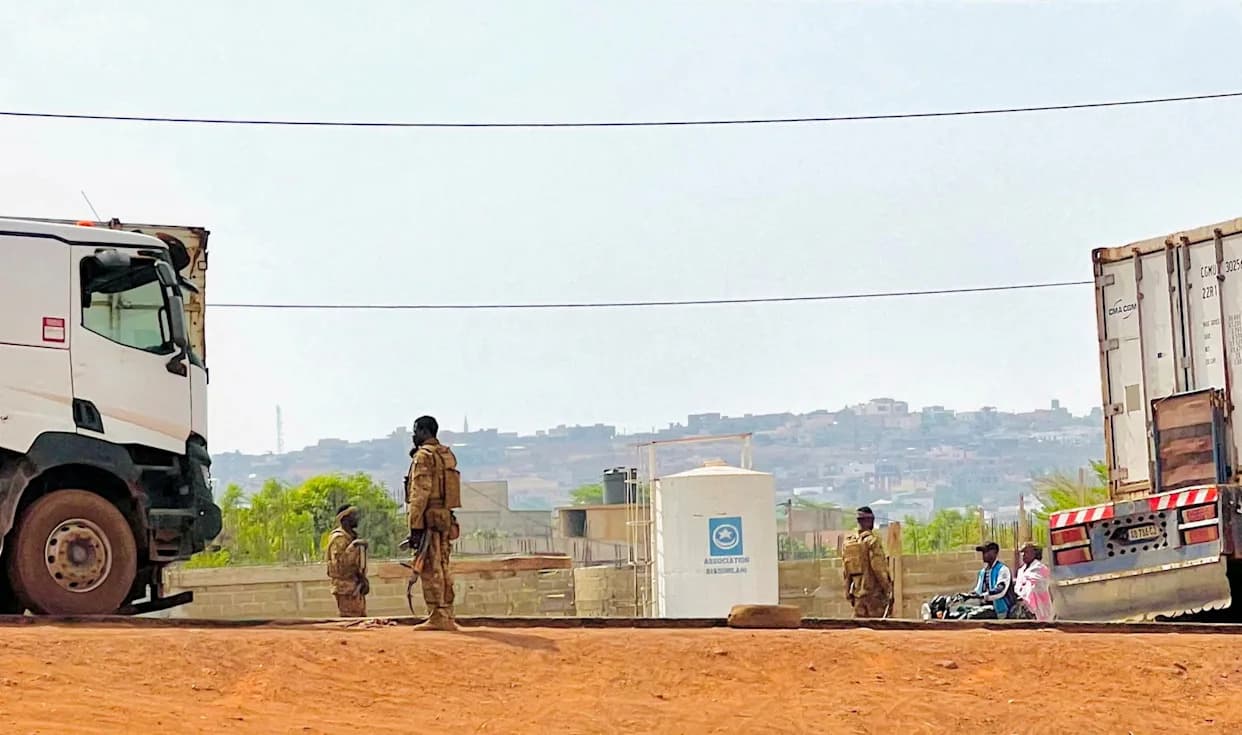
Malian soldiers stand near a truck during a patrol following the attack on Mali's main military base Kati, outside the capital Bamako, Mali [Reuters]
Fighters linked to the al‑Qaeda‑affiliated Jama’at Nusrat al‑Islam wal‑Muslimin (JNIM) launched a new assault in Mali, storming Kenieroba Central Prison and setting fire to trucks carrying food supplies destined for the capital, Bamako.
The attack targeted Kenieroba — a recently completed detention complex about 60 km southwest of Bamako that has been described in the media as 'Africa's Alcatraz.' Local and international reporters say the centre holds roughly 2,500 inmates, including at least 72 whom Malian authorities label as 'high value.' Malian security forces were reported to be attempting to repel the assault.
What Happened
According to Al Jazeera correspondent Nicolas Haque and other local sources, JNIM fighters not only attacked the prison but also established checkpoints on roads into Bamako and burned food convoys trying to reach the capital. Social media footage and witness accounts show armed militants on motorbikes equipped with heavy machine guns stopping and turning back supply trucks, creating a de facto blockade.
'These are al‑Qaeda fighters mounted on motorbikes, armed with 12.7mm machine guns, stopping any incoming or outgoing traffic,' Haque said. 'The blockade is not just affecting people in Bamako — it's affecting communities across Mali.'
Context And Consequences
The prison assault follows a coordinated offensive on April 25–26 by JNIM and Tuareg separatists from the Azawad Liberation Front (FLA), which included attacks on multiple military bases and the temporary seizure of the northern city of Kidal. One of those assaults resulted in the death of Mali's Defence Minister, Sadio Camara, and members of his family in Kati; at least 23 other people were reported killed in the April clashes.
In the aftermath, Malian authorities have carried out mass arrests of former and current military officers, civil society figures, lawyers and opposition politicians accused of colluding with the armed groups. Security sources cited by AFP report that opposition figures Mountaga Tall, Youssouf Daba Diawara and Moussa Djire were among those detained or abducted.
The military prosecutor claimed it had 'solid evidence' implicating certain military personnel in planning and facilitating the attacks. At the same time, a recent report by the UN Office of the High Commissioner for Human Rights (OHCHR) warned of 'gravely concerning reports of extrajudicial killings and abductions, allegedly carried out by members of the security forces' after the April offensive.
Humanitarian Alarm
Humanitarian concerns are mounting. The blockade of roads into Bamako — a city of roughly four million people — risks disrupting food, fuel and medical supplies nationwide. Local officials raised urgent alarms: on May 3 the mayor of Diafarabe in Mopti warned authorities to act before residents began to die of hunger after local food stocks were exhausted.
The unfolding situation presents immediate security and humanitarian challenges: restoring safe supply routes to Bamako, ensuring the safety and due-process rights of detainees, and clarifying allegations of abuses by security officials. International observers and aid agencies have called for rapid measures to protect civilians and restore access to essential supplies.
Help us improve.