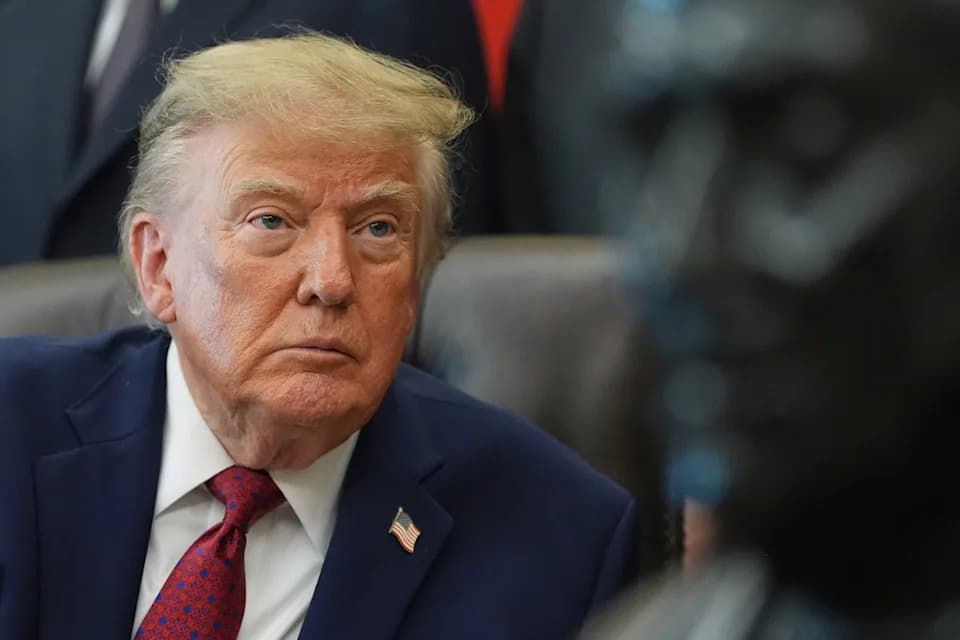
President Trump declined to say whether a fragile ceasefire with Iran remains in effect after reported missile-and-drone attacks on commercial vessels and U.S. warships in the Strait of Hormuz. The U.S. military said it sank six Iranian boats, while members of the administration offered conflicting statements: the president would not clarify, and Defense Secretary Pete Hegseth insisted the ceasefire was "not over," calling Strait operations "separate and distinct." Mixed messages from the White House — including contradictory comments by Trump in Florida and his opposition to an Iranian proposal — have left the public and international observers without clear guidance on U.S. policy.
Trump Refuses To Say Whether Ceasefire With Iran Has Collapsed After Strait Of Hormuz Clashes
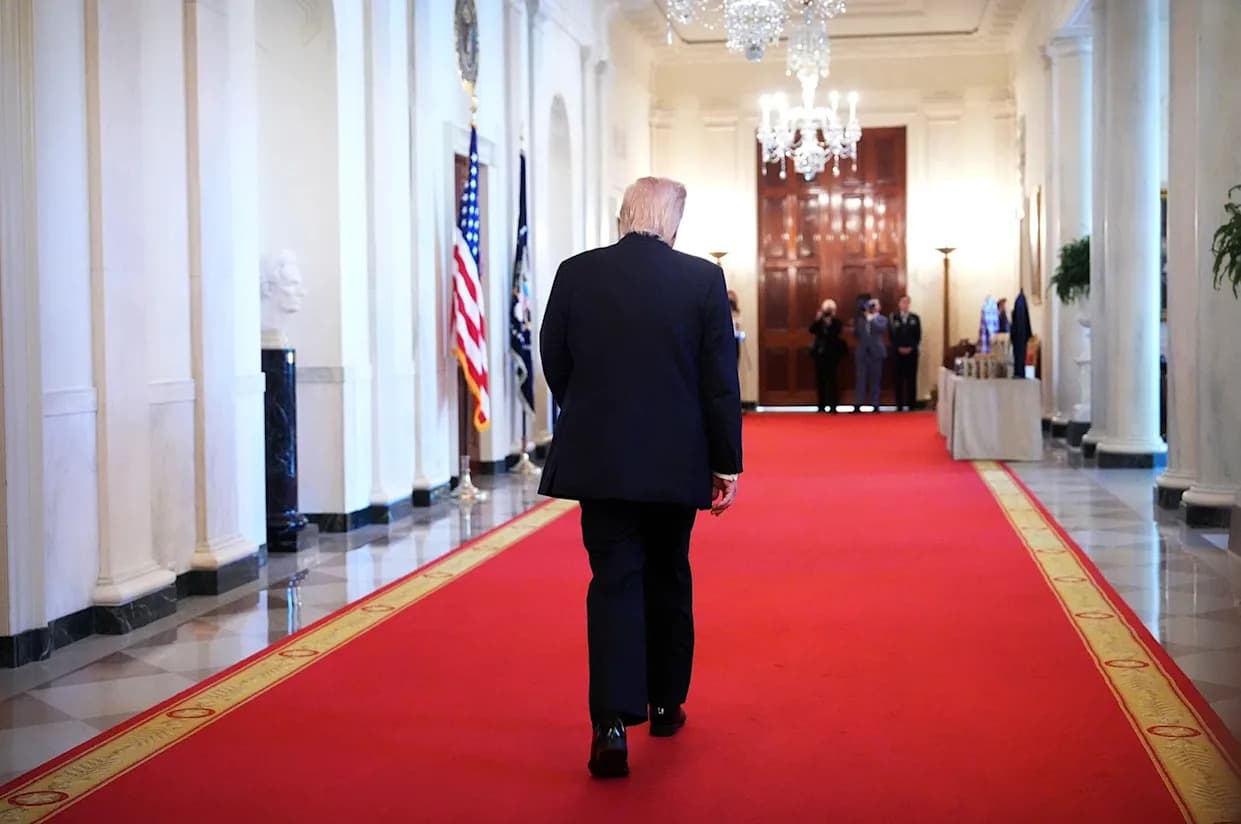
President Donald Trump leaves after an event with small-business owners in the East Room of the White House on May 4, 2026.(Mark Schiefelbein / AP Photo)
President Donald Trump declined to say whether a fragile ceasefire with Iran remains in effect after reported missile-and-drone attacks on commercial vessels and U.S. warships in the Strait of Hormuz, leaving U.S. policy and public understanding unclear.
What Happened
Iranian forces reportedly launched a combined missile-and-drone assault on commercial ships that were being escorted by U.S. vessels in the Strait of Hormuz and also targeted American warships. U.S. officials later said the military sank six Iranian boats following the incidents.
The Conflicting Messages From Washington
In an interview with conservative radio host Hugh Hewitt, Trump declined to say whether the ceasefire was over, responding, "Well, I can’t tell you that." The comment came amid renewed rhetoric from the president threatening to blow Iran "off the face of the Earth."
At the same time, Defense Secretary Pete Hegseth told reporters the U.S.-Iran ceasefire was "not over," explaining that he viewed U.S. operations in the Strait of Hormuz as "separate and distinct" from the conflict that began on Feb. 28. The divergence between the president’s nonanswer and the defense secretary’s statement has added to public confusion.
Political Context And Recent Statements
Observers have noted other mixed signals from the administration. Trump told supporters in Florida that the United States might be "better off" without an agreement with Iran — a comment that appeared to contradict official policy — and subsequently rejected and disavowed the remark. He also said he opposed a recent Iranian proposal to end hostilities but offered no explanation, instead vowing to win the war he says he already won "by a bigger margin."
Why This Matters
Wars and military operations inevitably involve classified information, but fundamental facts about ongoing hostilities and U.S. objectives must be communicated clearly to the public and to international partners. The administration’s mixed messages and lack of clarity risk undermining confidence, complicating diplomacy, and fueling uncertainty about the scope and duration of U.S. actions in the region.
Update: This article updates earlier coverage. Source: MS NOW.
Help us improve.