Nearly a week after coordinated attacks on 25 April claimed by JNIM, Mali faces a deepening security and political crisis. Defence Minister Sadio Camara was killed and President Assimi Goita has taken on the defence portfolio. UN agencies report dozens of deaths, allegations of extrajudicial killings and abductions, and rising humanitarian concerns as blockades threaten food supplies. Footage and reports indicate about 130 soldiers are being held captive in Kidal while Russian-aligned paramilitaries remain active.
One Week After the Mali Attacks: Clashes, Captives and a Political Shake-Up
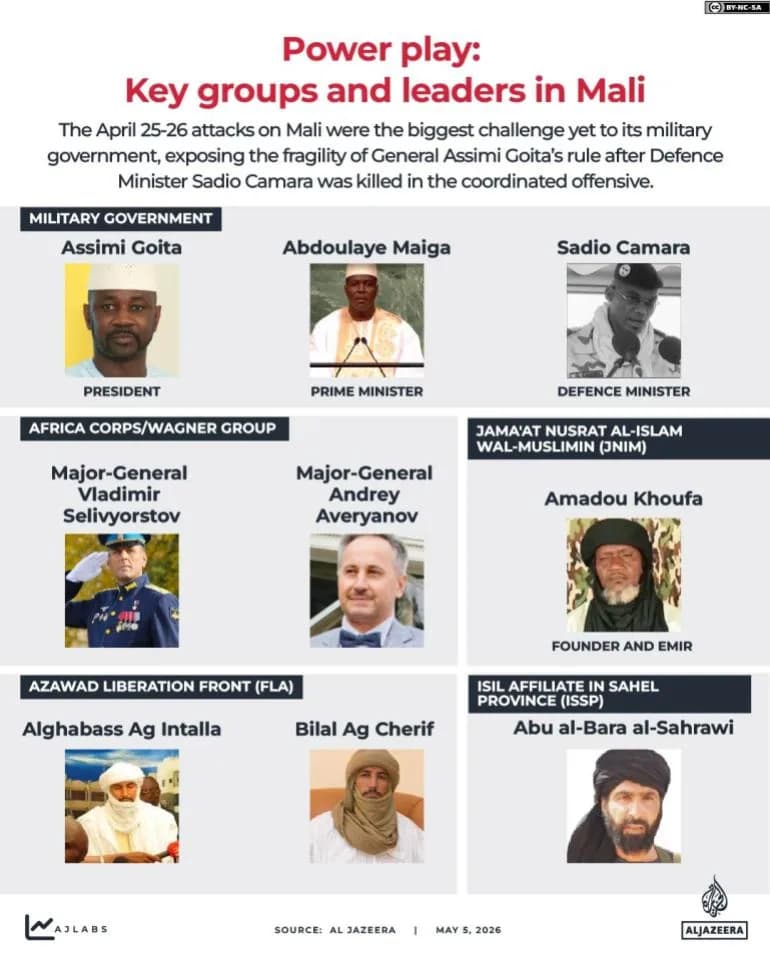
(Al Jazeera)
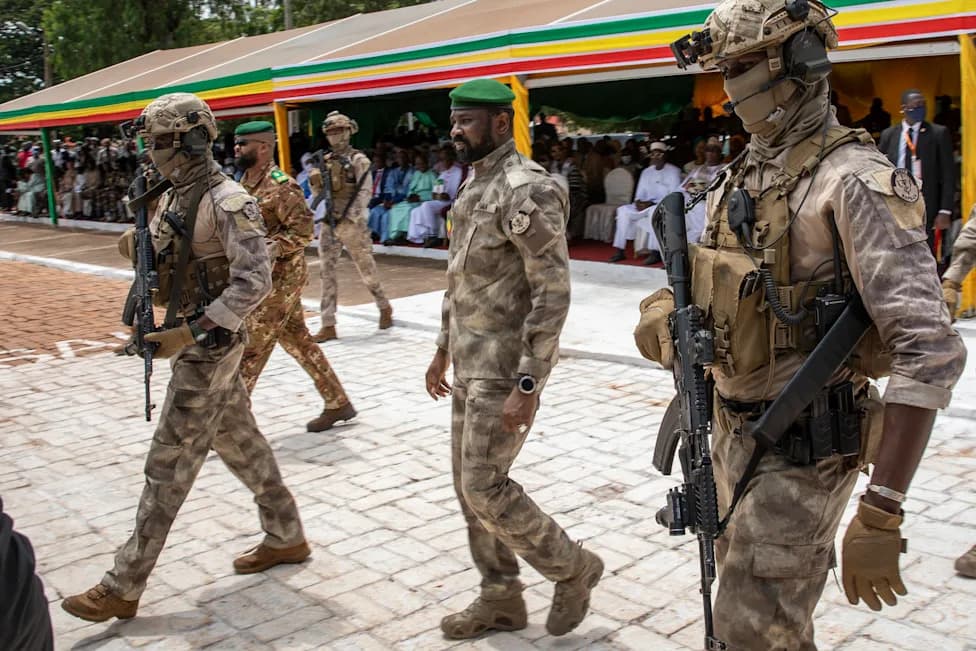
Almost a week after coordinated attacks rocked Mali, the country's military leadership has reshuffled key posts and deployed measures it says are meant to restore security amid continued clashes in the north and around the capital.
What Happened
On 25 April, the al-Qaeda-linked Jama'at Nusrat al-Islam wal-Muslimin (JNIM) claimed responsibility for strikes on military sites across Mali, including in Bamako. JNIM said it had "captured" the northern city of Kidal in a joint operation with the Tuareg-dominated Liberation Front for Azawad (FLA); the claim has been reported by multiple outlets but remains difficult to independently verify on the ground.
Leadership Changes
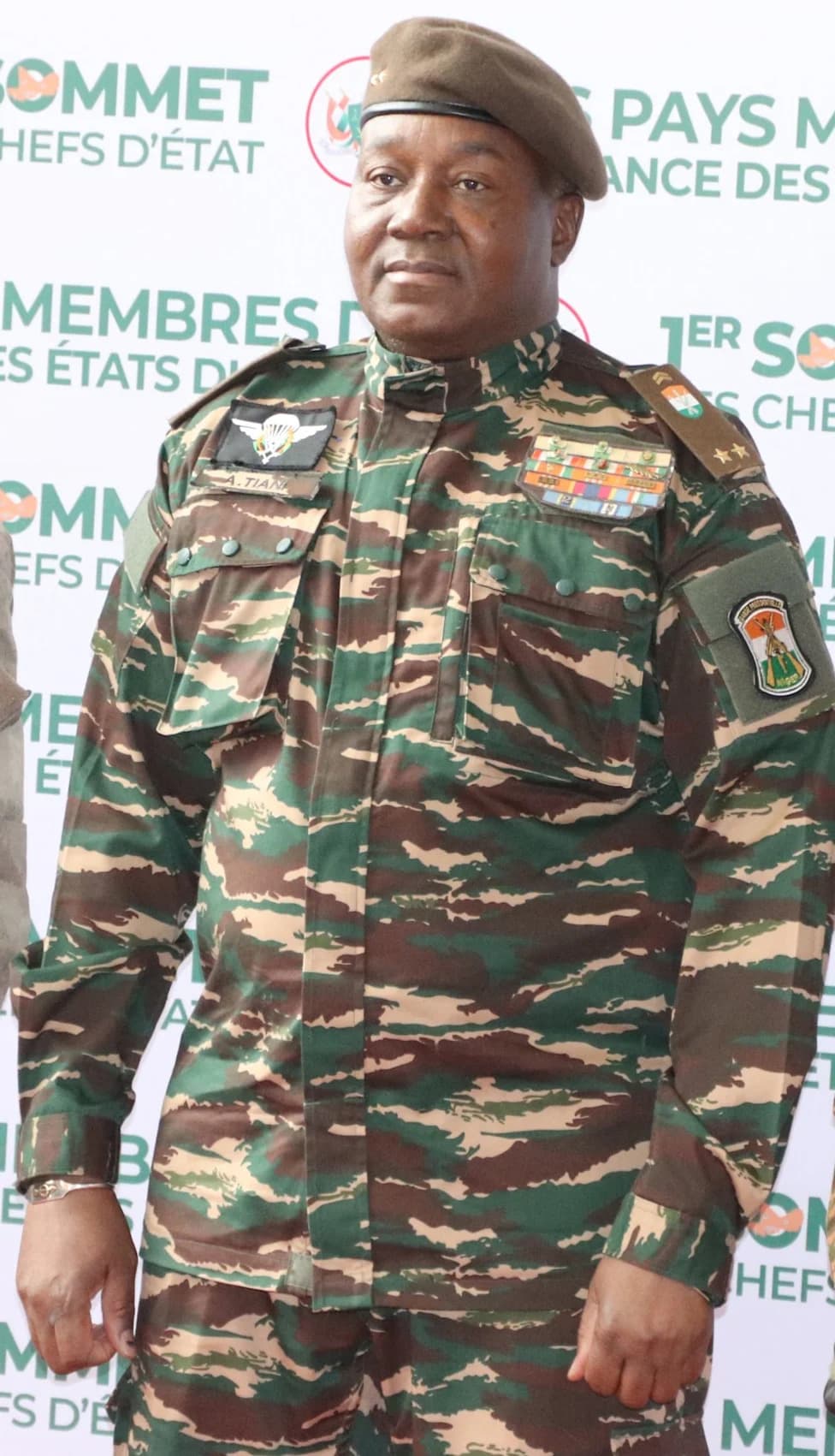
Defence Minister Sadio Camara was killed when a suicide attacker drove an explosives-laden vehicle into his residence, the government said. President and junta leader Assimi Goita has assumed the defence portfolio by presidential decree while remaining head of state.
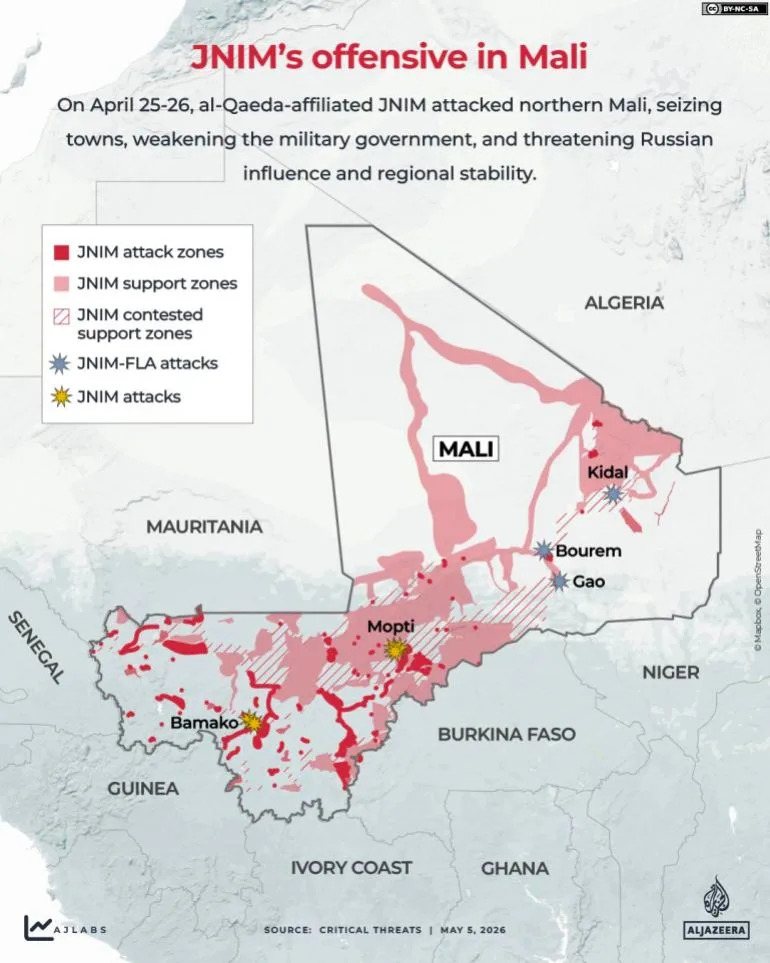
(Al Jazeera)
Security Situation
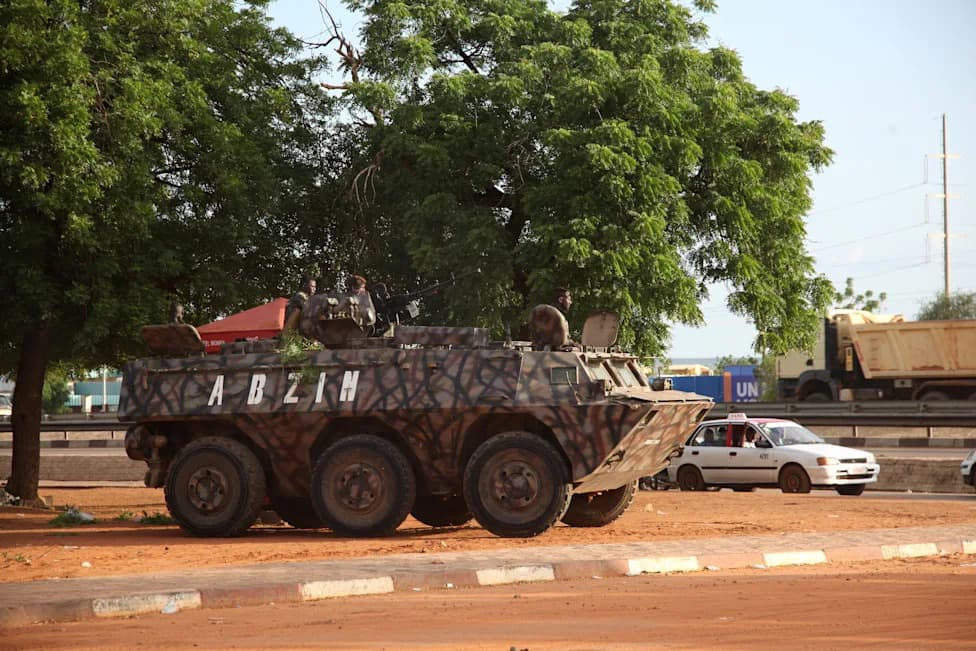
At least 23 people were reported killed in the clashes, with UNICEF confirming civilians — including children — among the dead and injured. Malian forces, backed by Russian-aligned paramilitaries, remain engaged with JNIM and FLA fighters in several northern and central areas.
Allegations of Abuses and Arrests
The Office of the United Nations High Commissioner for Human Rights (OHCHR) documented "gravely concerning reports" of extrajudicial killings and abductions allegedly carried out by members of Mali's security forces after the 25–26 April attacks. Among incidents cited was the 2 May abduction of lawyer and politician Mountaga Tall. Authorities say they are investigating soldiers suspected of involvement in the attacks, while local reporting notes detentions of officers, police and lawyers amid accusations of collusion.
Russian Presence and Paramilitary Forces
After inviting the Wagner Group in 2021 and following Wagner's declared withdrawal in 2023, many Russian fighters are reported to remain in Mali under a Kremlin-linked force often referred to as the Africa Corps. Regional reporting estimates roughly 2,000 paramilitary fighters are operating to protect Mali's military leadership and conduct counterinsurgency operations.
Captives, Humanitarian Impact and International Response
Al Jazeera published footage showing dozens of Malian soldiers held prisoner in Kidal; reports put the number of captured soldiers at about 130. Blockades and fighting have disrupted food supplies: the mayor of Diafarabe warned on 3 May that residents faced imminent hunger. OHCHR and UN Human Rights Chief Volker Türk have urged an immediate end to the fighting and protections for civilians and civilian infrastructure.
Note: The security environment in Mali is fluid. Claims by armed groups and official statements remain difficult to verify independently; the situation may evolve rapidly.
Help us improve.