Researchers identified a behavior called gaping in humpback whales: holding the mouth open outside feeding events. They reviewed 66 photos and videos from social media (2014–2025) captured from boats, drones and in-water observers to characterize the phenomenon. Possible explanations include play, social interaction, baleen cleaning, jaw issues or simple stretching, but the cause remains uncertain. The paper, published in Animal Behavior and Cognition, also underscores the value of citizen-contributed media for documenting rare marine behaviors.
Why Humpback Whales Sometimes Keep Their Mouths Open — Scientists Are Puzzled
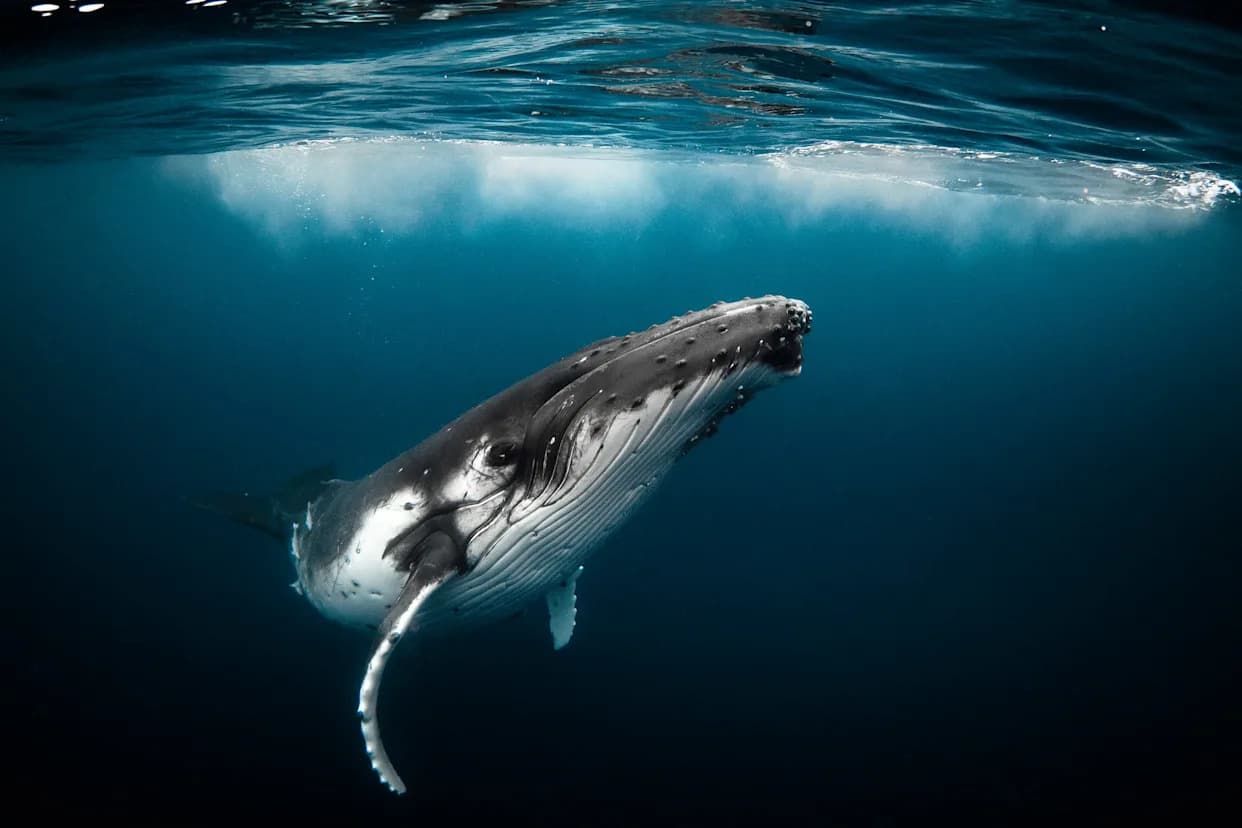
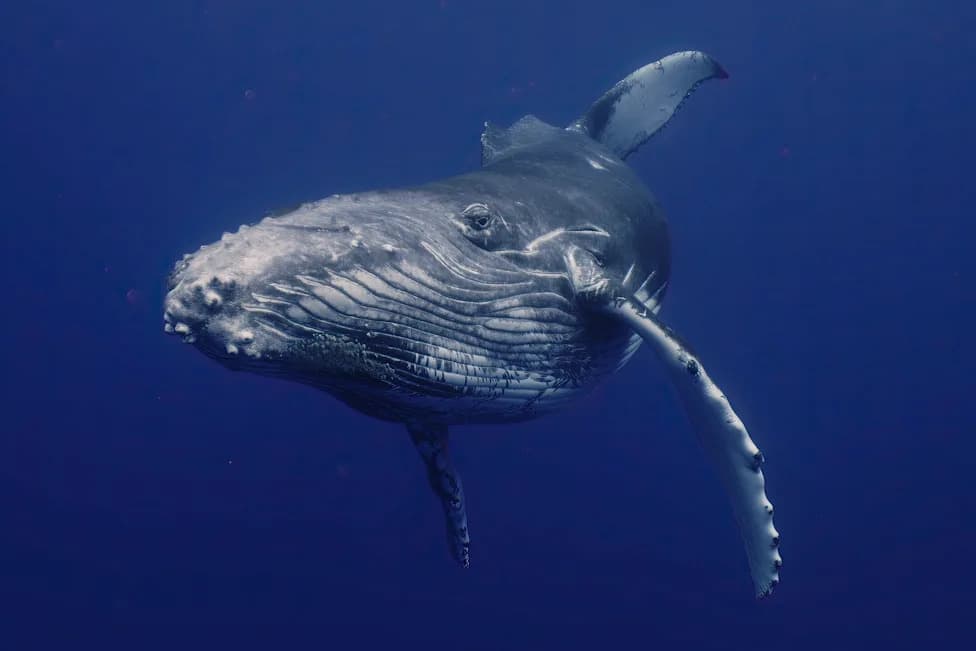
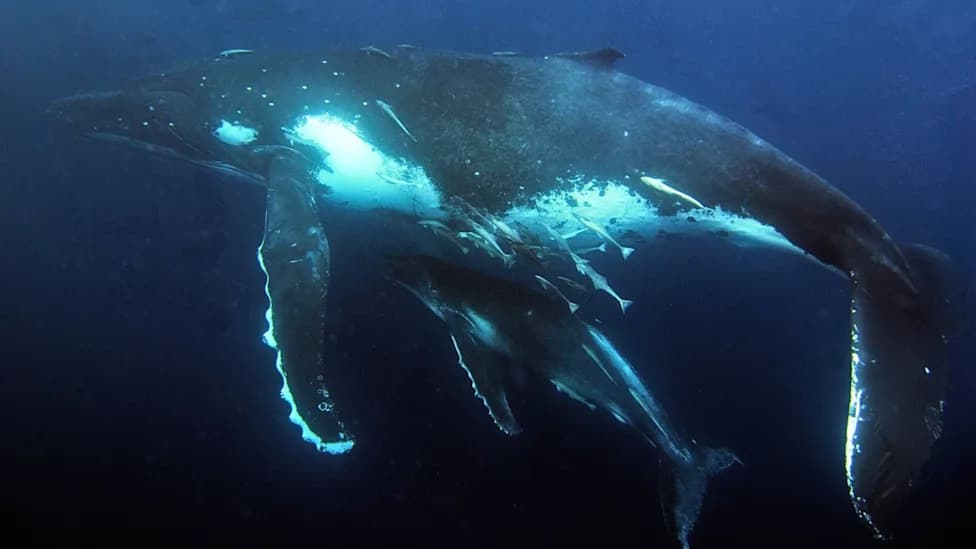
Humpback whales normally feed by opening their enormous mouths to engulf water full of krill or small fish, then straining the prey through baleen plates that act like a sieve. But new research shows that some humpbacks also hold their mouths open outside feeding events — a behavior researchers now call "gaping".
To investigate, a team led by Vanessa Pirotta of Macquarie University compiled and analyzed 66 photos and videos posted to social media between 2014 and 2025. The images, captured from boats, drones and in-water observers, show whales with their jaws hanging open at varying widths and for different durations.
“Just when we think we know a lot about humpback whales, we don’t,” said Vanessa Pirotta, lead author of the study and a lecturer at Macquarie University in Australia.
The researchers defined gaping as a whale opening its mouth outside of a feeding event and noted clear variation in both how wide the whales gaped and how long they kept their mouths open. The findings were published in the journal Animal Behavior and Cognition.
Possible Explanations
Pirotta and her colleagues do not yet know the cause of gaping, but they suggest several plausible hypotheses:
- Play or Social Interaction — the posture could be part of social signaling or play behavior.
- Baleen Cleaning — opening the mouth might help dislodge debris from the baleen plates.
- Jaw Dislocation or Discomfort — a medical issue could produce an involuntary gape.
- Mouth Stretching — similar to stretching behavior seen in other animals.
The team emphasizes that these ideas are speculative and that more systematic observations and targeted studies are needed to determine which, if any, explain the behavior.
The Role Of Citizen Science
The study highlights social media and whale-watching operators as valuable sources of high-quality imagery that can reveal rare or previously undocumented behaviors.
“Tourism operators and citizen scientists spend hours observing whales and are a powerful resource for capturing and reporting on behavior, using the increasingly high-quality technologies many of us have on hand,” Pirotta said.
Researchers say future work should combine systematic field observations, tagging and veterinary assessments to test the leading hypotheses and better understand the biological significance of gaping.
Help us improve.