The Trump administration has signaled support for a proposal to delay new federal protections for the roughly 380 North Atlantic right whales until 2035, citing concerns from the fishing industry. Rep. Jared Golden says a longer pause will allow regulators to "get the science right," while the White House says it "strongly supports" the plan. Environmental groups warn the species fell about 25% from 2010–2020 and remains critically endangered, though this year's 23 mother-calf pairs were the most since 2009.
Trump Administration Backs Push To Delay New Protections For Endangered Right Whales Until 2035
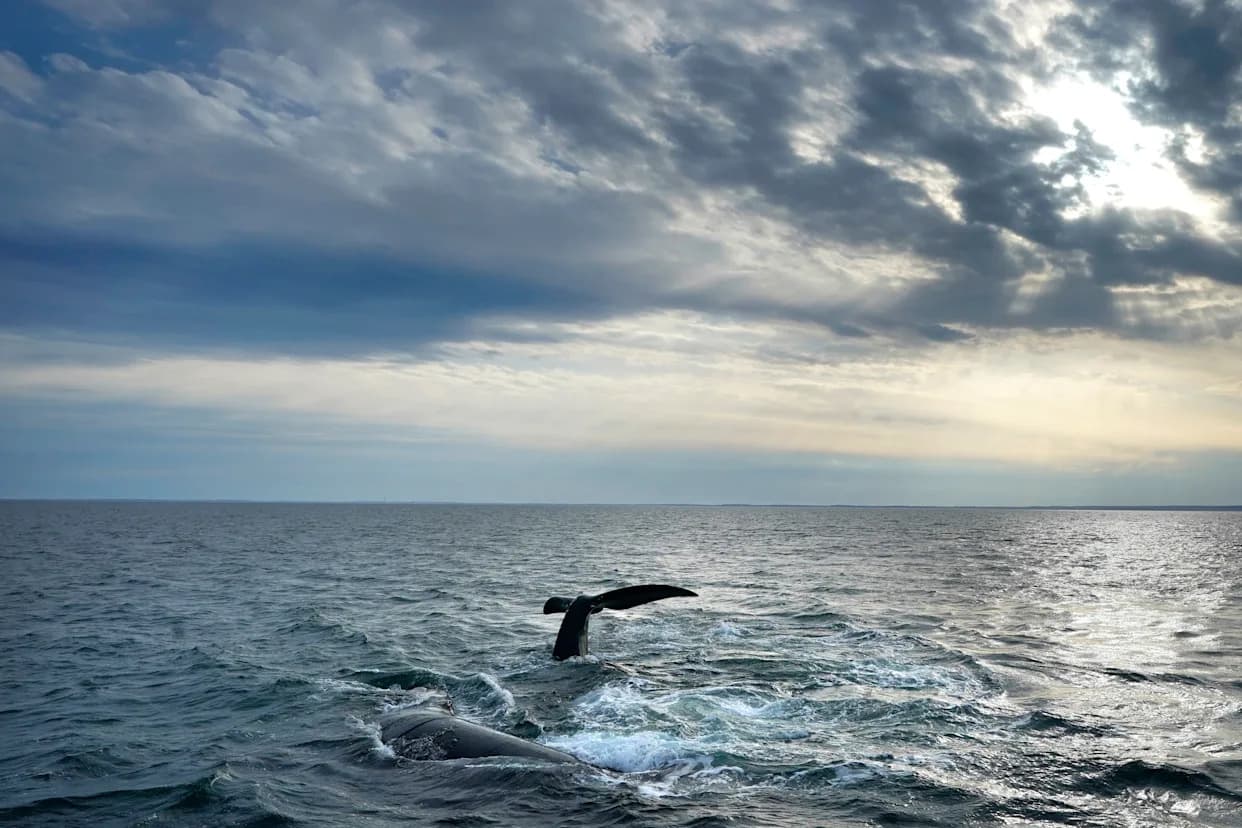
FILE - A pair of North Atlantic right whales interact at the surface of Cape Cod Bay, March 27, 2023, in Massachusetts. (AP Photo/Robert F. Bukaty, NOAA permit # 21371)(ASSOCIATED PRESS)
PORTLAND, Maine (AP) — The Trump administration this month signaled support for a proposal that could postpone new federal protections for the critically endangered North Atlantic right whale until 2035, a move critics say prioritizes commercial fishing interests over the roughly 380 animals that remain.
The North Atlantic right whale is at high risk of death from entanglement in fishing gear and from collisions with ships. Conservationists say reducing human-caused deaths and injuries is essential to any chance of recovery after decades of sharp declines.
Right whales give birth off the coasts of Florida and Georgia and then migrate north to feed in waters off New England and Canada. Protected ocean areas have historically helped safeguard parts of that journey, but scientists say the whales have increasingly moved beyond those zones in recent years while following shifting food supplies as oceans warm.
A proposal advanced by Rep. Jared Golden, a Maine Democrat, would delay new federal regulations designed to reduce risks to right whales until 2035, allowing more time to craft rules that the fishing industry says are less burdensome. The White House issued a memo saying it "strongly supports" the plan and that President Donald Trump's senior advisers would recommend he sign it into law if Congress approves it.
The proposal follows an existing federal pause on new right-whale rules through 2028.
"The now-paused regulations would have devastated Maine's famed lobster industry," Golden said, calling the rules "based on flawed science and hypothetical scenarios rather than the reality on the water." He argued a longer delay would give regulators time to "get the science right."
Industry officials emphasize the economic importance of lobster and crab fisheries. "This legislation is critical to ensuring the long-term stability of American fisheries for generations to come," said John Drouin, vice president of the New England Fishermen's Stewardship Association. At the dock, the U.S. lobster and crab industries are worth hundreds of millions of dollars annually, industry estimates say.
Environmental groups have pushed back against efforts to weaken whale protections. Organizations such as In Defense of Animals note that the species' population fell by roughly a quarter between 2010 and 2020 and that recovery in recent years has been slow.
There have been some encouraging signs: the New England Aquarium reported 23 mother-calf pairs during this year's birthing season, the most recorded since 2009. Still, the North Atlantic right whale remains federally protected and critically endangered after being decimated by commercial whaling in earlier centuries.
As lawmakers and stakeholders debate the timeline and specifics of new protections, scientists and conservationists warn that delays could increase the risk of additional deaths in a population that remains perilously small.
Help us improve.