A study published May 4 in Nature Climate Change finds that colored airborne micro- and nanoplastics absorb substantially more sunlight than they reflect, producing a net warming effect. Laboratory measurements of optical properties — including changes from UV aging — were combined with atmospheric models to estimate climate impacts. Globally the contribution is described as modest (around 2%), but it can be regionally significant and reach higher values (about 16.2% of black carbon) above ocean garbage patches. Authors urge more observations and inclusion of plastics in future climate assessments.
Microplastics in the Air May Be Warming the Planet — New Study Shows Color Matters
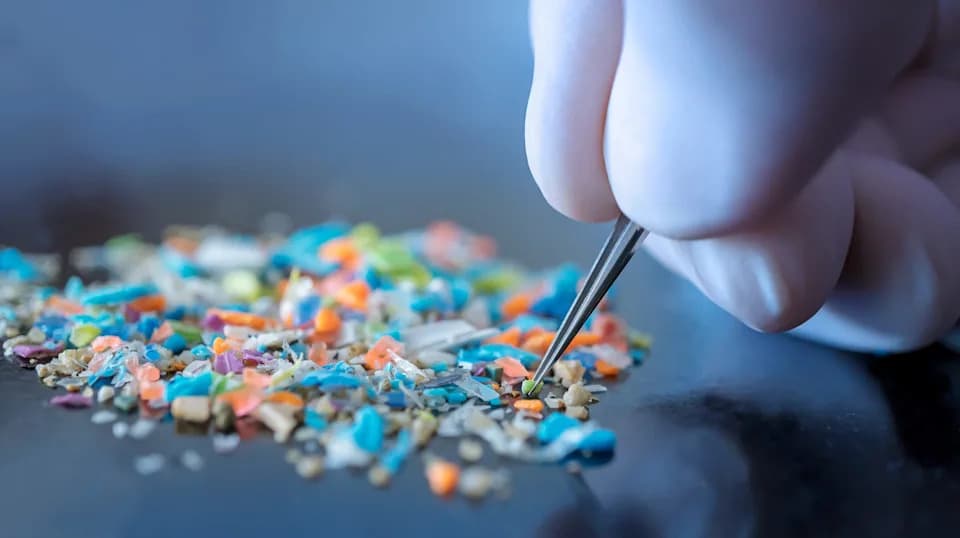
Microplastics are popping up all over the place, including our bodies.
A new peer-reviewed study published May 4 in Nature Climate Change links two pressing environmental problems: microplastics and global warming. Researchers report that colored micro- and nanoplastic particles suspended in the atmosphere absorb substantially more sunlight than they reflect and therefore contribute to net planetary warming.
What the Researchers Did
The team combined laboratory measurements of the optical properties of many types, sizes and colors of plastics — including how ultraviolet (UV) aging changes those properties — with state-of-the-art atmospheric climate models. They measured how different colored particles interact with visible light and then simulated how those particles would affect climate once transported by winds around the globe.
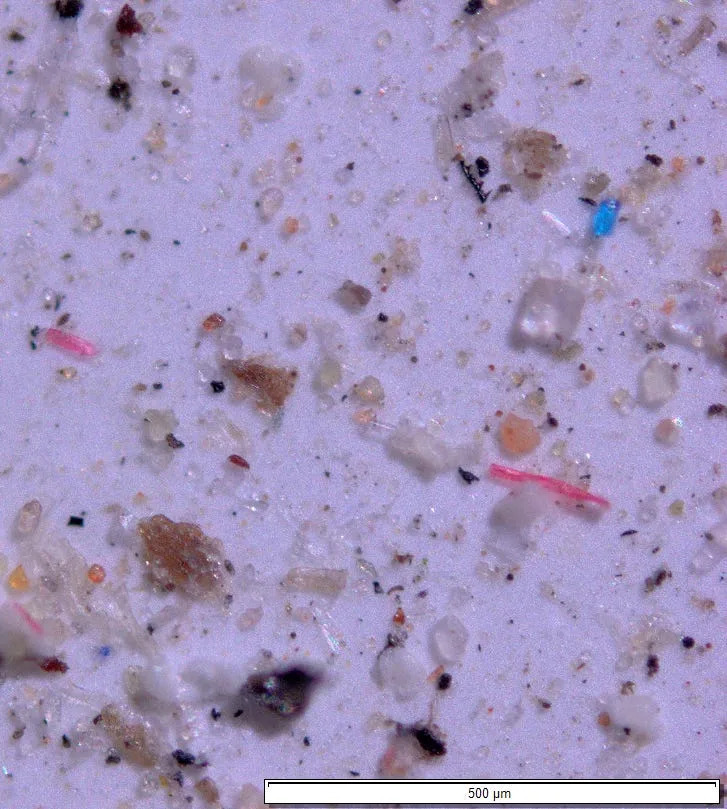
Powerful magnification allowed researchers to count and identify microplastic beads and fragments that were collected in 11 western national parks and wilderness areas over 14 months of sampling.
Key Findings
- Colored airborne micro- and nanoplastics absorb about five times more sunlight than they reflect on average, producing a net warming effect.
- Darker and pigmented particles (black, colored) are much stronger absorbers than white or very light particles; color therefore strongly influences warming potential.
- Modeling suggests that, globally, atmospheric microplastics may account for roughly 2% of current human-caused warming, and in some regions (for example above ocean garbage patches) their effect can reach the equivalent of about 16.2% of the warming caused by black carbon (soot).
From our study we can see that these particles absorb about five times as much sunlight as they reflect, so in the net they make our planet hotter.
Context and Limits
Although the study identifies a previously underappreciated contributor to warming, the authors emphasize that carbon dioxide and other greenhouse gases from fossil-fuel burning remain the dominant drivers of climate change — CO2’s warming role is roughly 50 times larger than that estimated for microplastics. The absolute climate impact of airborne plastics is still uncertain because observations of how many micro- and nanoplastic particles are present in the atmosphere and how they are distributed geographically remain limited.
Implications and Next Steps
The authors call for more systematic atmospheric observations to constrain the global abundance and distribution of micro- and nanoplastics. They also recommend that future climate assessments and models include the optical effects of colored plastics so policymakers and scientists can better evaluate mitigation options. Lead authors of the paper are Yu Liu and Hongbo Fu (Fudan University), with key contributions from Drew Shindell (Duke University) and Gilberto Binda (University of Insubria).
Bottom line: Colored micro- and nanoplastics in the atmosphere appear to add a measurable warming effect, particularly where dark particles concentrate, but greater observational coverage is needed to pin down their global significance.
Help us improve.