
The Great Pacific Garbage Patch and other land sources emit microplastics and nanoplastics that can be lofted into the atmosphere. A new Nature study finds pigmented fragments absorb far more sunlight than clear plastics — about 75 times more — and that smaller particles absorb more per mass and remain aloft longer. Although global warming from airborne plastics is modest (roughly 16% of black carbon’s effect), impacts can be larger in ocean gyres; the authors call for improved measurements and updates to climate models.
Invisible Heat: How Microplastics From the Great Pacific Garbage Patch Are Warming the Air
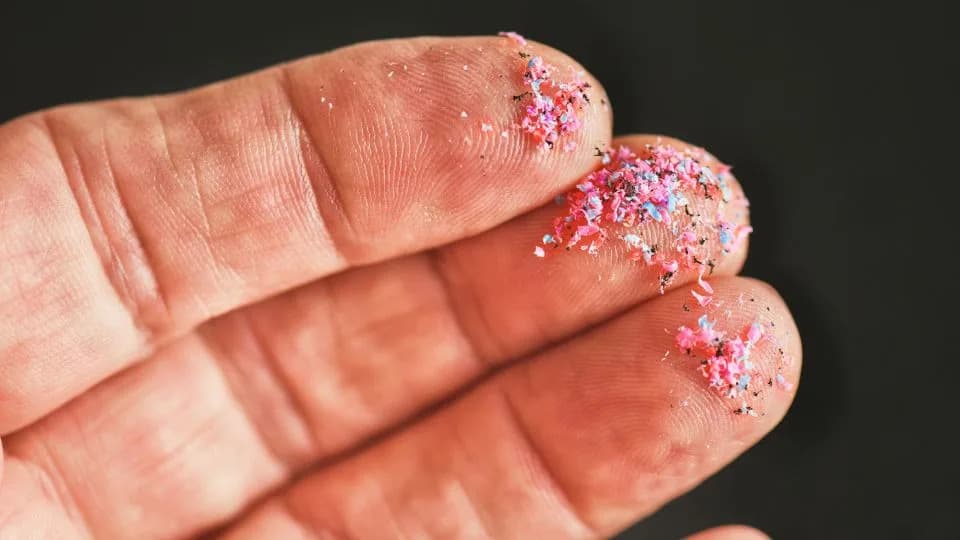
Tiny fragments of plastic are able to become airborne and, once in our atmosphere, they may be having a worrying impact on global warming. - Peter Dazeley/Getty Images
Far out between Hawaii and California, the Great Pacific Garbage Patch — a rotating mass of plastic debris larger than two Texases — is not only an ocean-cleanup headline. New research suggests fragments from that swirl, along with plastics from landfills, roadsides and tires, can be lofted into the atmosphere as microplastics and nanoplastics and influence Earth’s energy balance.
What the Study Examined
A multinational team of researchers from China and the United States analyzed the color, size and chemistry of airborne plastic fragments to determine whether they scatter sunlight (a cooling effect) or absorb it (a warming effect). Their work, published in Nature, combined laboratory measurements with aging experiments and atmospheric estimates to assess the radiative impact of these particles.
Key Findings
Pigments Matter: Many fragments are pigmented rather than clear. Red, yellow, blue and black plastics absorb roughly 75 times more light than pristine, non‑pigmented plastics — in effect behaving like a dark T‑shirt that soaks up heat.
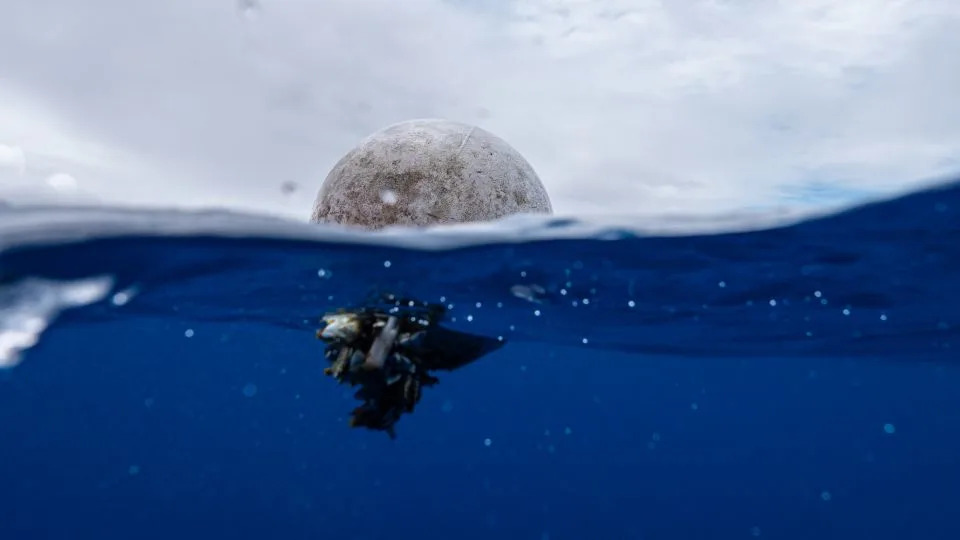
Plastic floats in the Great Pacific Garbage Patch. - The Ocean Cleanup
Smaller Is Stronger: Nanoplastics (far smaller than a human hair) absorb more sunlight per unit mass and remain airborne longer than larger microplastics, increasing their potential warming influence.
Weathering Changes Optical Properties: UV aging and environmental weathering can darken or sometimes bleach particles. The study’s experiments showed many plastics tend to become darker over time, which typically increases absorption.
Net Warming Effect: Although uncertainties remain, the authors conclude that on balance airborne plastics are more likely to warm than cool the atmosphere. Globally, microplastics and nanoplastics account for roughly 16% of the warming effect attributable to black carbon (soot). In concentrated ocean gyres such as the Great Pacific Garbage Patch, the local warming effect can be even larger and in some cases may exceed the impact of black carbon.
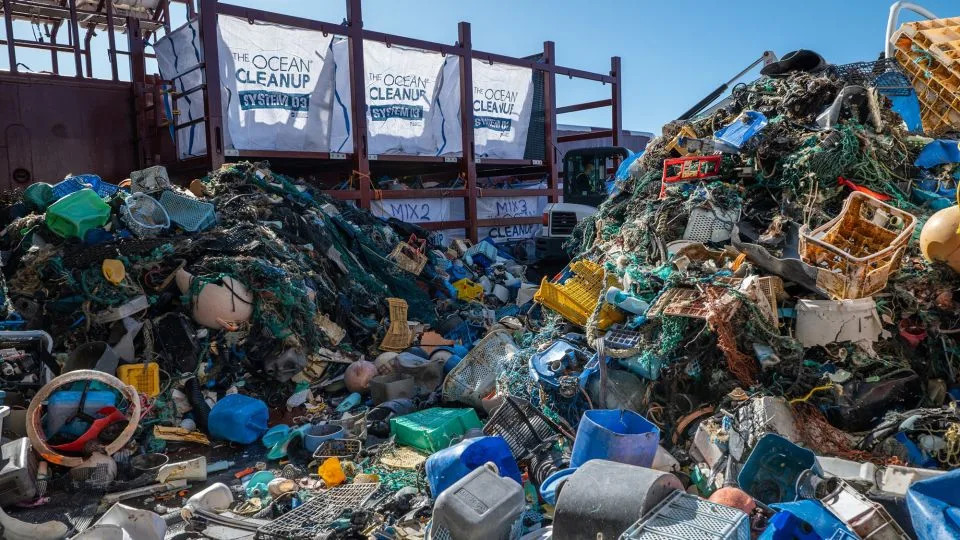
Trash cleaned up from the Great Pacific Garbage Patch by The Ocean Cleanup, a non-profit environmental organization, in August 2023. - The Ocean Cleanup
Context and Caveats
Independent experts welcomed the quantified approach to color and size but underscored major uncertainties — especially how much plastic is actually aloft. Current atmospheric measurements of plastic mass and distribution are sparse, and estimates will need refinement before climate models can robustly include this forcing. The paper’s authors nonetheless argue that climate models should begin to incorporate airborne plastics given the potential for growing impacts as production and environmental degradation continue.
Health Note: While the study focuses on radiative effects, many scientists emphasize that the most urgent concerns about microplastics remain their ecological and human‑health impacts, which are still poorly understood.
Implications
The work adds a new dimension to the problem of plastic pollution: airborne fragments can influence climate as well as ecosystems. Policymakers and modelers should consider both the climatic and health risks of plastics, improve atmospheric monitoring of micro- and nanoplastics, and reduce plastic waste at source to limit future impacts.
Source: Study published in Nature; reporting and expert comments from the research team and independent atmospheric scientists.
Help us improve.





















