J. Craig Venter, a leading figure in genomics who helped produce the first draft of the human genome, has died at 79 after hospitalization related to cancer treatment. In the 1990s he used a private sequencing approach through Celera Genomics to accelerate decoding the genome; the collaborative effort declared the sequence complete in 2003. Venter also published his own genome and led a synthetic biology milestone by creating a bacterial cell governed by lab-synthesized DNA.
J. Craig Venter, Genomics Trailblazer Who Helped Map the Human Genome, Dies at 79
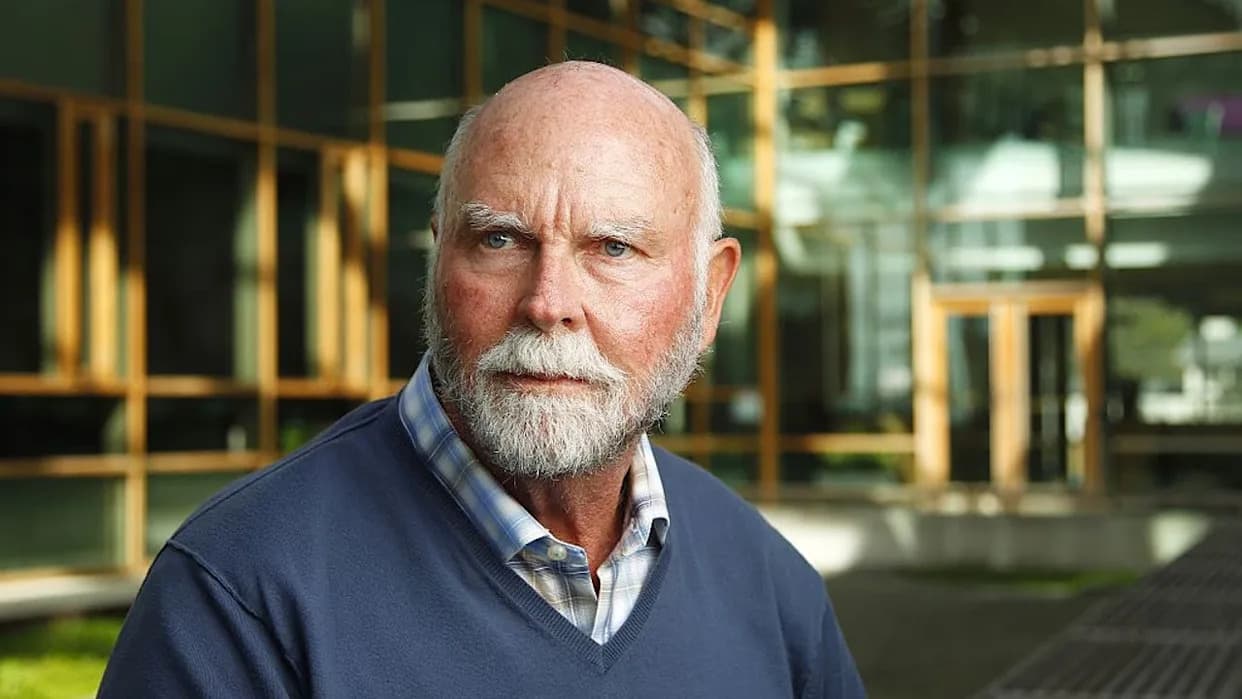
Pioneering geneticist J. Craig Venter and a team from the J. Craig Venter Institute in La Jolla have designed and synthesized a minimal bacterial genome, consisting of 473 genes, the only genes necessary for life. | (K.C. Alfred/ San Diego Union-Tribune (K.C. Alfred/ The San Diego Union-Tribune via Getty Images)
J. Craig Venter, a pioneering genomicist whose private-sector push helped produce the first draft of the human genome and whose work advanced personalized medicine and synthetic biology, died Wednesday at 79. The J. Craig Venter Institute announced he died in San Diego after being hospitalized for side effects related to a recent cancer treatment.
Dig deeper
In the 1990s Venter challenged the prevailing approach to sequencing by using a faster, privately funded method through his company, Celera Genomics. In 2000, Celera and leaders of the publicly funded Human Genome Project jointly announced they had decoded roughly 3.1 billion DNA subunits — the chemical letters that form the blueprint of human life. In April 2003 the collaborative effort declared the human genome sequence essentially complete.
“Some have said to me that sequencing the human genome will diminish humanity by taking the mystery out of life. Nothing could be further from the truth,” Venter said at a White House event in 2000.
Big picture view
Venter’s work both simplified and deepened the study of biology: it made it possible to identify genetic causes of rare disorders, to explore contributors to common diseases such as heart disease and cancer, and to recognize genetic variants that raise an individual’s risk of illness. Earlier in his career at the National Institutes of Health, he contributed to methods that rapidly identified large stretches of human genes.
Venter — who served in the U.S. Navy during the Vietnam era and said that experience shaped his appreciation for life’s fragility — later published his own sequenced genome to encourage researchers to examine inherited traits and vulnerabilities, a step toward tailoring treatments to an individual’s genetic profile.
He and his team also achieved a milestone in synthetic biology by creating a bacterial cell controlled by laboratory-synthesized DNA, demonstrating the potential to design and construct genomes in the lab.
The Source
The Associated Press contributed to this report. Primary details about Venter's death and the circumstances were provided by the J. Craig Venter Institute. This story was reported from Los Angeles.
Help us improve.