
Overview: Air-defence systems were activated over Tehran after reports of small aircraft and drone activity. Lebanon reported multiple deadly Israeli strikes in the south despite a ceasefire, and Washington urged Lebanese and Israeli leaders to meet. US leaders are reconsidering troop deployments in Europe, while the closure of the Strait of Hormuz and rising oil prices have prompted global economic warnings.
Middle East War Escalates: Tehran Air Defences, Deadly Lebanese Strikes and Global Energy Alarm
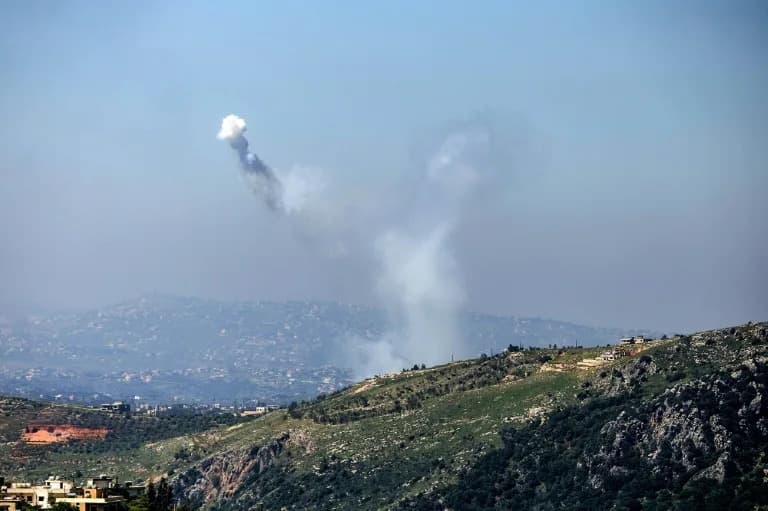
Smoke from Israeli shelling on the village of Yohmor, seen from the southern Lebanese area of Marjeyoun (-)(-/AFP/AFP)
Latest developments: Air defences were sounded over Tehran, deadly strikes continued in southern Lebanon despite a ceasefire, and world leaders warned of widening economic fallout as oil prices surged. Below is a clear summary of key events and reactions.
Tehran Air Defences Activated
Local Iranian news agencies Tasnim and Fars reported that air-defence systems were activated over Tehran on Thursday night to intercept small aircraft and drones. The activity lasted roughly 20 minutes before authorities said the capital returned to a normal situation.
Lebanon: Deadly Strikes Amid Ceasefire
Lebanon's health ministry reported multiple deadly incidents in the country's south despite an existing ceasefire. Officials said Israeli strikes across the southern region killed at least 15 people in separate attacks; a specific incident in three villages reportedly killed nine people, including two children and five women. Lebanese President Joseph Aoun condemned what he called "continuing Israeli violations," citing demolitions of homes and places of worship and urging international pressure to protect civilians and humanitarian workers.
Diplomacy: US Pushes For Direct Talks
The US embassy in Beirut called for direct talks between Lebanese and Israeli leaders, saying Lebanon "stands at a crossroads" and urging leaders to seize an opportunity to restore sovereignty. Former US President Donald Trump said he hopes to host Lebanese President Joseph Aoun and Israeli Prime Minister Benjamin Netanyahu "over the next couple of weeks" to advance direct negotiations.
US Troop Posture Under Review
Donald Trump said he is considering reducing US troop levels in Italy and Spain because of those countries' opposition to the campaign against Iran, following similar remarks about Germany. He criticized both Italy and Spain in blunt terms during remarks in the Oval Office. Trump also threatened cuts to US forces in Germany after Chancellor Friedrich Merz declined to align with Washington's Iran policy; roughly 35,000–50,000 US troops are stationed in Germany.
Israel Signals Potential Further Action Against Iran
Israel's defence minister warned Tehran that Israel may need to "act again" to prevent Iran from re-emerging as a threat. The defence minister's office said the efforts were coordinated with US leadership to achieve campaign objectives aimed at ensuring Iran does not threaten Israel, the United States or allied interests in the future.
Strait Of Hormuz And Global Economy
UN Secretary-General António Guterres warned that the effective shutdown of the Strait of Hormuz is "strangling the global economy." The bottleneck, driven by the conflict, has pushed oil prices sharply higher and heightened concerns about energy security worldwide. Iran's parliament speaker, Mohammad Bagher Ghalibaf, said Tehran's control over the strait would guarantee a future without a US presence in the region.
Energy Market Shock
International Energy Agency chief Fatih Birol described the situation as a "major energy and economic challenge" and warned of the biggest energy crisis in history as oil prices spiked. On markets, Brent crude briefly jumped to about $126.41 per barrel for June delivery, while West Texas Intermediate (WTI) rose toward $110.31 before trimming gains.
European Response
The European Union pushed back on proposals to rethink US troop deployments in Europe, noting that the US presence is in Washington's strategic interest and that NATO allies are increasing their defence spending. EU spokeswoman Anitta Hipper emphasized continued transatlantic cooperation amid rising tensions.
Context: The situation remains fluid. Casualty reports and market reactions may change rapidly as diplomatic, military and economic developments evolve. This article summarizes verified statements and official reports available at the time of publication.
Help us improve.





















