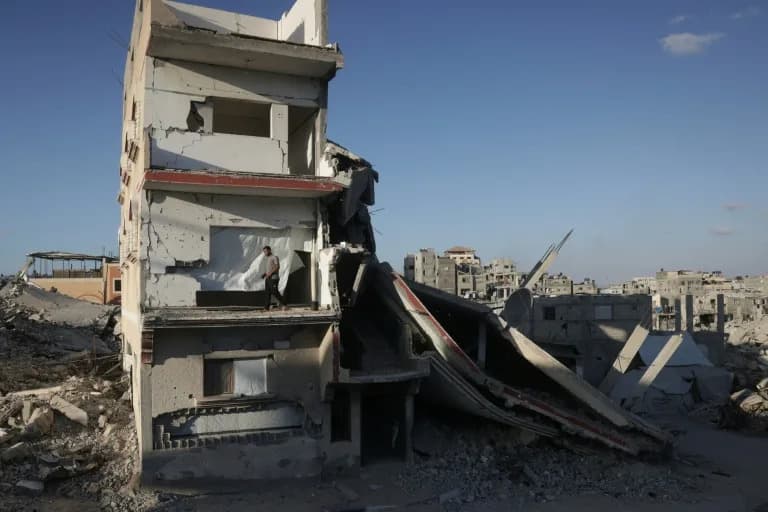
More than six months after a ceasefire, Gaza still faces a severe water crisis: nearly 90% of the enclave’s water infrastructure was damaged and roughly 80% of residents now depend on truck deliveries. Families queue and sometimes fight for limited supplies as bottled water remains unaffordable for many. Aid groups, including MSF, say restrictions on repair materials have worsened the crisis; Israeli authorities deny limiting essential water imports and cite the daily volume allowed into Gaza.
Gaza’s Water Crisis Persists Six Months After Ceasefire as Crowds Scramble for Trucked Supplies
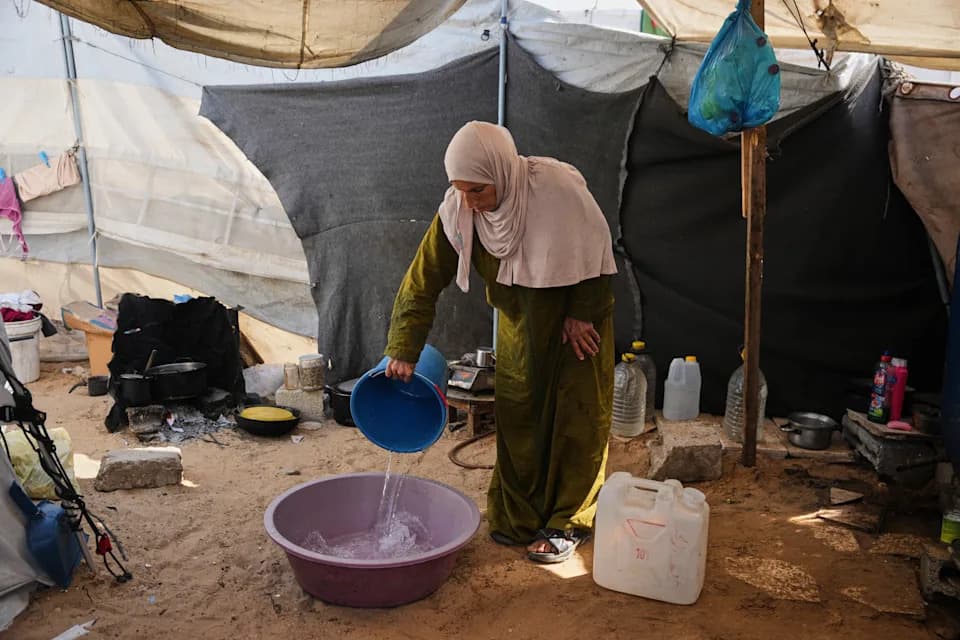
Displaced Palestinian Reem Abu Lahia uses water to do laundry inside the tent where she lives in Khan Younis, in the southern Gaza Strip, Thursday, April 30, 2026. (AP Photo/Abdel Kareem Hana)(ASSOCIATED PRESS)
When water trucks roll into neighborhoods in Muwasi, displaced families rush forward to fill dented plastic jerry cans marked with their names. Yehia Abu Daqqa carefully rations each delivery — one can for each child — tipping a small amount into a sippy cup for a daughter outside the family tent.
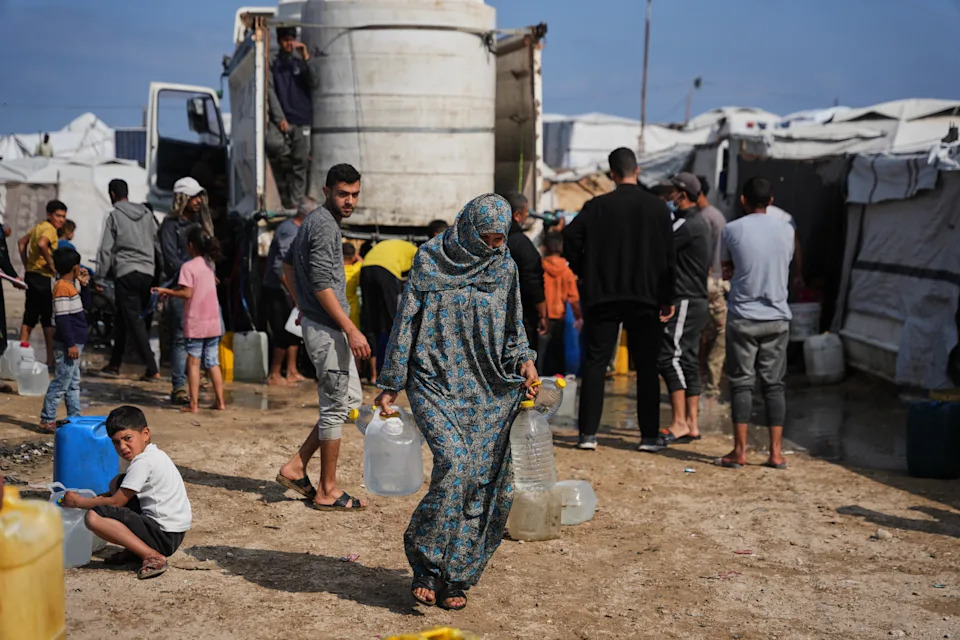
“The water truck arrives, and some 500 to 1,000 people throw themselves at it,” Abu Daqqa said. “They start fighting. It’s real suffering.”
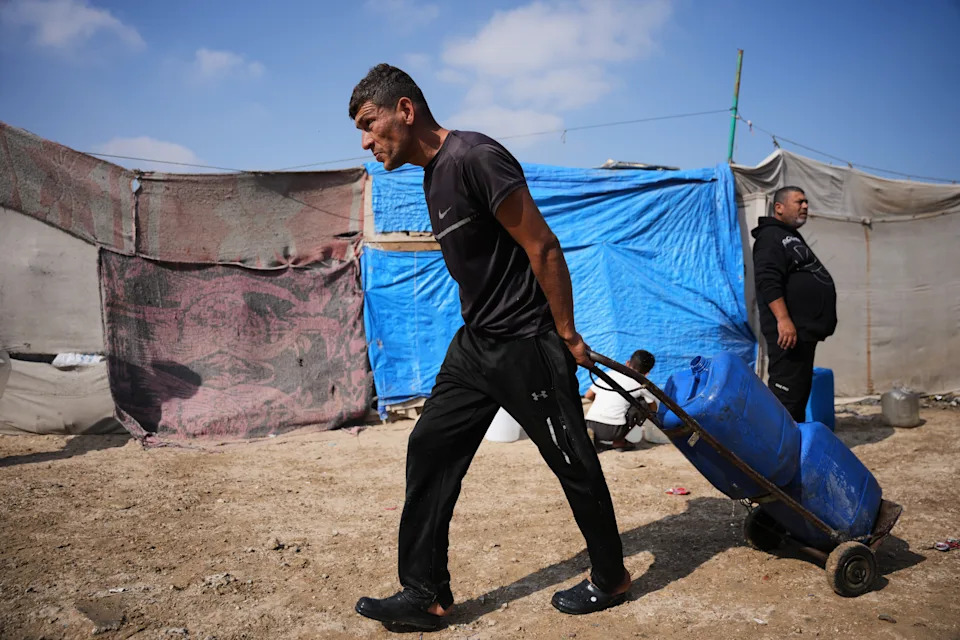
A Palestinian man carries jerrycans filled with water through a tent camp in Khan Younis, in the southern Gaza Strip, Thursday, April 30, 2026. (AP Photo/Abdel Kareem Hana)(ASSOCIATED PRESS)
Widespread Damage and Reliance on Trucked Water
More than six months after a ceasefire halted most fighting in Gaza, basic water systems remain largely nonfunctional. The United Nations estimates that nearly 90% of Gaza’s water infrastructure — including desalination plants and sewage treatment facilities — was destroyed. As a result, around 80% of residents now rely on water delivered by truck to central collection points, according to the U.N.-led WASH Cluster.
Daily Struggles
For many, access is unpredictable. Azmy Abu Lehya walks more than 500 meters to a distribution point; some days he manages to bring water back to Muwasi, other days the trucks do not arrive. Bottled water reaches markets but is unaffordable for most families whose incomes and livelihoods were devastated by the fighting.
Samah Abu Daqqa, 33, carries jerrycans filled with water through a tent camp in Khan Younis, in the southern Gaza Strip, Thursday, April 30, 2026. (AP Photo/Abdel Kareem Hana)(ASSOCIATED PRESS)
“I am not ready to buy each person a bottle of water,” said Sharif Abu Helal. “I have eight people. Is a gallon of water enough for them?”
Restrictions, Repairs and Health Risks
Many materials needed to repair and operate water systems — pipes, fuel, cement and chemicals such as chlorine — are classified by Israel as "dual use" and face import restrictions amid security concerns. Aid groups warn these limits have delayed reconstruction of distribution networks and treatment plants.
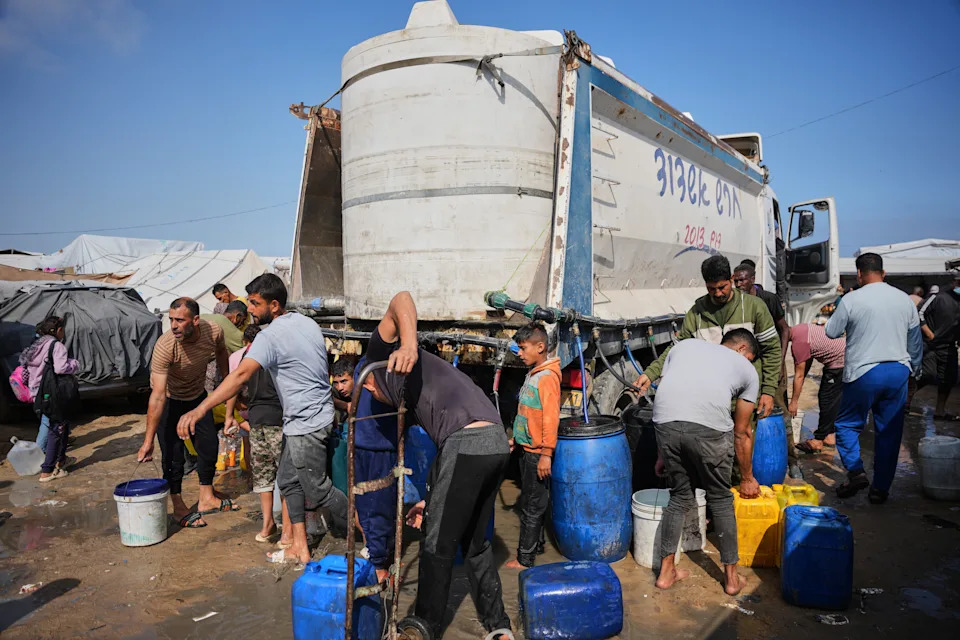
Displaced Palestinians gather to collect water from a truck at a makeshift tent camp in Khan Younis, southern Gaza Strip, Thursday, April 30, 2026. (AP Photo/Abdel Kareem Hana)(ASSOCIATED PRESS)
Water infrastructure damage and limited repairs have led to sewage overflows and contamination. Spent munitions have also seeped into groundwater aquifers relied on by wells, compounding risks of waterborne and hygiene-related illnesses among Gaza’s roughly 2.1 million residents.
“While Gazans are deprived of water and sanitation, Israeli authorities are using aid as a tap, closing or opening slightly to allow only drops of aid to enter the Strip,” the report from Doctors Without Borders (MSF) said.
MSF, Gaza’s second-largest water provider, reported that aid teams were forced to salvage damaged components because critical infrastructure parts were frequently blocked from entering. The group said shortages of supplies and spare parts have kept desalination and treatment equipment operating at reduced capacity.
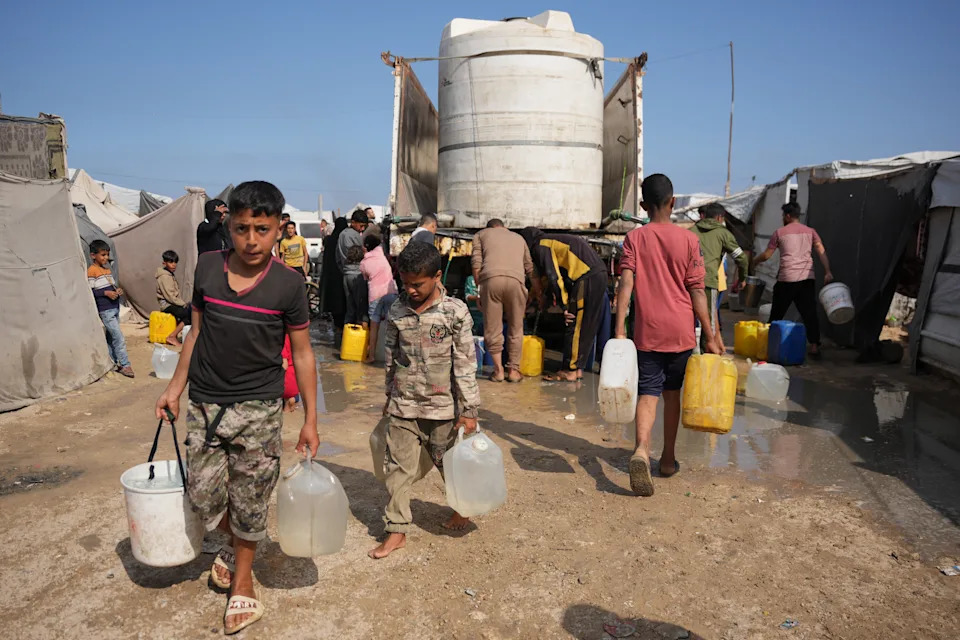
Displaced Palestinians gather to collect water from a truck at a makeshift tent camp in Khan Younis, southern Gaza Strip, Thursday, April 30, 2026. (AP Photo/Abdel Kareem Hana)(ASSOCIATED PRESS)
Official Responses
COGAT, the Israeli military authority responsible for humanitarian affairs in Gaza, rejected MSF’s accusations and said Israel allows more than 70,000 cubic meters of water into Gaza daily — roughly 33.3 liters (8.8 gallons) per person. Humanitarian agencies say people need at least 15 liters (4 gallons) per person per day for drinking, washing and basic hygiene, and warn that distribution and access, not only volume, determine whether needs are met.
Restoring water and sanitation systems is a top priority for Gaza’s reconstruction plan, but progress has been stalled amid broader political and security conditions.
Reporting contributions from regional correspondents.
Help us improve.