Assimi Goita made his first public appearance after weekend insurgent attacks that killed Defence Minister Sadio Camara and struck key military sites. Goita met with Russia's ambassador and visited wounded civilians, while Russia said militants were regrouping after its forces helped repel attempts to seize key facilities. JNIM claimed responsibility and threatened a siege of Bamako, and Islamic State-affiliated fighters were reported in Menaka. The offensive demonstrates increased coordination among armed groups and raises regional security concerns.
Mali Leader Reappears After Deadly Weekend Attacks; Russia Reaffirms Support
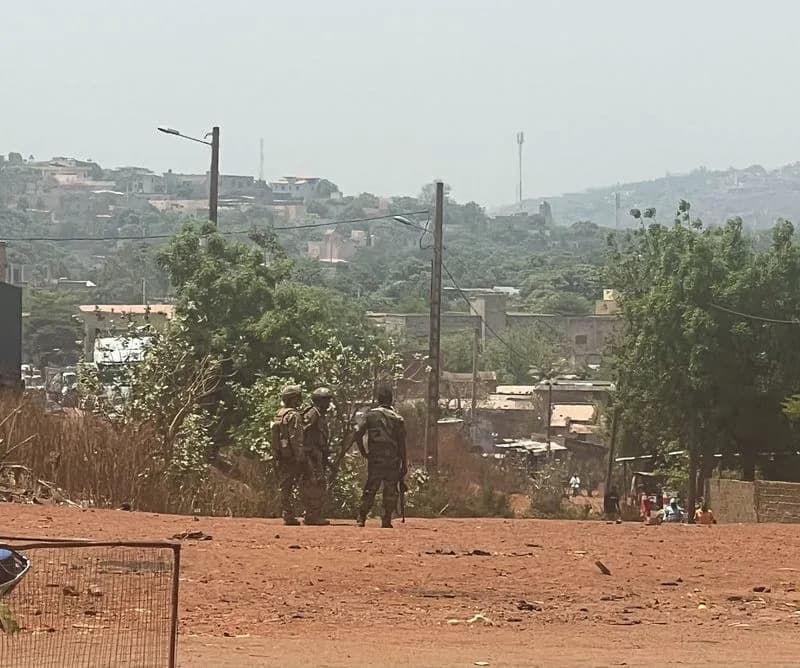
Malian soldiers stand during a patrol following the attack on Mali's main military base Kati, outside the capital Bamako, in Kati, Mali, April 26, 2026. REUTERS/Stringer
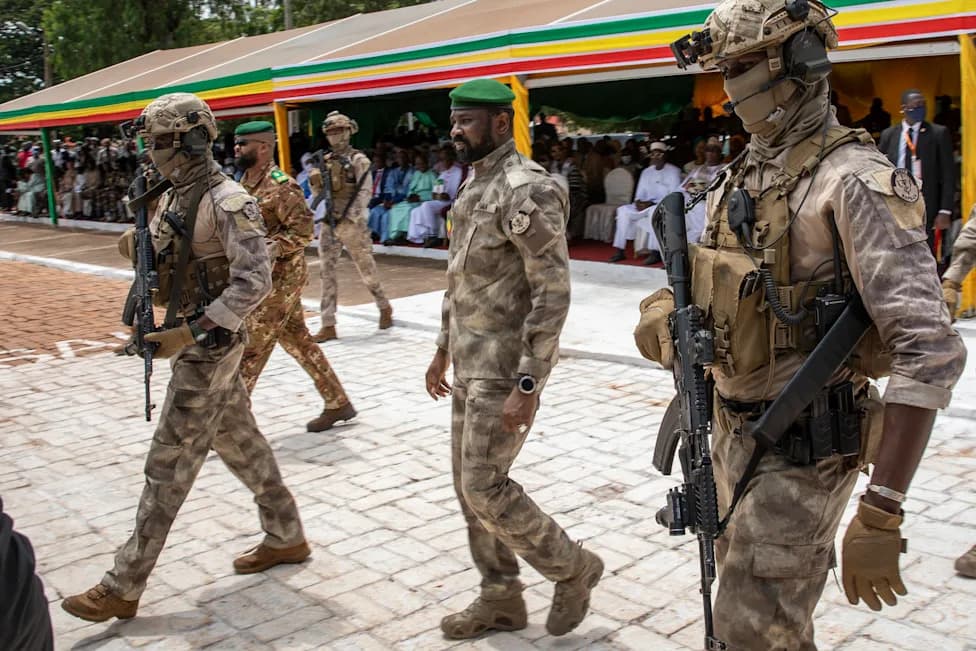
Mali's military leader, Assimi Goita, made his first public appearance on Tuesday since a weekend of coordinated insurgent attacks that killed Defence Minister Sadio Camara and struck multiple military sites, his office said.
Meeting With Russia: Goita met Russia's ambassador, Igor Gromyko, in a session described on the president's office social media account as a discussion of 'the current situation and the strong partnership between Bamako and Moscow.' The post said Gromyko reaffirmed Moscow's commitment to supporting Mali in the fight against international terrorism. Goita also visited a hospital treating people wounded in the attacks and offered condolences to Camara's family.
Weekend Offensive and Territorial Shifts
West Africa's al Qaeda affiliate, Jama'at Nusrat al-Islam wal-Muslimin (JNIM), together with a Tuareg-dominated separatist faction, struck Mali's main army base and areas near Bamako's airport on Saturday. Forces pushing from the north also forced Russian-backed troops out of Kidal, triggering a scramble for control across Mali's vast desert region. Authorities have said the situation is under control, but analysts warn the offensive underscores growing coordination among groups with different objectives.
'As of today, Bamako is closed off from all sides,' said JNIM spokesperson Bina Diarra in a video message claiming responsibility for the attacks and describing them as punishment for drone strikes and other operations by Malian forces.
Russian Response and Regional Concern
Russia said its forces had helped repel attempts to seize key facilities, including the presidential palace, and that jihadi and separatist forces were regrouping. The Russian Defence Ministry said its units were conducting reconnaissance to locate and destroy insurgent field camps and stood ready to repel further attacks. Moscow's response is being watched closely as it balances commitments in Africa with its military engagement in Ukraine.
Islamic State Activity in the Northeast
Separately, fighters from the Islamic State In The Sahel Province (ISSP) were reported in the northeastern town of Menaka near the Niger border. Reuters sources — including residents, security analysts and a representative of the Azawad Liberation Front — said ISSP fighters had set up checkpoints and were moving through neighbourhoods, though no direct clashes were reported and the group did not take part in Saturday's assault.
ISSP and JNIM have fought each other repeatedly since their first clashes in 2019; data from the Armed Conflict Location & Event Data project attributes more than 2,100 deaths to their confrontations. The weekend attacks, which hit multiple sites and at one point left Russian fighters surrounded in at least one location, highlight the fragile security picture in Mali and the wider Sahel.
Background: Mali turned to Russia for security support after expelling French and U.N. troops following coups in 2020 and 2021. The recent violence raises concerns about further territorial gains by armed groups and the potential for increased cross-border instability.
Help us improve.