
Astronomers have cataloged more than 350 molecules in space since 1937, and new species are added each year. Radio telescopes detect molecules via rotational spectral lines, but weak signals and overlapping features can make identifications uncertain. Laboratory measurements and computer models are essential to confirm spectral fingerprints. High-profile cases like glycine and the debated phosphine on Venus illustrate why independent follow-up and multiple-line detections are necessary.
Promising Signs of Life in Space Often Take Years to Confirm
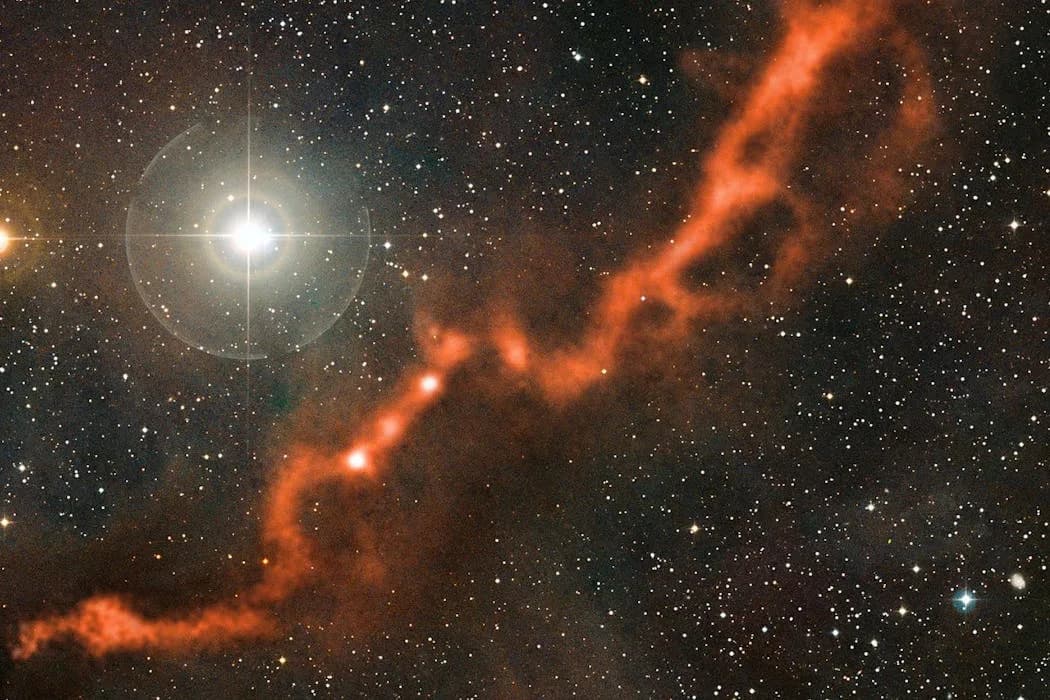
The Taurus molecular cloud is a relatively close star-forming region at 450 light-years away. It has been the site of many astromolecule discoveries.European Southern Observatory
By Olivia Harper Wilkins, Dickinson College
Astronomers can identify specific molecules in the atmospheres of nearby planets, in nebulae — clouds of interstellar gas and dust — and even in galaxies far beyond the Milky Way by using telescopes that measure different wavelengths of electromagnetic radiation. These detections offer tantalizing clues about the chemistry of the cosmos and the possible origins of life, but robust confirmation can require months or years of careful work.
How Molecules Are Detected
For astrochemistry, radio telescopes are especially important. Molecules in cold space rotate and emit photons at characteristic energies; a telescope records those photons as spectral lines. The more photons detected at a given energy, the stronger the signal. When a telescope captures the full set of expected spectral lines for a molecule — its spectrum — astronomers can be confident in the identification.
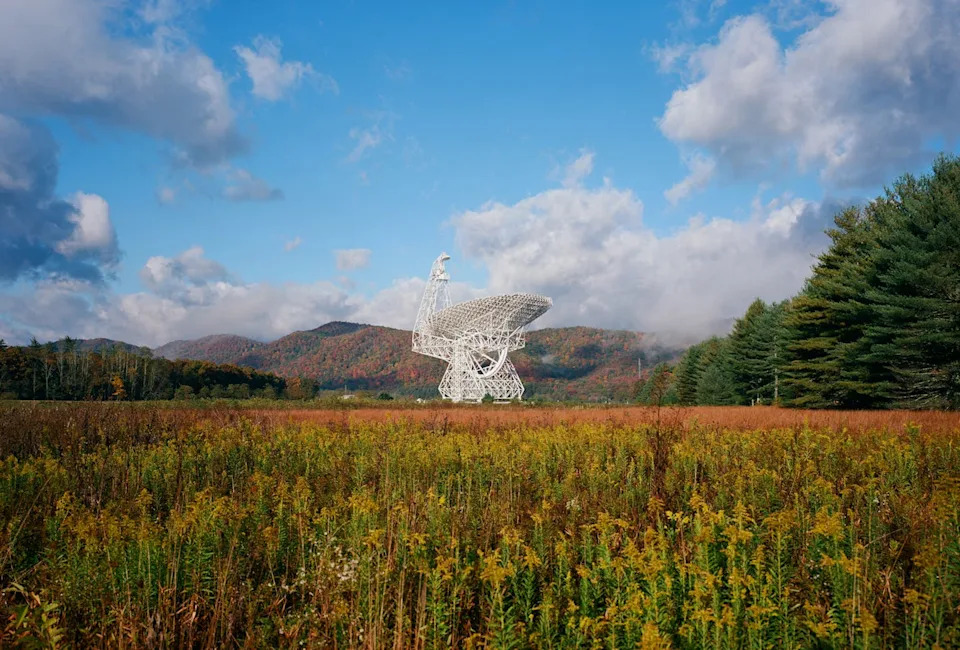
The Robert C. Byrd Green Bank Telescope in West Virginia is a radio telescope that has been used in the discovery of many astromolecules.NSF/AUI/NRAO/John Stoke,CC BY
Infrared observatories such as the James Webb Space Telescope and visible-light instruments like Hubble also contribute to astrochemistry, but overlapping signals often make chemical identification harder at these wavelengths.
Laboratory Work and Modeling
Every credible identification rests on months or years of lab work and computer modeling to determine a molecule’s spectral "fingerprint." During a Fulbright research fellowship at the University of Cologne, I helped model spectra and measured radio-frequency patterns from molecules introduced into a vacuum chamber that mimics space conditions. We iteratively adjusted models until simulated spectra matched laboratory measurements, enabling astronomers to search for features beyond the lab’s direct measurement range.
Why Some Claims Are Contested
Even with powerful instruments and careful experiments, detections can remain ambiguous. Signals may be too faint, or many molecular lines can overlap and blend, making it difficult to assign features to a single species. Researchers sometimes rush to announce surprising results — driven by excitement or the incentive to publish first — but independent follow-up is essential.
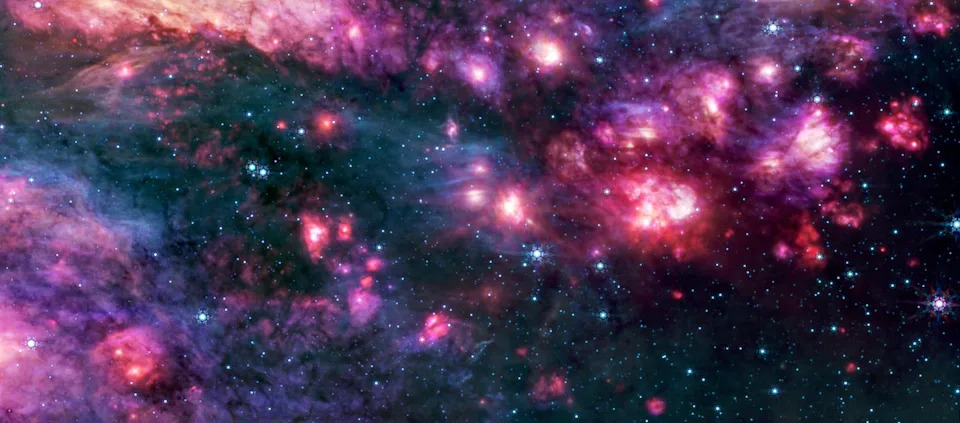
This is a mid-infrared image of Sagittarius B2 captured by the James Webb Space Telescope. Sagittarius B2 is a molecule-rich region of space and one of the places scientists thought they had observed glycine before that claim was refuted.NASA, ESA, CSA, STScI, A. Ginsburg (University of Florida), N. Budaiev (University of Florida), T. Yoo (University of Florida). Image processing: A. Pagan (STScI),CC BY
Two illustrative cases: more than two decades ago, initial reports of glycine (the simplest amino acid) in star-forming regions were later revised after follow-up studies showed key lines were missing; the community now accepts that glycine has not been detected in those nebulae. More recently, claims of phosphine in Venus’s atmosphere sparked intense debate; subsequent analyses have produced conflicting results and efforts to confirm or refute the detection are ongoing.
How to Read Molecule Claims
Be cautious of flashy headlines that equate a molecular detection with life. Detections based on only one or two spectral lines are generally less reliable than those supported by multiple lines (five or more). Independent analyses and repeat observations are the best tests of a surprising claim. Waiting a few months for follow-up studies can reveal whether a result holds up.
Bottom line: Astrochemistry is making rapid, exciting progress, but confirming the presence of molecules — especially those linked to life — requires rigorous lab work, careful modeling, and independent verification.
Funding and disclosures: Olivia Harper Wilkins is affiliated with Dickinson College and has received support from NASA and the National Radio Astronomy Observatory (NRAO).
Help us improve.





















