
German Chancellor Friedrich Merz said the US is being "humiliated" in its war with Iran and warned there is no clear exit strategy, comparing the crisis to the long campaigns in Afghanistan and Iraq. He praised Tehran's negotiating skill and accused the IRGC of contributing to the humiliation. Merz urged a swift end to fighting, warned of economic costs for Germany, and said Berlin could deploy minesweepers to protect the Strait of Hormuz if hostilities stop. Foreign Minister Johann Wadephul stressed that ongoing nuclear threats require credible deterrence and highlighted closer Franco‑German cooperation on security.
Merz: US 'Humiliated' As Iran Gains Upper Hand — Berlin Warns Of Economic Fallout
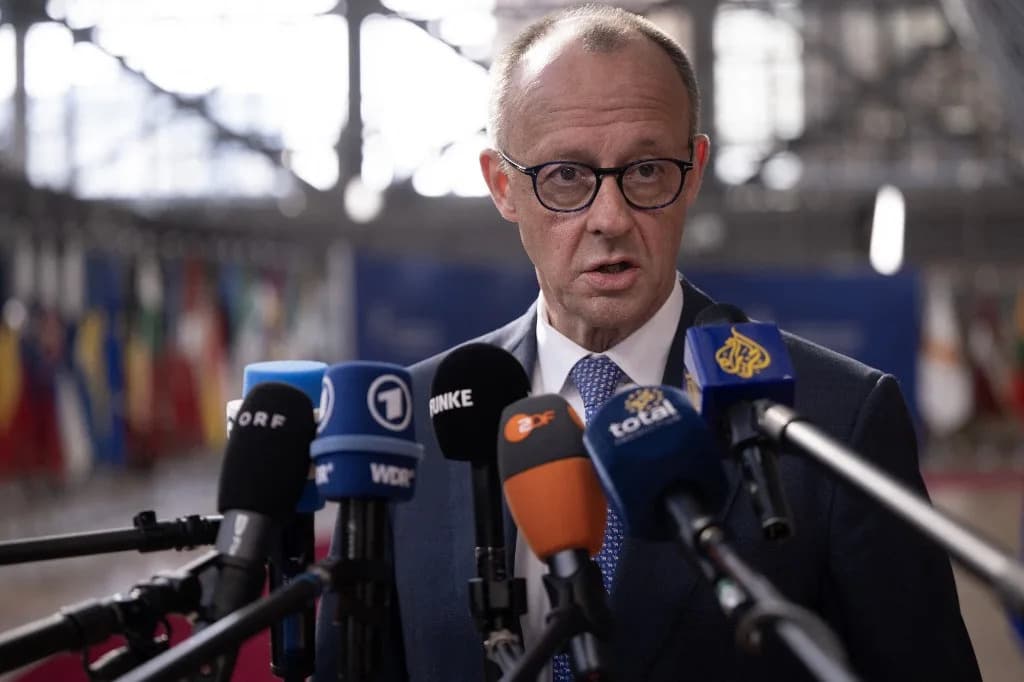
Chancellor Friedrich Merz said Germany is already feeling the economic effects of the Iran war [File: John Thys/AFP]
German Chancellor Friedrich Merz warned that the United States is being "humiliated" in its war with Iran and suggested Washington currently lacks a clear exit strategy as Tehran appears to gain the upper hand.
Speaking to students in the town of Marsberg, Merz framed the crisis as a strategic dilemma for the US, drawing parallels with prolonged campaigns in Afghanistan and Iraq. He cautioned that military involvement creates the dual challenge of entering conflicts and finding a credible path out.
“The problem with conflicts like this is always you don’t just have to get in – you have to get out again. We saw that very painfully in Afghanistan for 20 years. We saw it in Iraq,”
Merz said Iranian leaders were negotiating "very skilfully" and that Tehran now looked "clearly stronger than one thought." He also accused the Islamic Revolutionary Guard Corps (IRGC) of contributing to a wider perception that the United States is being humiliated.
The chancellor urged a rapid end to hostilities, warning the fallout is already affecting Germany’s economy. “It is, at the moment, a pretty tangled situation,” he said. “And it is costing us a great deal of money. This conflict, this war against Iran, has a direct impact on our economic output.”
Merz said Berlin stands ready to deploy minesweepers to help secure shipping through the Strait of Hormuz — a strategically vital route for global oil supplies — but emphasized any such deployment would depend on a cessation of hostilities.
Wider European Concerns
His remarks come amid rising concern across Europe about the broader consequences of the conflict, including energy disruptions and economic instability. German Foreign Minister Johann Wadephul reiterated Berlin’s commitment to non‑proliferation while warning that nuclear threats continue to shape the security environment.
“As long as nuclear threats against us and our partners continue, we will need a credible deterrent,” Wadephul said ahead of meetings at the United Nations on the Treaty on the Non‑Proliferation of Nuclear Weapons.
France and Germany have recently moved to deepen cooperation on nuclear deterrence, reflecting growing anxiety in Europe over the Iran war and broader regional instability.
Help us improve.





















