Summary: Fossils, tools and physiology show that meat became an important part of many hominin diets over the last two million years, supported by evidence such as butchery marks (≈2.6 Mya), hunting at sites like Olduvai (≈1.5 Mya), high gastric acidity, and nutrient demands of our large brain. Simultaneously, genetics and isotopes document deep adaptations to starchy plant foods and an earlier plant-dominated phase in hominin history. Cultural innovations like cooking further reshaped diets, and modern public-health findings mean evolution alone cannot dictate today's dietary choices.
Did Humans Evolve To Eat Meat? What Our Anatomy Really Reveals
The evolutionary case for eating meat is etched into human anatomy — but so is the case against it. The science deserves more than a simple verdict.getty
The relationship between human anatomy and meat consumption is complex: the evidence points strongly in both directions. Rather than offering a simple verdict, the biological and archaeological record reveals a nuanced story of flexibility, adaptation, and cultural innovation.
Early Evidence: Tools, Butchery, and Hunting
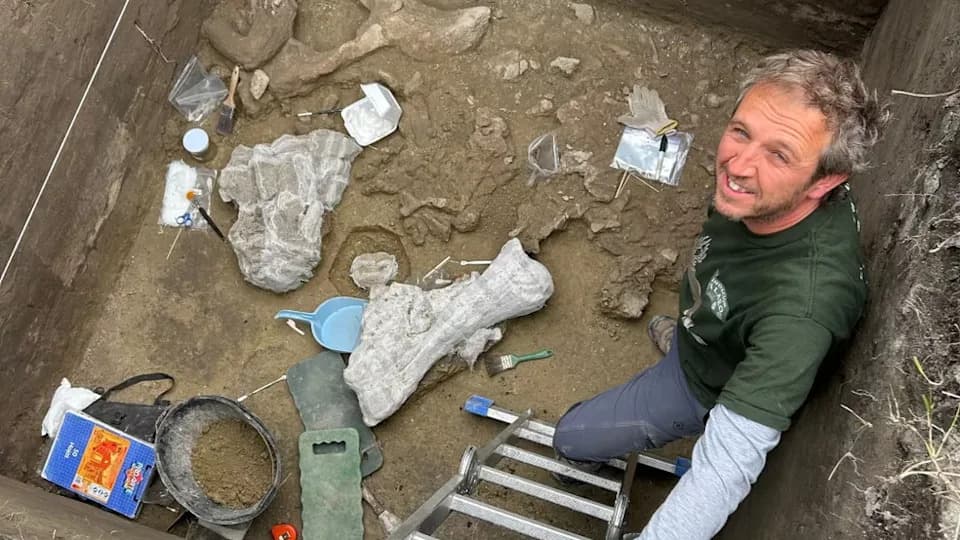
Stone-tool cut marks on animal bones from Gona, Ethiopia, date butchery to about 2.6 million years ago, long before modern humans appeared. By roughly 1.5 million years ago, sites at Olduvai Gorge in Tanzania provide clear signs that early Homo were actively hunting as well as processing carcasses. A 2021 synthesis in the American Journal of Physical Anthropology — drawing on nearly 400 studies across genetics, zooarchaeology, isotope analysis and comparative physiology — argued that Homo obtained a large portion of dietary energy from animal sources for much of the last two million years, a claim that has provoked lively debate.
Anatomical Clues: Stomachs, Brains, and Nutrients
Several physiological features point toward significant meat consumption. Human gastric acidity averages around pH 1.5, similar to scavengers and far more acidic than many omnivores; high acidity helps break down dense animal proteins and neutralize bacteria in aged meat. Our disproportionately large brain requires steady access to bioavailable iron, zinc, vitamin B12 and long-chain omega-3 fats (DHA) — nutrients commonly abundant in animal tissues.
The "expensive tissue" hypothesis (1995) proposes that a shift toward higher-quality, energy-dense foods — including meat — enabled smaller guts and larger brains. Paleopathology adds another hint: fragments of a 1.5-million-year-old child’s skull in Tanzania show signs consistent with porotic hyperostosis, a condition linked to B12 deficiency, which suggests an increased physiological reliance on animal-derived nutrients at that time.
Plant Adaptations and Preservation Bias
Humans also show clear adaptations for plant consumption. Genetic evidence — notably duplication of the salivary amylase gene AMY1 (reported in 2007) — points to long-term starch use, likely from tubers and other starchy plants. Isotope data from Australopithecus (3–4 million years ago) indicate a predominantly plant-based diet in earlier hominins. Importantly, plant remains (tubers, seeds, leaves) rarely survive in the archaeological record, producing a preservation bias that can overemphasize meat in reconstructions of ancient diets.
Cooking and Cultural Change
Control of fire and cooking (Richard Wrangham’s "cooking hypothesis") transformed caloric availability and digestibility for both plant and animal foods. Cooking increases energy yield from starchy roots, softens meat and reduces the need for heavy jaw musculature, potentially freeing cranial architecture for larger brains. Cultural practices such as cooking, tool use and cooperative hunting therefore interacted with biology to reshape diets.
What Evolution Means For Modern Diets
Evolutionary history shows that humans are metabolically flexible omnivores with notable carnivorous adaptations layered on an older plant-eating primate legacy. But ancestral diets are not direct prescriptions for modern nutrition: Pleistocene environments, lifespans, activity levels and food processing methods differ drastically from today's. Public-health research also complicates matters — for example, a 2015 IARC review classified processed meat as a Group 1 carcinogen and red meat as Group 2A (probably carcinogenic), with important caveats about dose and preparation.
Bottom line: Our anatomy reveals versatility more than inevitability. Humans evolved to exploit both animal and plant resources; choosing what to eat today requires weighing health, environment and ethics in a modern context.
Help us improve.