
Russia launched the Progress 95 cargo freighter from Baikonur on April 25 atop a Soyuz rocket, carrying about 3 tons of food, fuel and supplies for the International Space Station. Progress 95 is scheduled to dock with the station on April 27 at roughly 8 p.m. EDT. This is the second Progress mission this year; Progress 94 remains attached after a partial antenna deployment issue. Progress 95 will take the port vacated by Progress 93, which deorbited over the Pacific.
Russia Launches Progress 95 From Baikonur With 3 Tons Of Supplies For the ISS — Docking Set For April 27
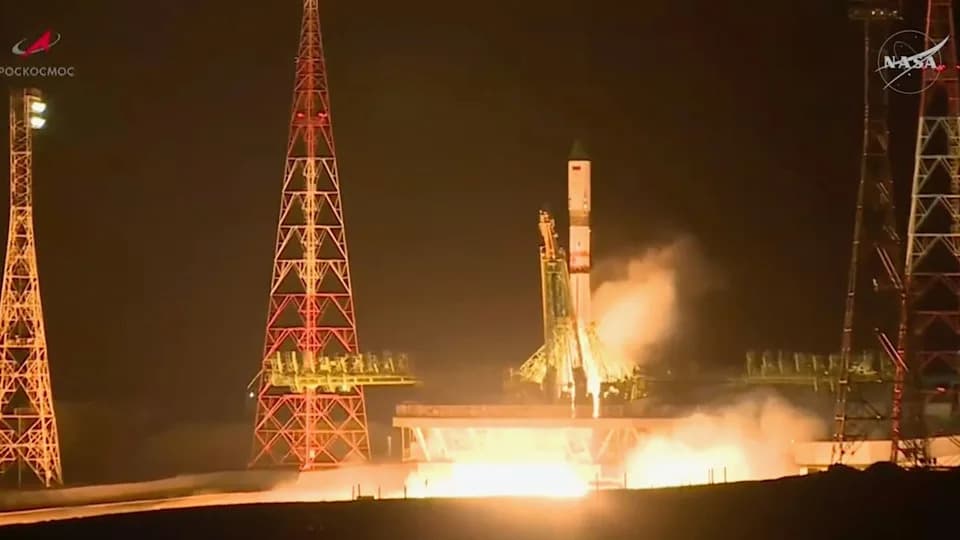
Credit: Roscosmos/NASA
Russia launched its latest Progress cargo freighter toward the International Space Station on April 25. A Soyuz rocket carrying the robotic Progress 95 spacecraft lifted off from the Baikonur Cosmodrome in Kazakhstan at 6:21 p.m. EDT (2221 GMT; 3:21 a.m. local time on April 26).
Mission Overview
Progress 95 is carrying roughly 3 tons of supplies — including food, propellant and other essentials — for the orbiting laboratory. The spacecraft is scheduled to rendezvous and dock with the ISS on Monday, April 27, at about 8 p.m. EDT (0000 GMT on April 28). Live coverage of the approach and docking is available on Space.com.
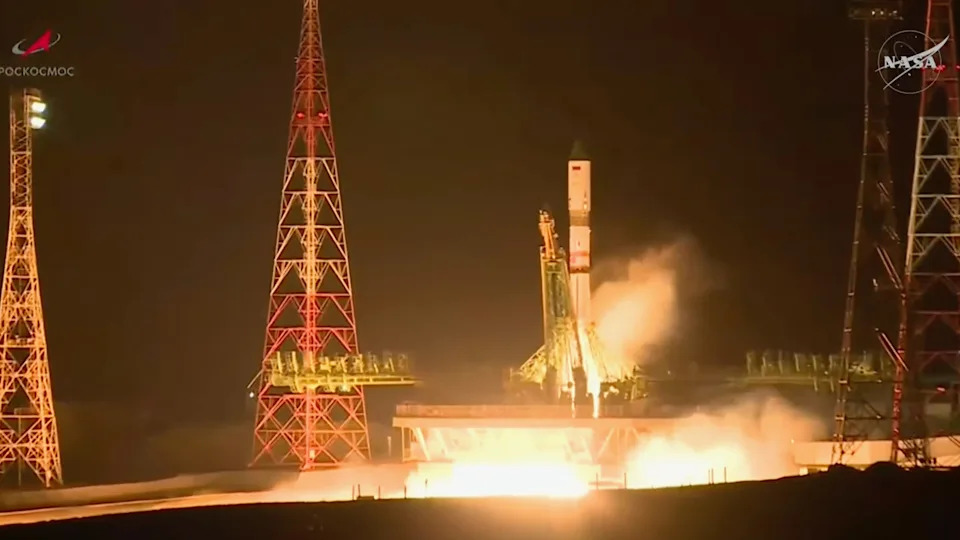
A Russian Soyuz rocket launches the Progress 95 cargo ship toward the International Space Station on April 25, 2026. | Credit: Roscosmos/NASA
Context And Recent Activity
This is the second Progress mission of the year. Progress 94 launched from Baikonur on March 22 and reached the station two days later despite a partial failure in the deployment of one of its docking antennas; Progress 94 remains attached to the ISS.
Progress 95 is planned to occupy the docking port recently vacated by Progress 93, which departed the station on April 20. After its departure, Progress 93 performed a controlled reentry and burned up over the Pacific Ocean — the routine end-of-mission fate for Progress vehicles. Progress 95 is expected to stay on station for several months before a similar deorbit and reentry, typically about seven months after arrival.
Cargo Fleet For The ISS
Progress is one of four cargo spacecraft currently resupplying the ISS, alongside Japan's HTV-X, Northrop Grumman's Cygnus, and SpaceX's Dragon cargo capsule. All of these vehicles are expendable except for Dragon, which — like Crew Dragon — returns to Earth with parachute-assisted ocean splashdowns and is partially reusable.
Editor's note: This story was updated at 6:30 p.m. ET on April 25 to confirm the successful liftoff.
Help us improve.





















