
US envoys Steve Witkoff and Jared Kushner traveled to Islamabad as Iran's foreign minister Abbas Araghchi arrived, aiming to revive fragile ceasefire diplomacy. Tehran said it would not meet US envoys directly and will use Pakistan to convey proposals while continuing talks in Oman and Russia. Israeli strikes in southern Lebanon killed six despite a declared ceasefire extension, and disruptions in the Strait of Hormuz have unsettled energy markets even as Wall Street rose on hopes for de-escalation.
US Envoys Head to Islamabad as Iran Rules Out Direct Talks — Lebanon Strikes Kill Six, Hormuz Disruptions Rattle Markets
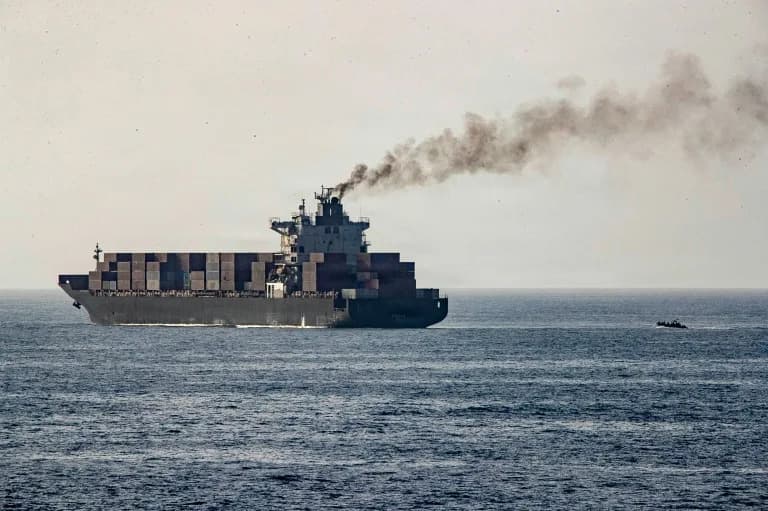
Under orders from Trump, the US Navy is attempting to block vessels heading to or from Iranian ports, seeking to ramp up pressure on the Iranian economy (-)(-/NAVCENT PUBLIC AFFAIRS/AFP)
US envoys Steve Witkoff and Jared Kushner traveled to Islamabad as Iran's foreign minister, Abbas Araghchi, arrived in the Pakistani capital in a cautious effort to revive stalled peace negotiations during a fragile ceasefire.
The White House said the envoys would pursue an "in-person conversation" with Iranian representatives, but Iranian state media and Tehran officials countered that direct talks with US diplomats were not planned. Iran indicated Pakistan would serve as an intermediary to "convey" Iranian proposals, while Araghchi reportedly plans further visits to Oman and Russia to continue diplomatic outreach.
Diplomatic Moves and Uncertainty
White House Press Secretary Karoline Leavitt confirmed Witkoff and Kushner would travel to Pakistan and said the Iranians "reached out" at the president's urging. She added Vice President JD Vance, who led an earlier round of negotiations in Islamabad, would remain on standby but would not join the mission immediately.
"The Iranians reached out, as the president called on them to do, and asked for this in-person conversation," Leavitt said, adding hopes the exchanges would "move the ball forward towards a deal."
Iranian state television said Araghchi had no plans to meet the US envoys directly, leaving it unclear whether any face-to-face US–Iran discussions would occur in Islamabad.
Strait Of Hormuz, Markets And Military Posture
Since the previous talks, diplomacy has stalled over a US naval blockade of Iranian ports; in response Iran has imposed a de facto restriction on traffic through the Strait of Hormuz, allowing only a trickle of ships through the vital corridor. The disruption has unnerved global energy markets, though oil prices eased on hopes renewed negotiations could restore traffic.
European Council President Antonio Costa urged immediate reopening of the strait "without restrictions and without tolling," calling the move "vital for the entire world." Financial markets welcomed the prospect of de-escalation: major Wall Street indices closed at fresh records as investors digested corporate earnings and diplomatic developments.
At the same time, the United States continued to reinforce its military presence in the region with the arrival of the aircraft carrier USS George H.W. Bush, underscoring the strategic and security stakes involved.
Lebanon: Fragile Ceasefire, Human Cost
Despite US President Donald Trump’s announcement of a three-week ceasefire extension in Lebanon, Israeli strikes in southern Lebanon killed six people, officials said. The violence and deep political divisions have complicated efforts to broker a lasting settlement between Israel and Lebanon.
Mohammed Raad, head of Hezbollah's parliamentary bloc, urged Lebanon not to engage in direct talks with Israel and warned any agreement endorsed by the United States would lack broad national support. Israeli Prime Minister Benjamin Netanyahu accused Hezbollah of trying to sabotage peace efforts.
In Tyre, southern Lebanon, resident Mohamad Ali Hijazi sifted through rubble searching for keepsakes of relatives killed in an airstrike just before the ceasefire. "I'm trying to find my mother's hairbrush...and a bottle of perfume that she loves," he said, adding, "My life has been destroyed. I haven't slept for five days."
The situation remains fluid: diplomats and mediators are in motion, but significant obstacles — including disagreements over naval access, continued military strikes and domestic political resistance — mean a comprehensive settlement is not yet in sight.
Help us improve.





















