
The White House has shifted from rapid strikes to prolonged economic pressure against Iran nearly eight weeks after the campaign began, arguing recent joint US‑Israeli strikes fractured Tehran’s leadership. Officials say they will wait for a unified Iranian response to ceasefire offers even as the closure of the Strait of Hormuz disrupts global energy supplies and forces airlines to cut flights. Allies warn there is no clear US strategy, while military and munitions strains—highlighted by a CSIS estimate of Patriot missile usage—add urgency to the dilemma.
From Shock-and-Awe to a Waiting Game: How the White House Is Rethinking Its Iran Strategy
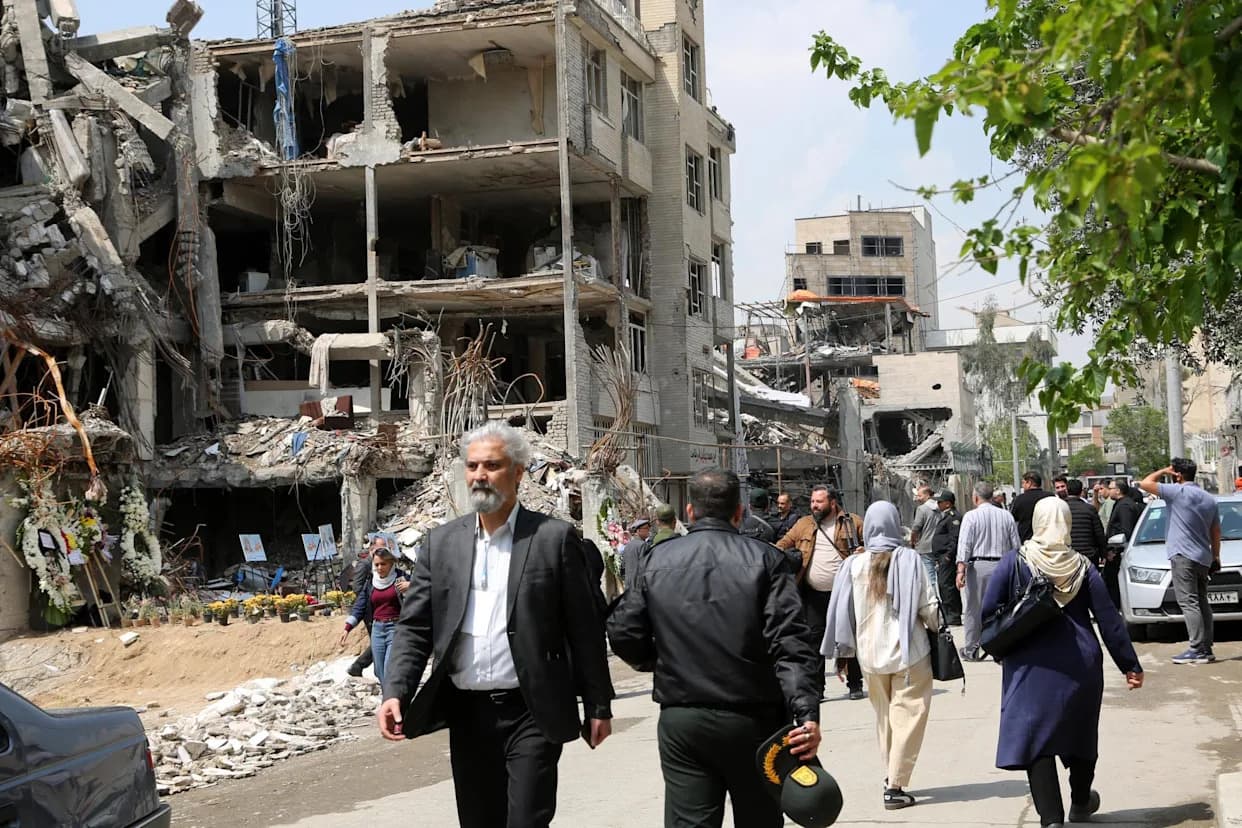
Resalat Square in Tehran, Iran, on 20 April 2026.Photograph: Fatemeh Bahrami/Anadolu via Getty Images(Photograph: Fatemeh Bahrami/Anadolu via Getty Images)
Nearly eight weeks after President Donald Trump ordered a major strike campaign against Iran, the White House appears to have shifted from an initial strategy of high-intensity strikes and leadership decapitation toward a longer campaign of economic pressure aimed at compelling Tehran to change course.
The administration, officials say, is now signalling a willingness to wait for a more durable settlement even as the global economic fallout from the closure of the Strait of Hormuz mounts. White House aides argue that recent joint US-Israeli strikes were effective enough to fracture Iranian leadership and slow any rapid reconsolidation of power.
Patience as Policy
When asked how long he would wait for a response to Washington’s latest ceasefire proposal, President Trump told reporters:
“Don’t rush me. We were in Vietnam, like, for 18 years. We were in Iraq for many, many years … I’ve been doing this for six weeks.”
Pressed about his earlier suggestion that the conflict would last four to six weeks, he added, “Well, I hoped that, but I took a little break.” The apparent shift toward a “wait-and-see” posture, combined with the rising costs of the campaign, has unsettled career officials at the Pentagon and the State Department, lawmakers from both parties, and allied governments that now increasingly view the US role as destabilising.
Allies Question the Plan
White House strategy reportedly coalesced at a recent national security meeting attended by senior advisers and cabinet officials. The consensus: sustain economic pressure to push Iran to reopen the strait while waiting for Tehran to offer a unified response to US ceasefire proposals.
But several European and regional allies have expressed concern that Washington lacks a clear, long-term plan—especially for reopening the Strait of Hormuz, the critical shipping lane through which a significant share of the world’s oil transits. “We don’t see a clear strategy—and we don’t think that there is one,” a senior European diplomat in Washington said. “We are worried we will be left with the fallout.”
Economic and Military Strains
Although oil futures have remained relatively stable so far, the closure of the strait has begun to ripple through global energy markets. Airlines are cutting thousands of flights as jet-fuel supplies tighten, and businesses and governments are bracing for broader economic disruption. Former negotiators warn that Iran’s blockade of the waterway gives Tehran a potent bargaining chip that complicates any path to a settlement that would allow the US to claim victory and withdraw.
At the same time, Washington has increased its naval presence—deploying a third aircraft carrier and additional assets to the region, the largest carrier concentration in decades—but appears reluctant to undertake a large-scale convoy or escort operation to reopen the strait. Experts note that a repeat of past escort efforts would be costly and risky, and insurers and shipping companies might remain unwilling to transit even with a US presence.
Stockpile Concerns
Compounding the dilemma are escalating drone attacks in the region and a depletion of critical munitions. A recent analysis by the Center for Strategic and International Studies estimates the US has expended as many as 1,430 of an estimated 2,330 Patriot missiles from prewar inventories, each costing nearly $4m. The CSIS report warns that diminished munitions stockpiles create near-term risks and would constrain US operations if a future, larger conflict—such as with a peer competitor—were to occur.
As Republicans face tense midterm elections this November, the administration confronts mounting political pressure to stabilise markets by reopening the Strait of Hormuz. For now, the strategy appears to be a blend of sustained economic pressure and strategic patience, a posture that has reassured few allies and left many questions about next steps.
Help us improve.





















