The Kremlin’s tightened internet controls are prompting uncommon public dissent across Russia. Citizens have faced blocked messaging services and intermittent nationwide shutdowns as authorities seek to suppress criticism. This week, some people petitioned officials despite possible legal risks. A recent poll shows President Putin’s approval slipping rapidly amid restrictions, a cooling economy and the war in Ukraine.
Kremlin Internet Clampdown Triggers Rare Public Dissent — Putin’s Approval Slips
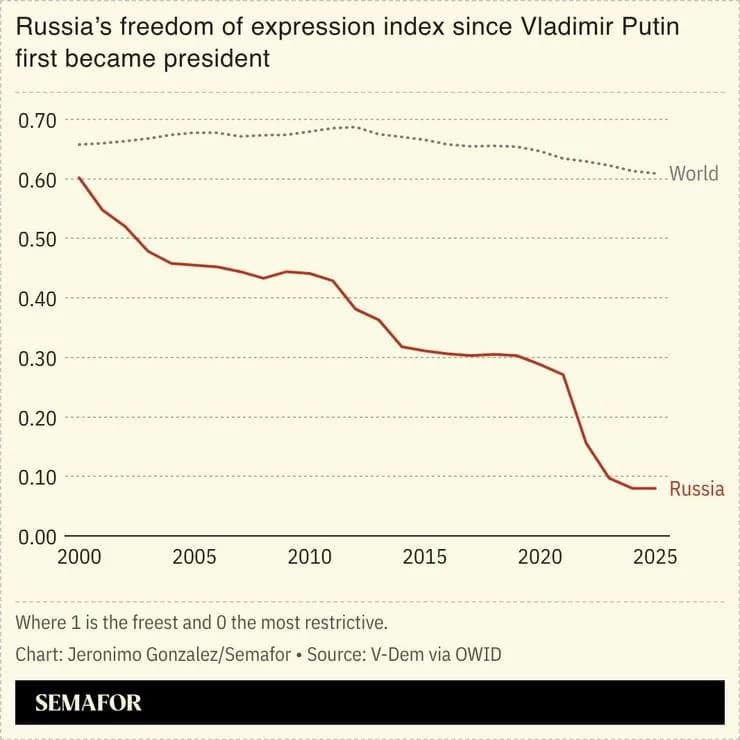
A chart showing Russia’s freedom of expression index.
The Kremlin’s escalating internet curbs are provoking uncommon public dissent across Russia, as authorities tighten control over messaging services and at times cut access nationwide to curb criticism.
Once relatively open online despite President Vladimir Putin’s consolidated power, Russia has in recent months seen access to international messaging apps restricted and, in some cases, the internet effectively shut down as Moscow moves to silence critical voices.
This week, some Russians formally petitioned officials — a risky step that could carry legal consequences — asking for the rollback of connectivity limits and restored access to messaging platforms.
Those measures are contributing to a rapid decline in Mr. Putin’s popularity: a recent poll found his approval rating falling at the fastest pace in years, driven not only by anger over the internet restrictions but also by concerns about a cooling economy and frustration with the war in Ukraine.
Growing Frustration, Limited Open Protest
Alongside petitions, small public complaints and other cautious acts of dissent point to rising frustration, even as broad censorship powers and the threat of punishment keep large-scale protests limited.
Impact: Tighter digital controls are reshaping how Russians communicate and express grievances, and they risk further eroding public trust in the government if economic and wartime pressures continue.
Observers warn that sustained restrictions on online communication could deepen domestic discontent and carry political costs for the Kremlin over time.
Help us improve.