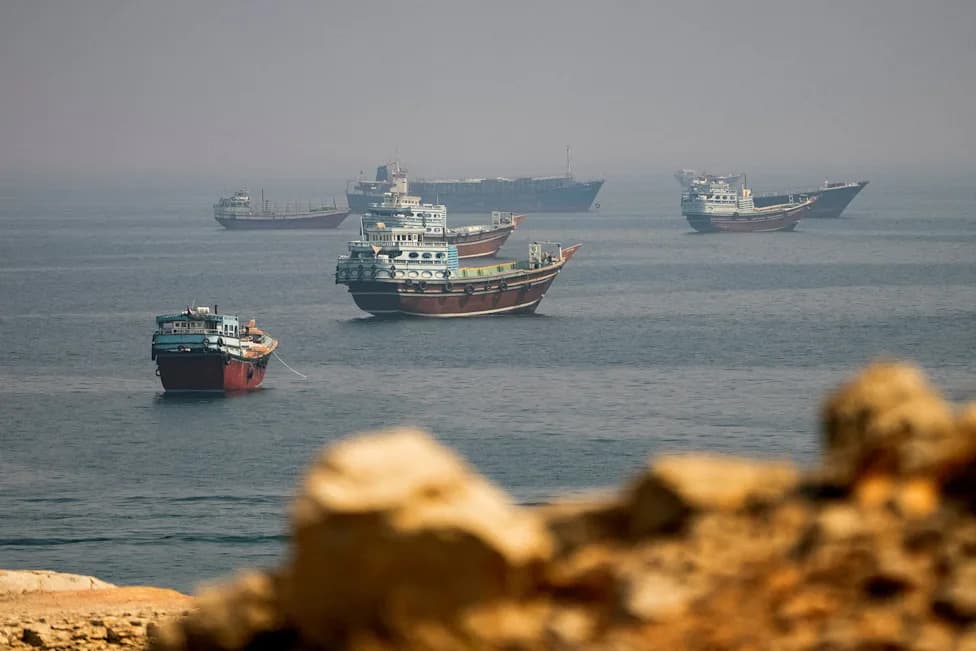
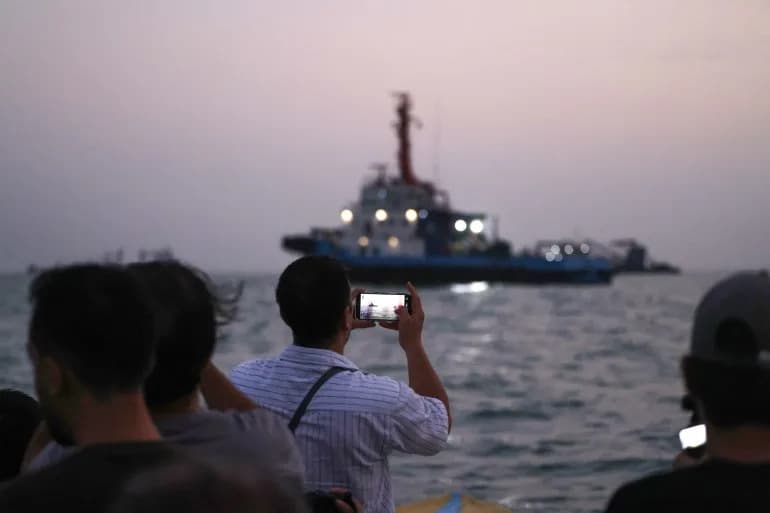
Overview: A US naval blockade of Iranian ports began at 14:00 GMT on April 13, prompting Iran to close the Strait of Hormuz and seize some foreign vessels. Despite the blockade, analysts estimate roughly 160–183 million barrels of Iranian crude remain at sea and Iranian oil revenues last month were nearly $5bn at conservative price assumptions. Iran is using floating storage, transit tolls and alternative buyers to sustain income, and experts say Tehran may weather the blockade for months unless Washington escalates enforcement or military action.
How Long Can Iran Withstand a US Naval Blockade of the Strait of Hormuz?
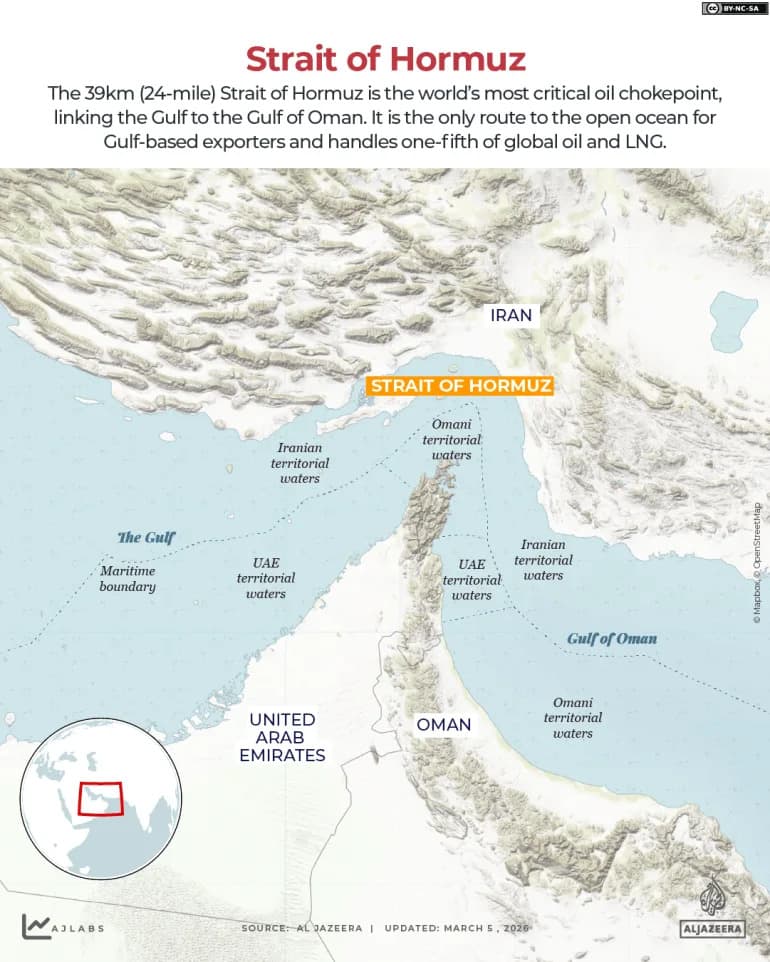
(Al Jazeera)
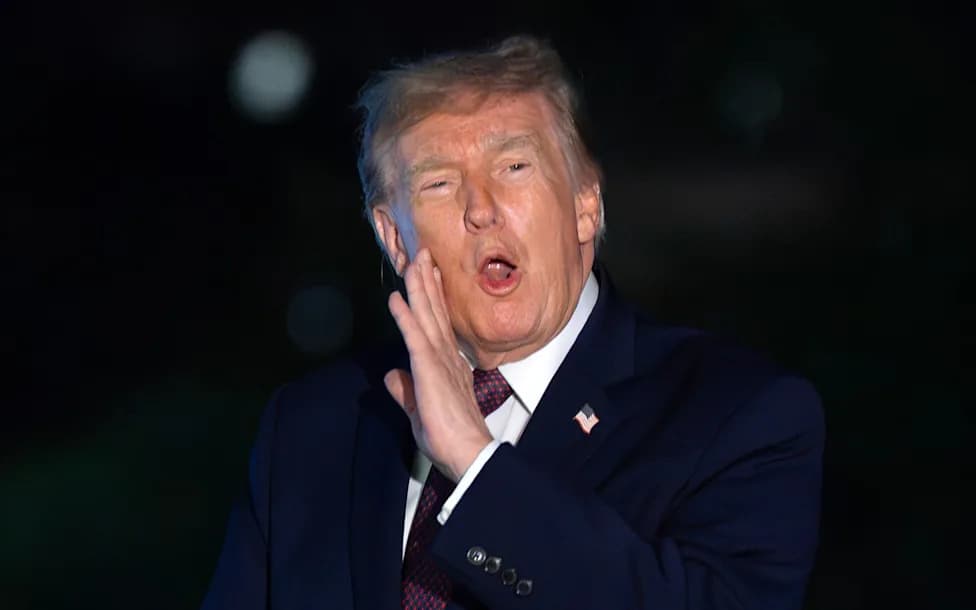
United States President Donald Trump has said Iran is 'collapsing financially' and claimed Tehran is losing millions daily after Washington announced a naval blockade of Iranian ports that began at 14:00 GMT on April 13. The blockade has included the firing on and seizure of an Iranian-flagged tanker and the interception or redirection of vessels carrying cargo to or from Iran.
In response, Iran closed the Strait of Hormuz to foreign shipping, detained several foreign-flagged vessels and continued to move some shipments it deems friendly. Iranian officials have denounced US actions as 'illegal' and likened them to piracy. Tehran's leaders have also insisted the country remains politically united despite US assertions of internal discord.
Economic Impact: Oil, Storage and Revenues
About 80% of Iran's oil exports transit the Strait of Hormuz. Trade-intelligence firm Kpler reported Iran exported 1.84 million barrels per day (bpd) in March and about 1.71 million bpd so far in April, compared with a 2025 average of 1.68 million bpd. Between March 15 and April 14, Iran exported roughly 55.22 million barrels. Across its main grades, Iranian crude has traded above $90 per barrel for the past month, often surpassing $100. At a conservative $90 per barrel, that implies nearly $5 billion in oil revenue last month—about 40% more than the roughly $3.45 billion monthly pace seen before the conflict.
Analysts estimate between roughly 160 million and 183 million barrels of Iranian crude remain afloat on tankers worldwide—cargoes that transited the strait before the blockade and are awaiting delivery. Those floating supplies can sustain revenue flows for months, with some analysts suggesting revenues could last into August unless the US escalates enforcement.
Storage Constraints
Onshore storage is a limiting factor. Kpler estimates Iran's onshore capacity currently covers about 20 days of production at present rates. To extend capacity, Iran has reportedly reactivated older tankers for floating storage—most notably the VLCC NASHA—and is relying on other afloat reserves to keep exports and sales moving.
Political and Strategic Limits on the Blockade
Experts caution the blockade's effectiveness depends on how far Washington is willing to push operationally and politically. The US faces a domestic constraint: the 60-day window a president can prosecute a foreign offensive without explicit congressional approval runs into early May. Intercepting vessels in distant waters also risks confrontation with third-party states, notably China, which has already protested restrictions on its trade with Iran and may continue to import Iranian crude where feasible.
Analysts say Iran appears to be 'playing the longer game'—accepting economic pain while leveraging floating inventories, transit tolls and asymmetrical military options. Tehran has introduced a 'toll' system for ships transiting Hormuz and reportedly charged some vessels as much as $2 million for passage, with at least some payments reported in yuan.
Military and Diplomatic Context
Iran has demonstrated resilience with asymmetric tactics—cyber operations, proxy activity, and targeted strikes on energy infrastructure—and has vowed to defend its maritime claims. The standoff has pushed global oil and gas prices higher and created geopolitical pressure on US partners and shipping routes.
Analysts' bottom line: Iran can likely sustain meaningful revenue and economic resilience for months using oil afloat, floating storage and alternative buyers, but continued tight enforcement, storage limits and further escalation could force production cuts or change the dynamic sooner.
Key uncertainties remain: the exact geographic limits of US enforcement, the reaction of major buyers (including China), the political will in Washington to sustain military operations, and how quickly Iran's onshore storage and production plans adjust to prolonged pressure.
Help us improve.