The Khumbu Icefall above Mount Everest's Base Camp features a large, unstable serac that has halted hundreds of climbers and their Nepali guides from advancing. Officials, including the Sagarmatha Pollution Control Committee, plan an aerial survey and are waiting for natural melting to reduce avalanche risk. About 410 foreign climbers hold spring permits, while the Icefall Doctors’ rope-fixing work is on hold until conditions improve. The Khumbu Icefall remains one of the most dangerous sections of the climb, illustrated by a 2014 collapse that killed 16 Sherpa guides.
Unstable Serac Above Everest Base Camp Forces Hundreds of Climbers to Wait
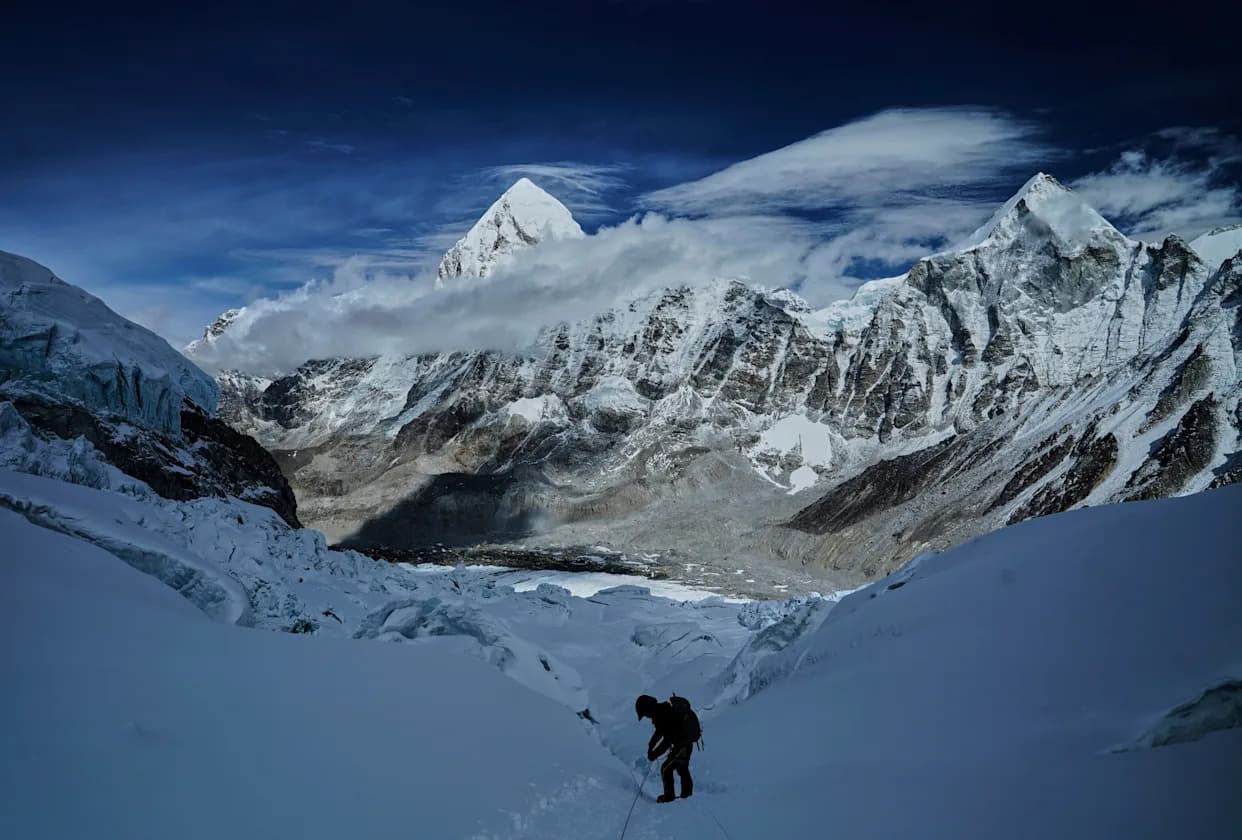
FILE - Mount Pumori, center left, looms in the background as a mountaineer negotiates Khumbu Icefall to descend to Everest Base Camp, in Nepal, May 4, 2025. (AP Photo/Pasang Rinzee Sherpa, File)(ASSOCIATED PRESS)
A large, unstable serac on the route just above Mount Everest's Base Camp has forced hundreds of foreign climbers and their Nepali guides to pause ascent plans, officials said Friday.
Himal Gautam of Nepal's Department of Mountaineering warned that the serac between Base Camp and Camp One is unstable and poses a significant risk to anyone attempting to pass beneath it.
Authorities Are Assessing the Danger
Expedition leaders, government officials and local guide teams are coordinating at Base Camp to evaluate the situation. About 410 foreign climbers have been issued permits for the spring climbing season, which runs through the end of May, and many are waiting for a safe window to proceed.
The elite rope-fixing team known as the "Icefall Doctors", who normally establish the annual climbing route by fixing ropes and placing aluminum ladders across crevasses, usually finish that work by mid-April. Their deployment to the Khumbu Icefall is on hold until the serac is deemed stable.
The Sagarmatha Pollution Control Committee plans to inspect the formation by aerial survey. Committee chairman Lama Kazi Sherpa said the avalanche risk is high and officials are hoping the serac will melt back naturally to a safer configuration before teams move forward.
Dangerous Terrain and Deadly History
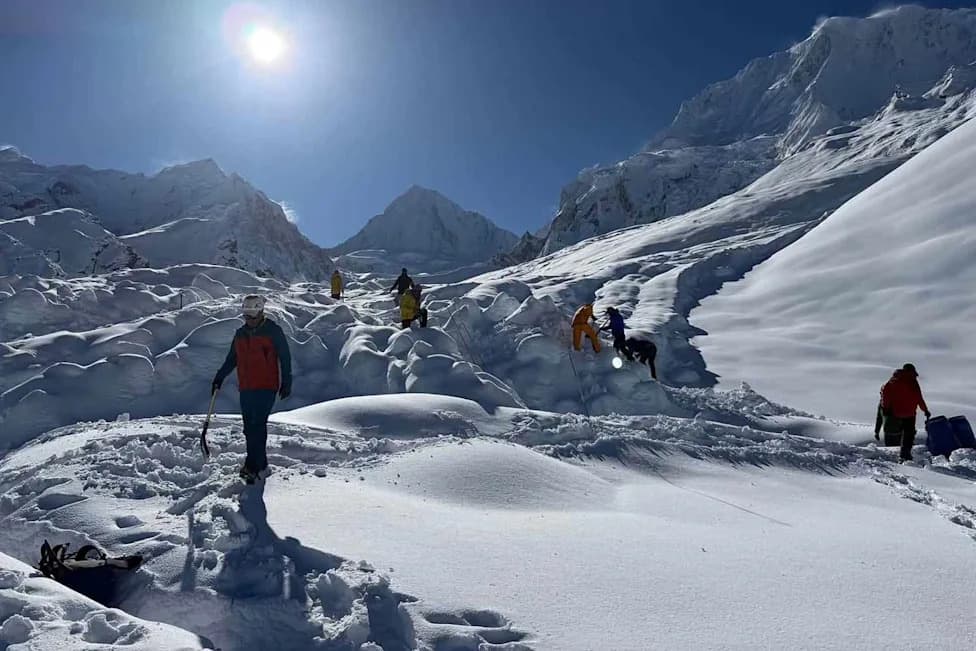
The unstable block is part of the Khumbu Icefall, a constantly shifting glacier cut by deep crevasses and topped with massive overhanging ice seracs that can be as large as 10-story buildings. The Khumbu Icefall is widely regarded as one of the most technically demanding and hazardous sections of the climb.
In 2014, a section of the glacier collapsed, triggering an ice avalanche that killed 16 Sherpa guides who were carrying clients' equipment — one of the deadliest events in Everest climbing history. That disaster remains a sobering reminder of the risks faced by climbers and support staff in the region.
Hundreds of foreign climbers and roughly the same number of Nepalese guides and support staff are expected to make summit bids when short windows of favorable weather open in the coming weeks. Officials say safety will determine when route-fixing and summit pushes resume.
Background
Since the first successful ascent on May 29, 1953, by New Zealander Edmund Hillary and Sherpa Tenzing Norgay, thousands of people have reached the 8,849-meter (29,032-foot) summit. This season’s delays underscore the continuing challenge posed by changing glacier conditions on the world’s highest peak.
Help us improve.