
After Oval Office talks, Lebanon and Israel agreed to extend their ceasefire by three weeks, President Donald Trump said. Ambassadors from both countries met with U.S. officials in Washington as violence continued in southern Lebanon, where recent strikes killed civilians including journalist Amal Khalil. Hezbollah did not participate and says the truce must be met by "full compliance" from Israel. Lebanese officials intend to press for withdrawal, detainee returns and a formal border delineation in subsequent talks.
Lebanon and Israel Agree Three-Week Ceasefire Extension After White House Talks
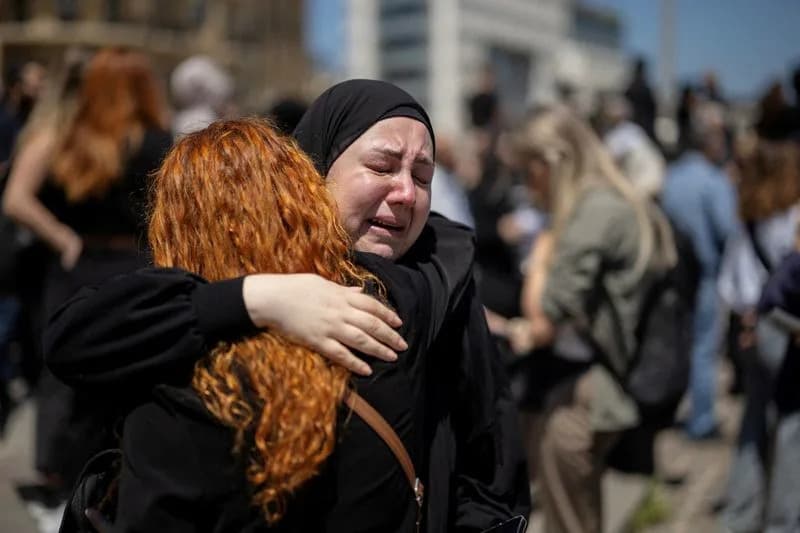
Women react as they hug each other while protesters, including members of the media, attend a vigil to condemn the killing of journalists, a day after journalist Amal Khalil was killed in an Israeli strike, in Martyrs' Square, Beirut, Lebanon April 23, 2026. REUTERS/Marko Djurica
Lebanon and Israel have agreed to extend their ceasefire for an additional three weeks after a high-level meeting at the White House, U.S. President Donald Trump announced on April 23. The talks, held in the Oval Office, were described by the president as constructive and a foundation for further negotiations.
Who met: Trump hosted Israel's ambassador to Washington, Yechiel Leiter, and Lebanon's ambassador to the United States, Nada Moawad, in a second round of U.S.-facilitated discussions. Senior U.S. officials present included Vice President J.D. Vance, Secretary of State Marco Rubio, U.S. Ambassador to Israel Mike Huckabee and U.S. Ambassador to Lebanon Michel Issa.
Ceasefire details: The truce — originally brokered after ambassador-level talks in Washington last week and due to lapse on Sunday — will be extended for three weeks. Officials said the agreement has produced a noticeable reduction in violence, though clashes and strikes have continued in parts of southern Lebanon, where Israeli forces have established a self-declared buffer zone.
Violence and casualties: The meeting came a day after Israeli strikes reportedly killed at least five people, including Lebanese journalist Amal Khalil. Lebanon's health ministry reported an air strike that killed three people and artillery shelling that wounded two others, including a child. The Israeli military separately said it killed two armed individuals in southern Lebanon after they approached soldiers and posed an immediate threat. Wednesday was described as Lebanon’s deadliest day since the ceasefire took effect on April 16.
Hezbollah’s role: Hezbollah, the Iran-aligned armed group engaged with Israel, did not participate in the talks and reiterated that it reserves "the right to resist" what it calls occupying forces. Hezbollah lawmaker Hassan Fadlallah said the group favored extending the ceasefire but only "on the basis of full compliance by the Israeli enemy," and reiterated objections to direct, face-to-face talks with Israel.
U.S. position and follow-up: President Trump said the United States would work with Lebanon to help it defend itself from Hezbollah and voiced hope that Israeli Prime Minister Benjamin Netanyahu and Lebanese President Michel Aoun could meet during the three-week pause. He also urged Lebanon to repeal anti-normalization laws that criminalize certain contacts with Israel, calling such statutes an impediment to dialogue.
Outlook: Lebanese officials said Beirut will push in the next phase of negotiations for an Israeli withdrawal from occupied areas, the return of Lebanese detainees held in Israel, and a formal delineation of the land border. Nearly 2,500 people have been reported killed in Lebanon since Israel launched its offensive after Hezbollah’s March 2 attack, according to Lebanese authorities. Israel says it occupies a belt of southern Lebanon extending 5–10 km to protect its north from rocket fire.
"The meeting went very well! The United States is going to work with Lebanon in order to help it protect itself from Hezbollah," President Trump posted on Truth Social.
The situation remains fragile: while the truce has slowed large-scale exchanges of fire, localized strikes and ground operations continue, and both sides have set conditions and demands that will shape any further progress toward a durable settlement.
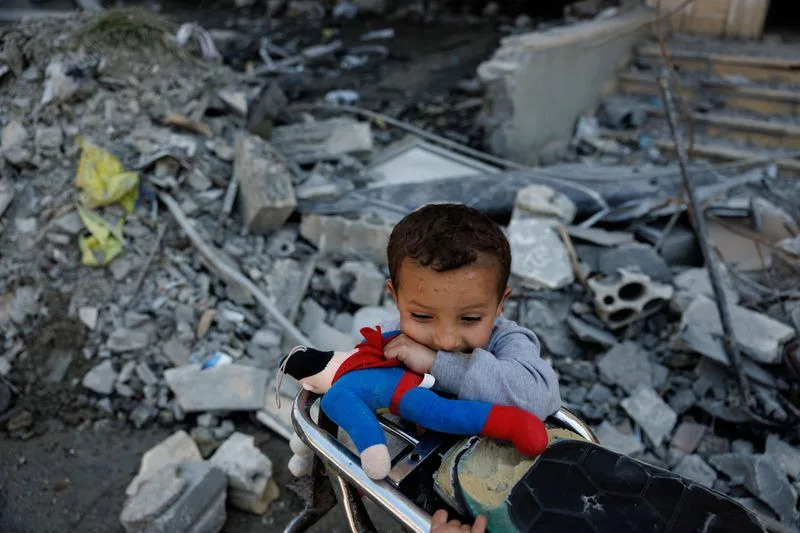
A child plays among the rubble of a building damaged by an Israeli strike, amid a temporary ceasefire between Lebanon and Israel, in Housh near Tyre, Lebanon, April 23, 2026. REUTERS/Zohra Bensemra
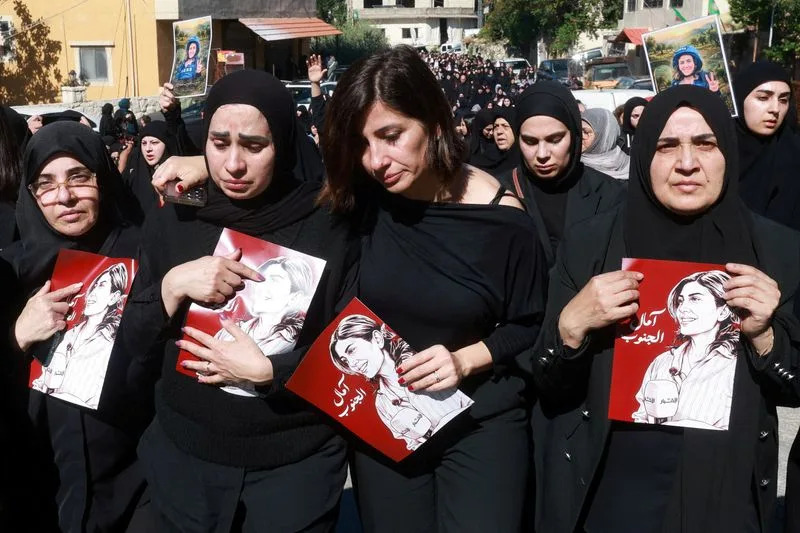
Mourners hold images depicting journalist Amal Khalil, who was killed in an Israeli strike on Wednesday, during her funeral in Baisariyeh, Lebanon April 23, 2026. REUTERS/Aziz Taher
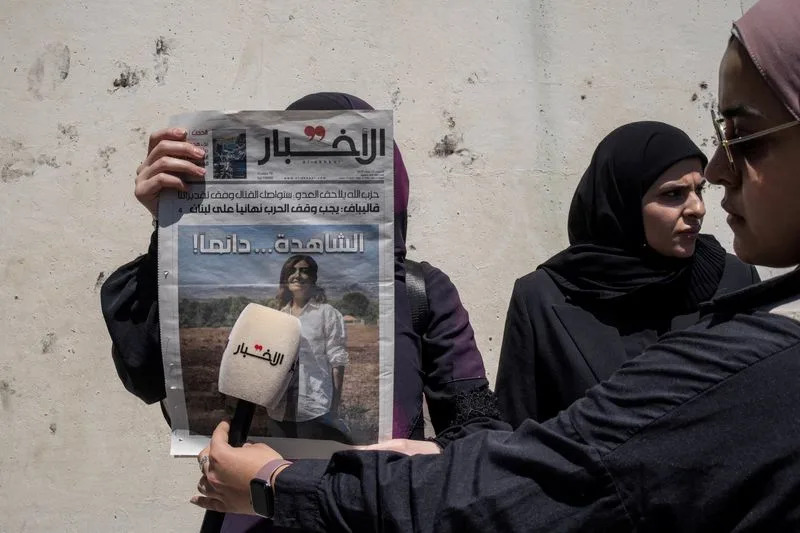
A colleague of journalist Amal Khalil, who was killed in an Israeli strike on Wednesday, places a microphone on a newspaper featuring Amal's picture during a vigil to condemn the killing of journalists, in Martyrs' Square, Beirut, Lebanon April 23, 2026. REUTERS/Marko Djurica
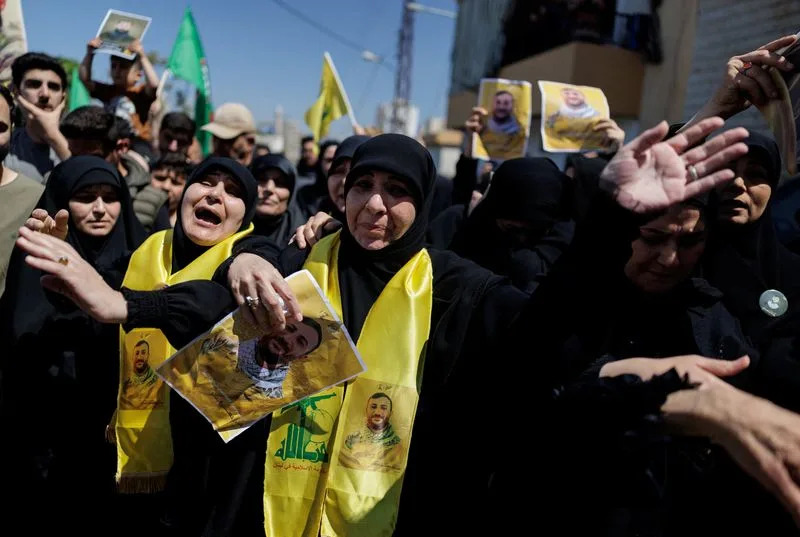
Mourners react during the funeral of Abed el Aziz Swaidan and Haider Farhat, Hezbollah fighters killed during the conflict with Israel, amid a temporary ceasefire between Lebanon and Israel, in Tyre, southern Lebanon, April 23, 2026. REUTERS/Zohra Bensemra
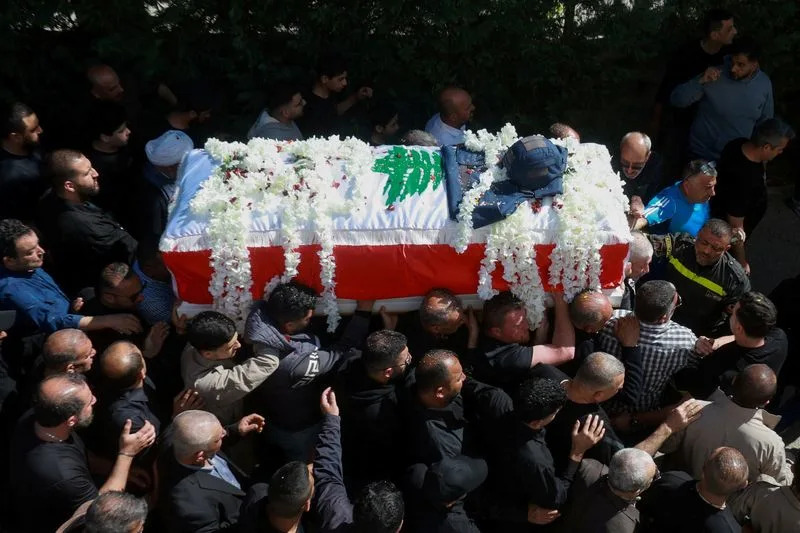
Mourners carry the coffin of journalist Amal Khalil, who was killed in an Israeli strike on Wednesday, during her funeral in Baisariyeh, Lebanon April 23, 2026. REUTERS/Aziz Taher
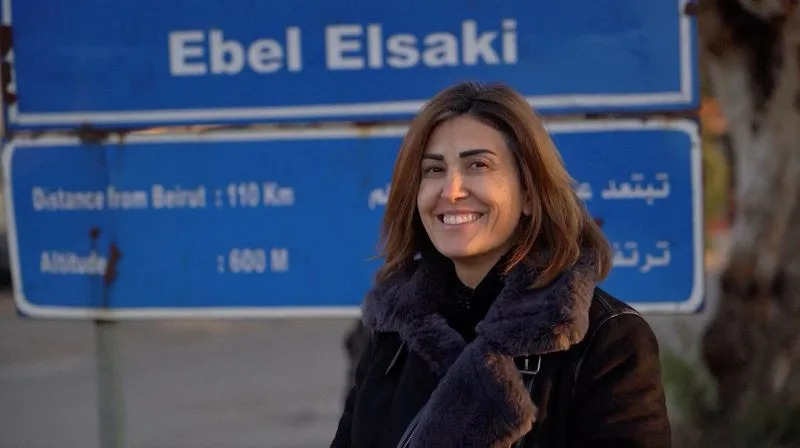
Journalist Amal Khalil, who was killed in an Israeli strike, stands in front of a sign, in this still image obtained from a handout video on April 23, 2026. REUTERS TV/Al-Akhbar/Handout via REUTERS
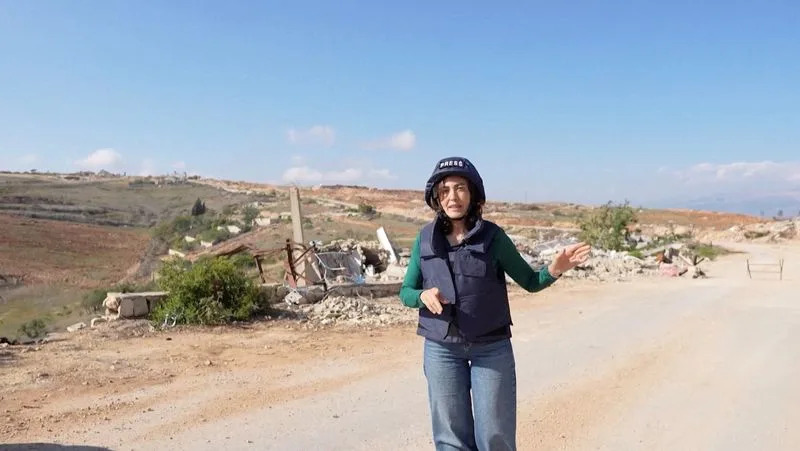
Journalist Amal Khalil, who was killed in an Israeli strike, speaks, in this still image obtained from a handout video on April 23, 2026. REUTERS TV/Al-Akhbar/Handout via REUTERS
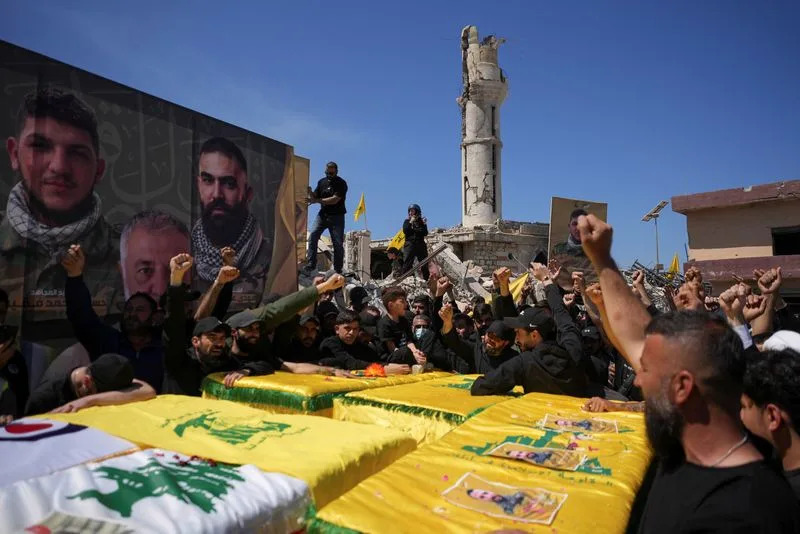
Mourners attend the funeral of people, including Hezbollah members, who were killed during the conflict with Israel, in Mansouri Lebanon, April 23, 2026. REUTERS/Stringer
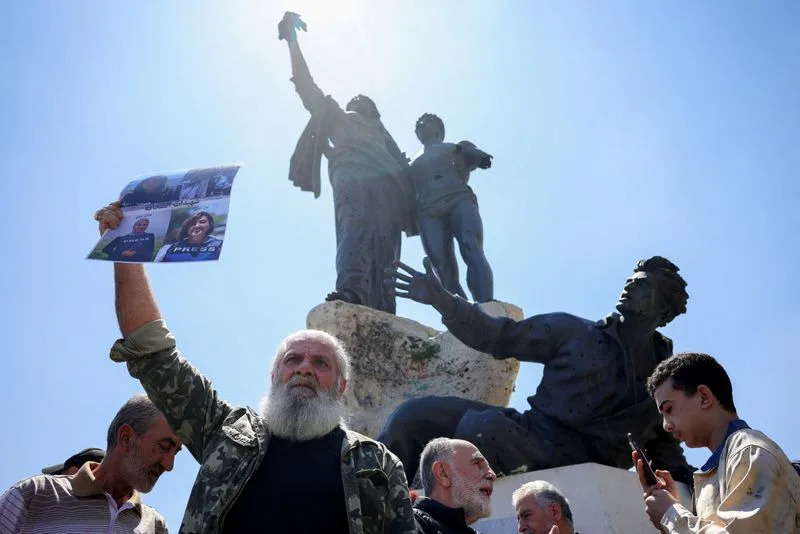
Protesters, including members of the media, attend a vigil to condemn the killing of journalists, a day after journalist Amal Khalil was killed in an Israeli strike, in Martyrs' Square, Beirut, Lebanon April 23, 2026. REUTERS/Marko Djurica
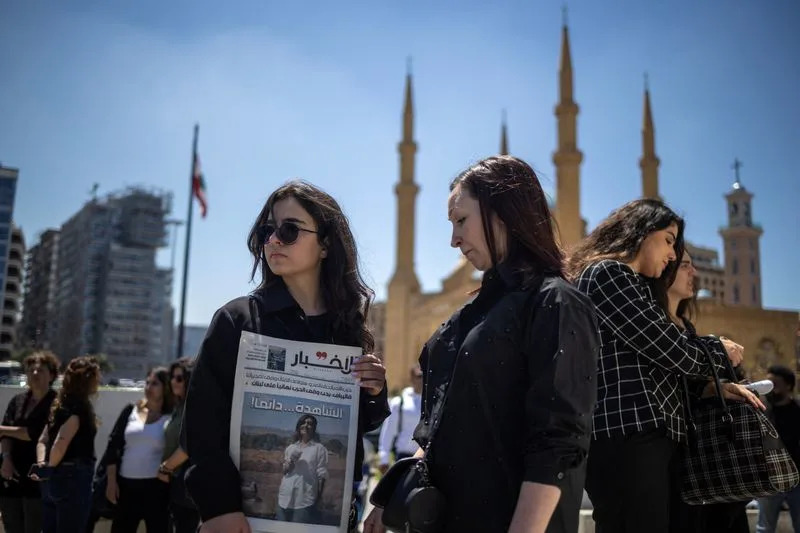
Protesters, including members of the media, attend a vigil to condemn the killing of journalists, a day after journalist Amal Khalil was killed in an Israeli strike, in Martyrs' Square, Beirut, Lebanon April 23, 2026. REUTERS/Marko Djurica
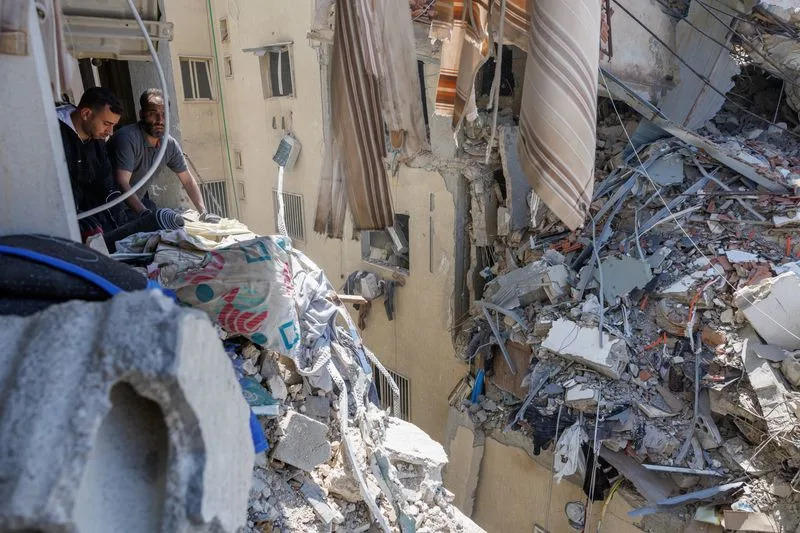
Residents clean their apartments in a building damaged by an Israeli strike, amid a temporary ceasefire between Lebanon and Israel, in Housh near Tyre, Lebanon, April 23, 2026. REUTERS/Zohra Bensemra
Help us improve.





















